A tree service with crane Spokane Valley, WA homeowners call in isn't reaching for the most expensive tool on the truck just because it looks impressive. It's the one option that gets a brittle, 70-foot ponderosa off a roofline without a single section dropping into the yard. Most local jobs still come down with a chainsaw, a rope, and a clear drop zone. This guide covers exactly when a crane earns its cost, what happens on removal day, what it runs in 2026, and the one permit question most homeowners never think to ask.
What Is Crane-Assisted Tree Removal?
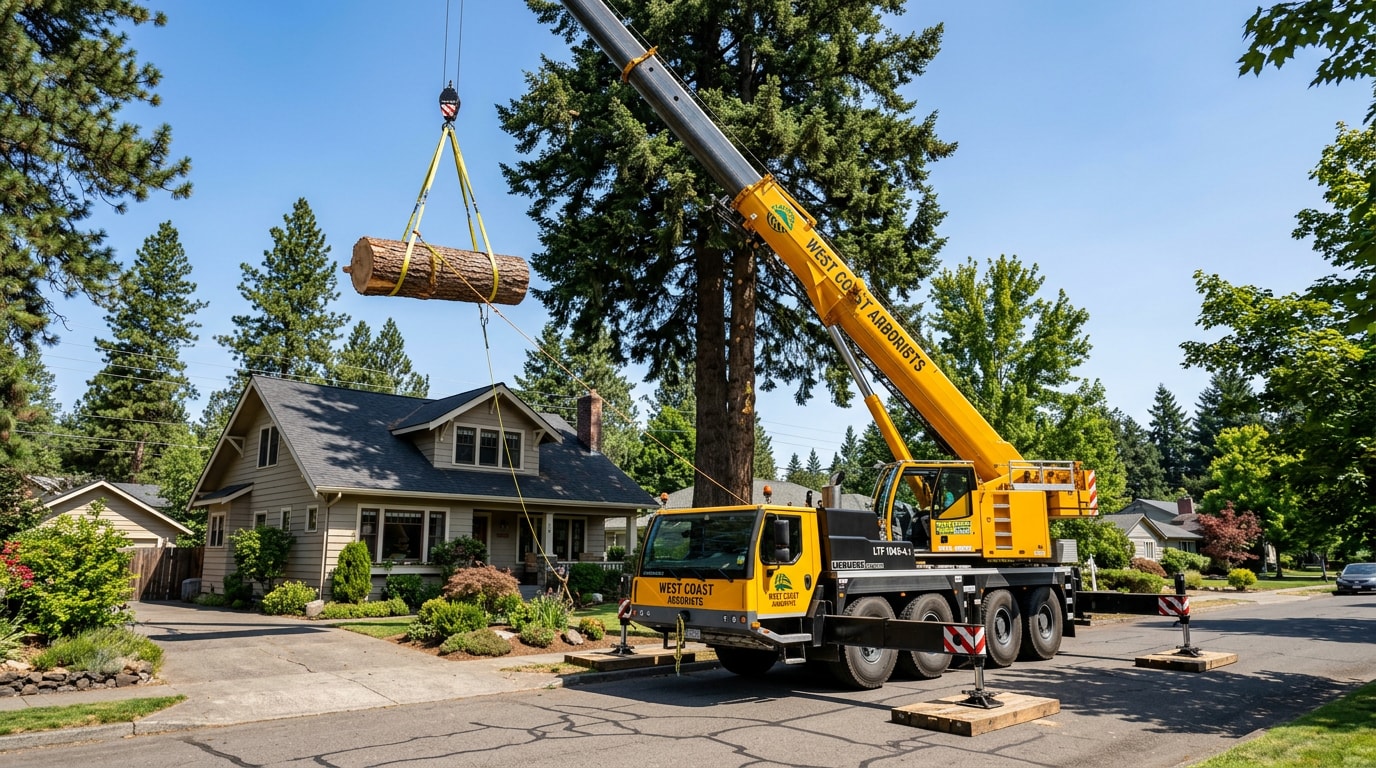
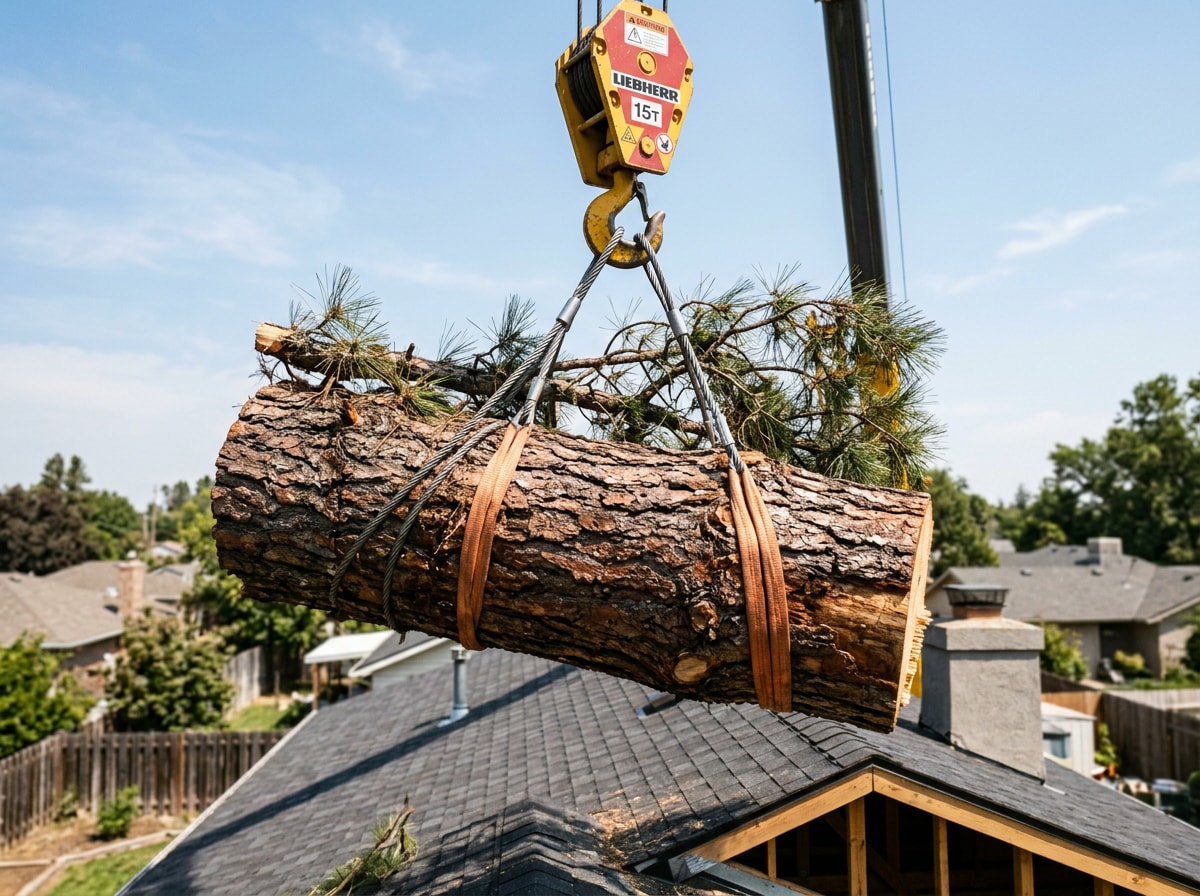
Crane-assisted tree removal is a method where a mobile crane takes the weight of a cut section before the final cut is even made, then lifts that piece straight up and away from the tree instead of letting a climber lower it by rope or drop it into open space. A climber or bucket-lift operator cuts sections free while the crane carries the weight, so the piece is lifted to a drop zone instead of falling. The tree still comes apart from the top down, one section at a time, but nothing travels through the canopy or across the lawn on the way out.
Most Spokane Valley crews run everything from chainsaws and climbing gear to a rented crane, and they pick the tool based on the tree in front of them, not the other way around. Crane work costs more and takes longer to set up than standard rigging, which is exactly why it's reserved for the trees that genuinely need it.
Homeowners comparing their options can start with the tree removal services page for a broader look at pricing, scheduling, and what a standard removal involves before deciding whether a crane applies to their property.
When You Actually Need a Crane for Tree Removal
A crane becomes necessary when a tree is too tall, too unstable, or too closely boxed in by structures for a climber to safely cut and lower sections by hand. In Spokane Valley, that usually means a leaning ponderosa over a roofline, a beetle-killed pine too brittle to climb safely, or a backyard with a fence, patio, and shed leaving no room for a clean drop zone. Mature pines, cottonwoods, and locusts around the valley also tend to grow tall and brittle enough that standard rigging alone can't guarantee a safe sectional drop.
Before calling anyone, walk around the tree and check:
- Height relative to the nearest structure or power line
- Visible lean angle, especially after wind or heavy snow
- Decay, cavities, or fungus near the base or trunk
- Whether there's an actual clear drop zone for falling sections
- Distance to the roof, fence, shed, or overhead service lines
If a storm already brought a tree down or left one hanging, same-day emergency tree removal usually happens before anyone schedules a crane. Our guide on downed tree removal in Spokane Valley walks through what to do in the first hour after a tree falls, crane or no crane.
Several "yes" answers above usually mean the tree needs a formal risk assessment rather than a guess. Deciding whether a tree presents a risk to people or property is a decision that should not be taken lightly, and it's work best left to a tree care professional trained in a standardized risk-assessment process. Our tree assessment and hazard tree removal services start with exactly that kind of walk-around before anyone decides a crane is justified.
How Crane Tree Removal Works, Step by Step
Here's what typically happens once a crew decides a tree needs a crane, from the first walk-around to the final cut.
1. Hazard assessment before the saw starts. Every job begins with a walk-around of lean, root plate condition, base decay, and deadwood in the crown, plus whatever sits underneath, roof, fence, or power lines. This shapes the written estimate, so a crane plan is never a surprise mid-job.
2. Controlled rigging over anything that can't absorb impact. Sections above a roof, fence, or garden bed aren't dropped. They're roped and lowered piece by piece using standard rigging and sectional cutting. It's slower than a straight drop, but it's the accepted method for working near structures. ANSI Z133, published through the Tree Care Industry Association, is the detailed safety standard the industry is measured against, spelling out minimum approach distances, required PPE, and how climbing and rigging systems have to be set up and inspected.
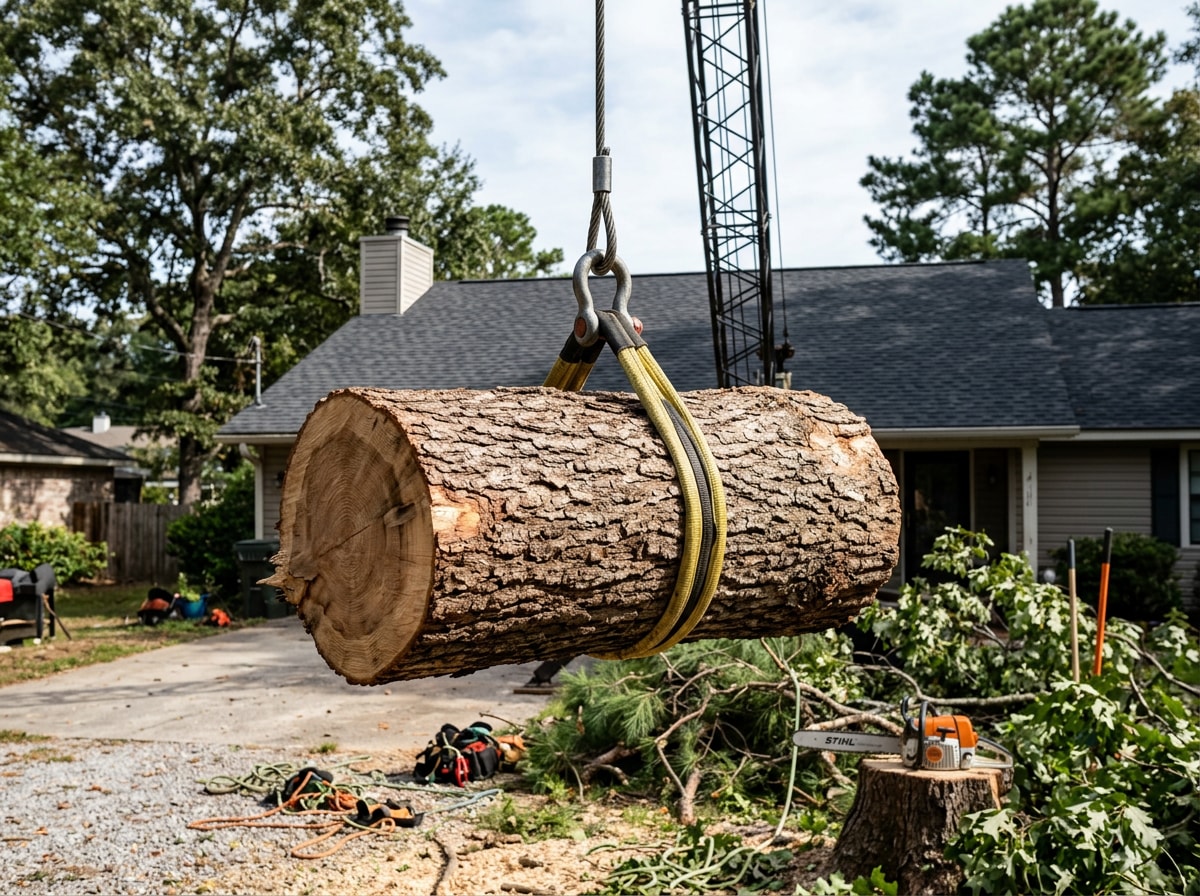
3. Crane picks for the sections rigging can't handle safely. Each section gets cabled to the crane, cut free, and lifted straight up and out instead of swung past whatever is underneath. One detail most homeowners never hear: the crane lifts wood, not people. OSHA has specifically flagged concerns about hoisting personnel into position with a crane during tree work, since that practice runs contrary to OSHA's existing crane standards. That's part of why a climber or bucket truck, not the crane hook, still does the actual cutting on most residential jobs.
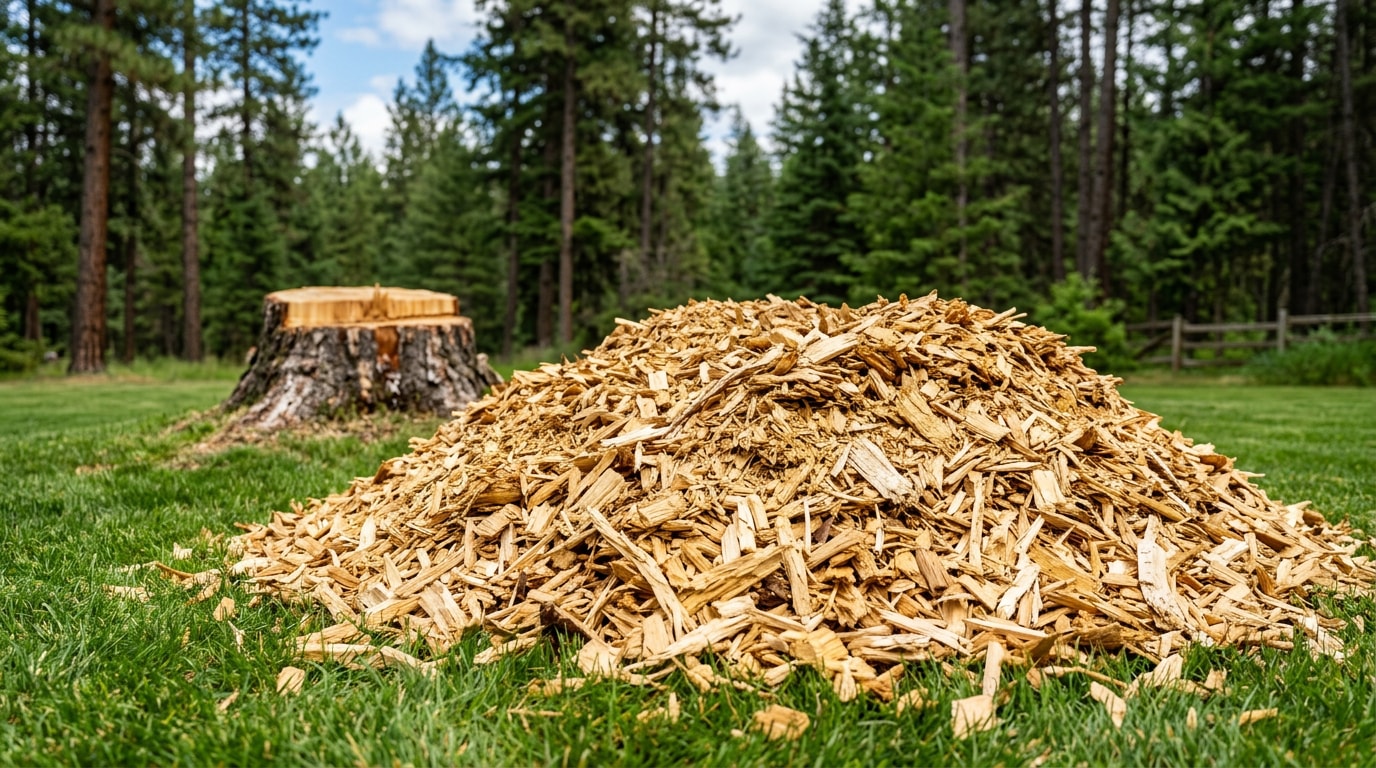
4. Cleanup and stump handling. Once the trunk is down, sections get bucked, chipped, or hauled, and stump removal can follow the same day or get scheduled separately.
What Tree Removal with a Crane Costs in 2026
Tree removal cost in Spokane Valley scales with tree size, but crane work adds its own line item on top of a standard removal. Access and what's underneath the tree, a roof, shop, fence, or service line, usually move the price more than height alone.
| Tree Size | Standard Removal (2026) | Crane-Assisted Removal (2026) |
|---|---|---|
| Small (under 30 ft) | $300–$700 | Rarely needed |
| Medium (30–60 ft) | $700–$1,500 | $1,800–$3,000 |
| Large (60–80 ft) | $1,500–$2,800 | $2,800–$4,500 |
| Very large / over structure | $2,500–$4,000+ | $4,000–$7,000+ |
These ranges are planning estimates, not quotes. Lot access, debris hauling, and whether stump grinding is included all shift the final number. A free on-site estimate is still the only reliable way to get an exact price for a specific tree, and it's the fastest way to find out whether your tree even needs a crane in the first place.
Permits and Street Setup in Spokane Valley
This is the part most tree-service pages skip. If the crane needs to park in the street or in the right-of-way in front of your house rather than in your driveway, that's not automatically covered under a standard tree removal contract. A right-of-way permit is required of any person or company who performs construction work or otherwise engages in activity within existing City right-of-way, or on City-owned infrastructure in Spokane Valley. In practice, this mostly comes up on tight in-city lots where there's no room to stage a crane off the street. A reputable crew pulls that permit before setup day, not after a neighbor calls the city.
Private-property removals almost never need a separate tree-removal permit in Spokane Valley. The exceptions are trees in the right-of-way itself, critical or protected areas, and larger vegetation-clearing projects, which are handled under Spokane Valley's own code rather than City of Spokane rules.
Areas We Serve
Crews covering Spokane, Spokane Valley, Liberty Lake, and Colbert handle crane logistics differently depending on the lot. Larger Spokane Valley parcels sometimes have enough open space to skip crane costs that tighter, older in-city lots simply can't avoid. Confirming coverage for a specific address is easiest through the Spokane Valley service area page, and you can see examples of past crane and removal jobs on the projects page.
For homeowners weighing a trim against a full removal, it's worth starting at {{SITE_URL}} to see the full range of tree and arborist services available before committing to the bigger job.
FAQ
What happens during a tree removal?
A typical removal follows four steps: a call or online request for an estimate, an on-site hazard assessment, a free written estimate that includes a rigging or crane plan if one is needed, and controlled removal and cleanup, including optional stump grinding.
Do I need a permit to remove a tree in Spokane Valley?
Most private-property tree removals don't require a permit. The exceptions are trees in the public right-of-way, critical or protected areas, and larger clearing projects. If the crane itself needs to sit in the street, that's a separate right-of-way permit question, covered above.
Is a crane needed for every large tree?
No. A large tree with a clear drop zone can usually come down with standard climbing and rigging. A crane becomes necessary specifically when structures, tight access, fragile ground, or an unstable trunk take that option off the table.
How much does crane tree removal cost?
Crane tree removal typically runs $1,800 to $7,000 or more, priced as a separate line item added to the base removal cost. Tree size, access, and proximity to structures drive most of that range. See the cost table above for size-based figures.
How large a tree can a crane remove?
Cranes used in residential tree work can handle very large, mature trees that would be unsafe or physically impossible to take down by hand, including trees well over 80 feet. The limiting factor is usually the crane's rated capacity at the working radius required to reach the tree, not the tree's size alone.
How long does a crane tree removal take?
Most residential crane jobs finish in a single day, often half a day once the crane is set up and stabilized. Setup and stabilization can take longer than the actual cutting, especially on a tight lot.
Ready to find out if your tree needs a crane or just a trim? Get a free estimate and a crew will walk the property, flag any hazards, and give you a written plan before anything gets cut.