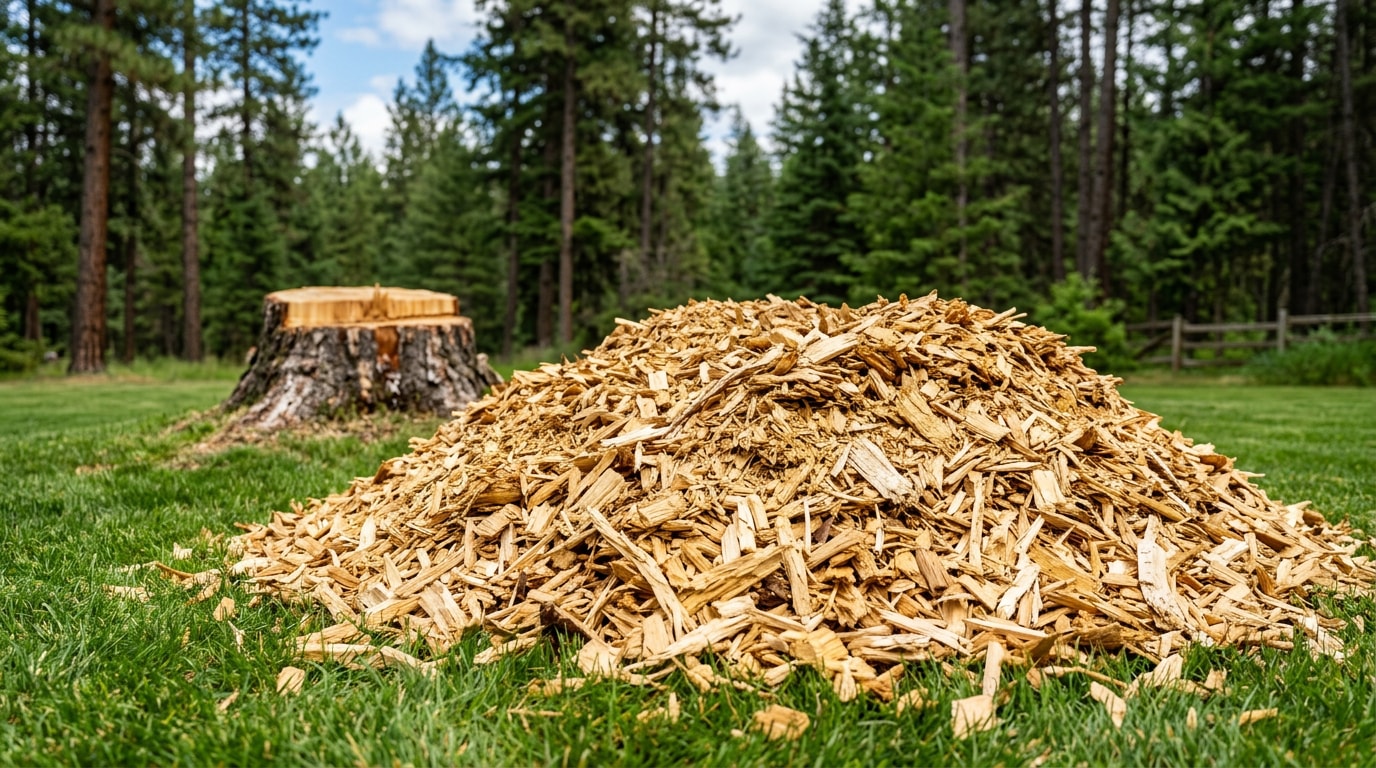
If a crew just took down a pine or fir on your property, you're probably staring at a pile of fresh chips and wondering what to do with wood chips after tree removal in Coeur d'Alene, ID. That pile is a free resource, not a cleanup problem. It can become mulch, a garden path, compost, or play-area cushioning without a hauling fee.
Key Takeaways
- Wood chips from tree removal are a free resource for mulch, paths, compost, and play areas.
- Reusing them on-site beats paying extra for debris hauling.
- Ask your crew to leave the chips before the job starts; most Coeur d'Alene tree companies will.
- Fresh chips spread on top of soil as mulch do not rob your plants of nitrogen, that myth applies mainly to chips tilled into the ground.
- Got more chips than you can use? Neighbors, community gardens, and local nurseries often want them.
Why Wood Chips From Your Tree Removal Are Worth Keeping
Dumping wood chips feels like the easy fix, but it wastes material you could use for mulch, pathways, or compost. Haulers often charge extra by the yard to cart debris off-site, while keeping the chips costs nothing.
A mature pine or fir removal around Coeur d'Alene can produce several cubic yards of chips, so it's worth deciding where that volume will go before the crew arrives. If you're scheduling a tree removal or stump removal, just tell the crew you want the chips left on-site and roughly where to pile them.
If the job also involves storm damage or a hazard tree near your home, our storm tree cleanup team can leave chips for reuse or haul them away, whichever works better for your property. Either way, get a free estimate before the work starts so chip handling is built into the plan, not an afterthought.
Use Wood Chips as Mulch
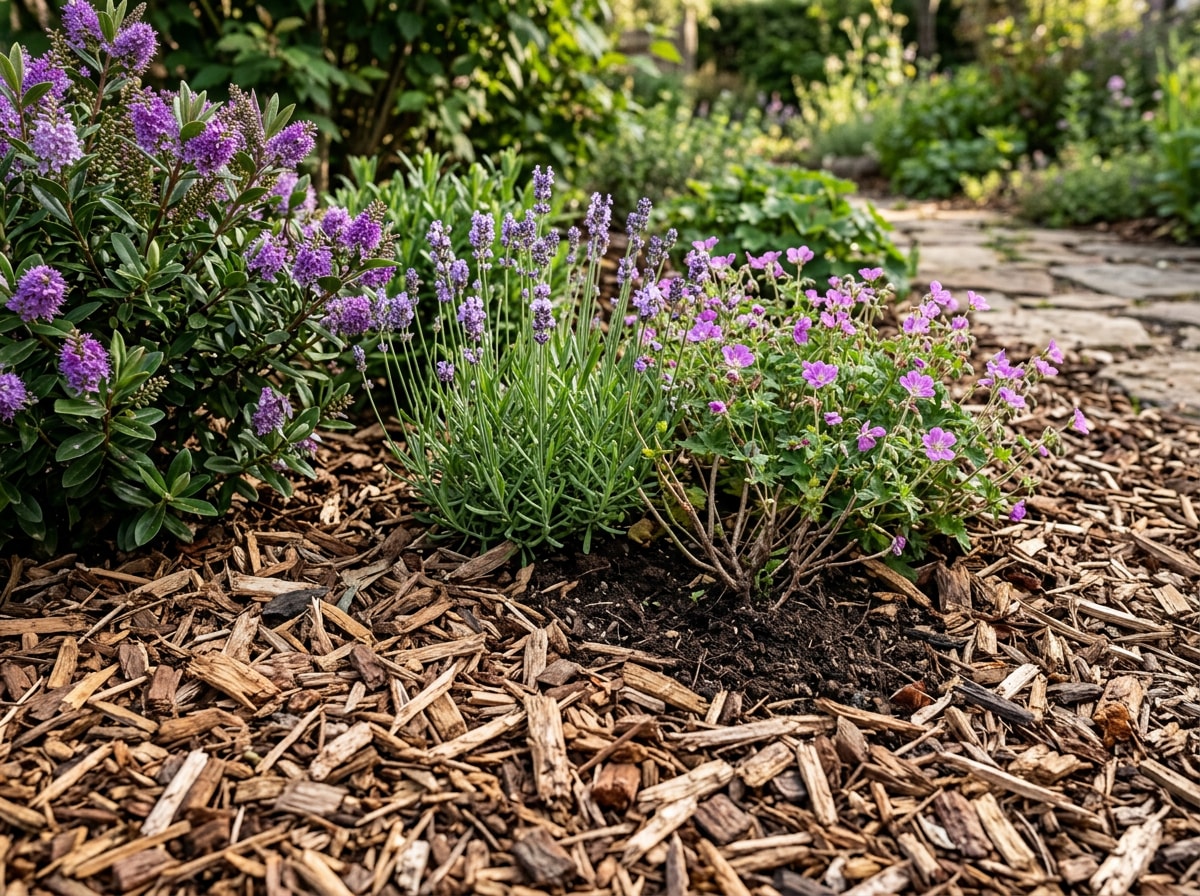
Mulching is the most common and easiest way to put a removal pile to work. Spread a layer around trees, shrubs, and garden beds, leaving a gap near the trunk so bark stays dry.
| Factor | Recommendation |
|---|---|
| Depth | 2-4 inches |
| Gap from trunk/stem | About 1 inch |
| Reapplication | Annually, as the layer breaks down |
Done right, wood chip mulch suppresses weeds, holds soil moisture through dry North Idaho summers, and moderates soil temperature over winter.
One long-running myth is that fresh chips "steal" nitrogen from your plants. According to Washington State University Extension's research on arborist wood chips, when chips sit on top of the soil as mulch rather than being mixed in, nitrogen tie-up isn't a real problem for established plants. The effect shows up mainly in a thin surface layer, which actually helps by making it harder for weed seeds to germinate.
Build a Garden Path or Walkway
Turn leftover chips into a path in an afternoon:
- Clear grass and debris from the route.
- Lay landscape fabric to block weeds underneath.
- Spread a 3-4 inch layer of chips over the fabric.
- Add stone or timber edging to hold the shape.
The result is a textured walkway that handles foot traffic and holds up through wet CDA springs. For a bigger landscaping push after removal, our Coeur d'Alene area page covers neighborhood-specific tips for lakefront and hillside lots.
Add Wood Chips to Your Compost Pile
Wood chips are a "brown," carbon-rich material that balances nitrogen-heavy "greens" like grass clippings and kitchen scraps. Their coarse texture also keeps a compost pile from compacting into a soggy mass.
The EPA's home composting guidance recommends roughly two to three parts carbon-rich material for every one part nitrogen-rich material, which is an easy ratio to hit once you've got a fresh pile of chips on hand. Mix them with green waste, turn the pile every week or two, and keep it damp but not soaked. Chips break down slower than food scraps, so expect finished compost to take longer than a pile without them.
Cushion a Play Area or Swing Set
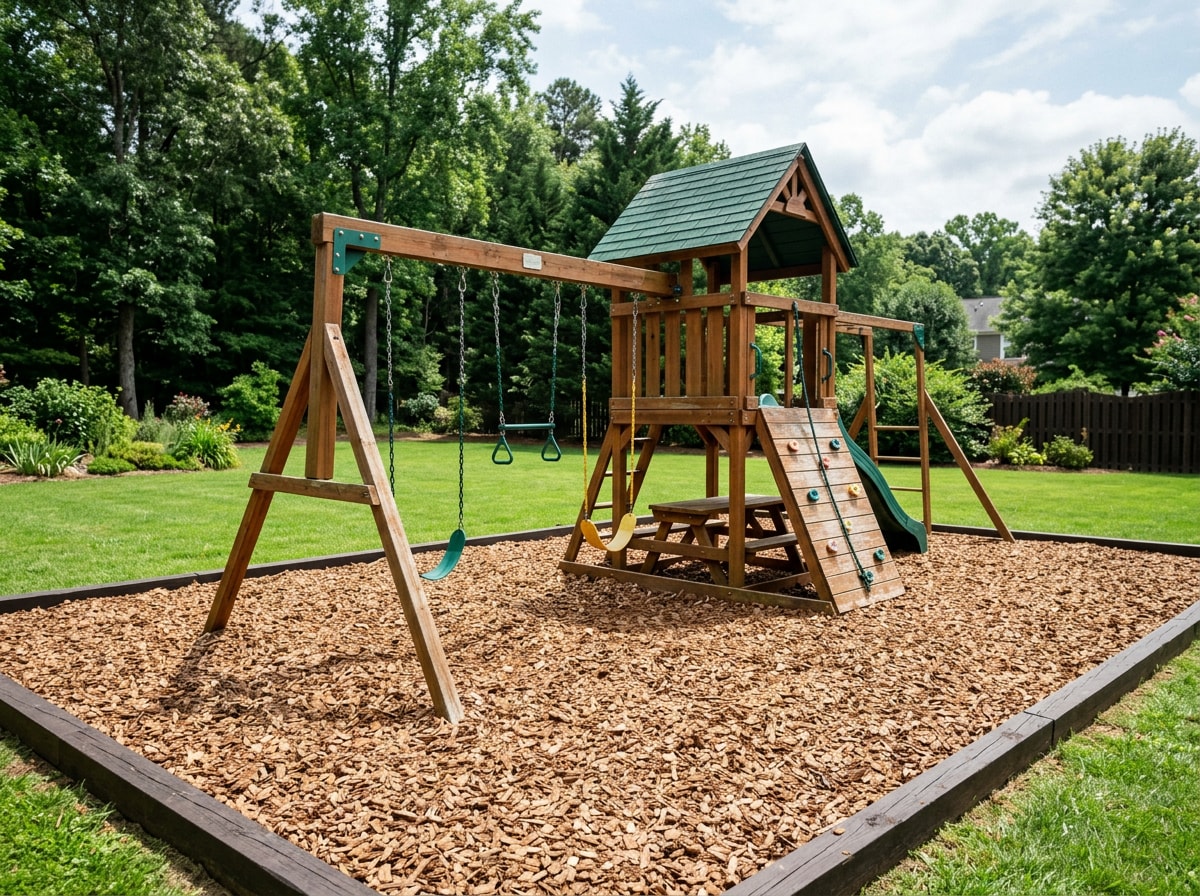
Wood chips make an inexpensive, shock-absorbing surface under swing sets and play structures. Clear the area, lay landscape fabric, and spread chips well beyond the equipment's footprint.
Depth matters for safety, not just comfort. The U.S. Consumer Product Safety Commission's Outdoor Home Playground Safety Handbook recommends a minimum compressed depth of 9 inches of loose-fill material like wood chips for equipment up to 8 feet high, with surfacing extending at least 6 feet in every direction. Start with about 12 inches since loose fill compresses over time. Only use untreated wood chips around kids; treated or chemically processed wood doesn't belong in a play area.
Control Erosion on Slopes and Lakefront Yards
Plenty of Coeur d'Alene properties sit on a slope or back up to the lake, where bare soil washes out fast during spring runoff. A 4-6 inch layer of wood chips slows water movement and holds soil in place. On steeper grades, combine chips with small logs or branches to build simple terraces that anchor the slope while the chips break down.
Burn Wood Chips as Kindling (Check Idaho's Rules First)
Dry wood chips catch fast and make decent kindling for a fire pit, fireplace, or wood stove. Store extra chips somewhere covered and dry, since damp chips won't light easily.
Before you burn anything outdoors in Kootenai County, though, check the rules. The Idaho Department of Environmental Quality notes that residential yard waste burning is allowed in most areas, but it has to happen on the property where the waste was generated and can't violate local ordinances or an active burn ban. The City of Coeur d'Alene also requires a permit and a same-day air quality check for yard waste burning inside city limits, so a quick call before you light anything saves a possible citation.
What to Do With Leftover or Excess Wood Chips
If the pile is bigger than your yard can use, you have options beyond the landfill:
- Offer them to neighbors who garden or landscape.
- Check with local nurseries or community gardens, which often take chip donations.
- Post them free on a local marketplace so someone with a truck can haul them away.
- Contact a chip-matching service that connects homeowners with people who want wood chips for free, a tool highlighted by WSU Extension's hedgerow program as a quick way to clear a surplus pile.
If you'd rather skip storing or redistributing chips altogether, our wood chipper service guide walks through how on-site chipping and hauling works for larger cleanups.
Safety Mistakes to Avoid With Wood Chips
- Don't stack chips against siding or your foundation. Thick piles trap moisture against the house.
- Keep mulch layers thin near structures, about 2-3 inches, rather than piling them deep.
- Skip chips from a diseased or pest-infested tree near healthy plants; keep that material separate.
- Don't till fresh chips into garden soil. Let them age for a few months first if you want to mix them in.
- Wood chips don't attract termites any more than other organic ground cover does. The real risk is wood-to-soil contact directly against a foundation, not a few inches of surface mulch.
About This Guide
This guide was put together by the team at CDA Tree and Utility LLC, a family-owned tree service that has worked in Coeur d'Alene and the greater Spokane area since 1996. Our crews haul, chip, and clean up after tree removals across Kootenai County every week, and we've watched plenty of homeowners turn one removal's chip pile into mulch for an entire yard instead of paying to have it hauled off. Questions about your own pile? Contact us or visit the CDA Tree and Utility homepage for more on our tree services.
FAQ
What is the main purpose of wood chips after tree removal?
The main purpose is reuse, as mulch, compost, erosion control, or ground cover for paths and play areas, turning removal debris into useful material instead of landfill waste.
Can I keep the wood chips after my tree is removed?
Yes. Most companies will leave wood chips on-site if you ask before the job starts. Confirm it with your crew when you book tree removal so it's part of the plan, not a surprise on cleanup day.
How deep should I spread wood chips for mulch?
Spread wood chip mulch 2 to 4 inches deep around plants, leaving about an inch of bare soil near the trunk or stem to prevent rot and moisture buildup.
Do wood chips attract termites?
No. Wood chips don't attract termites any more than other organic ground cover does. The real risk is piling chips directly against a home's foundation, not the mulch itself sitting a few inches away.
Can I use fresh wood chips in my vegetable garden?
Fresh chips work fine as surface mulch or a walkway between rows. Let them age before mixing them into planting soil, since tilled-in fresh chips can tie up nitrogen in a way that surface mulch doesn't.
What do I do if I have more wood chips than I can use?
Offer the surplus to neighbors, community gardens, or local nurseries, or post it free online. A chip pile that's too big for one yard is rarely too big to find a home.
Can I burn the wood chips instead of reusing them?
You can use dry chips as kindling, but outdoor burning in Kootenai County generally requires following Idaho DEQ rules and, inside Coeur d'Alene city limits, a permit and a same-day air quality check.