Tree debris disposal in Spokane Valley, WA comes down to three decisions: where you're allowed to take it, what it costs this year, and whether a truckload is worth your Saturday. After hauling storm debris to both the county transfer station and the city's Waste to Energy facility for Valley customers, we've learned the two sites aren't interchangeable, and that mix-up is where most homeowners overpay. Here's the current breakdown, fees included.
Where to Dispose of Tree Debris in Spokane Valley
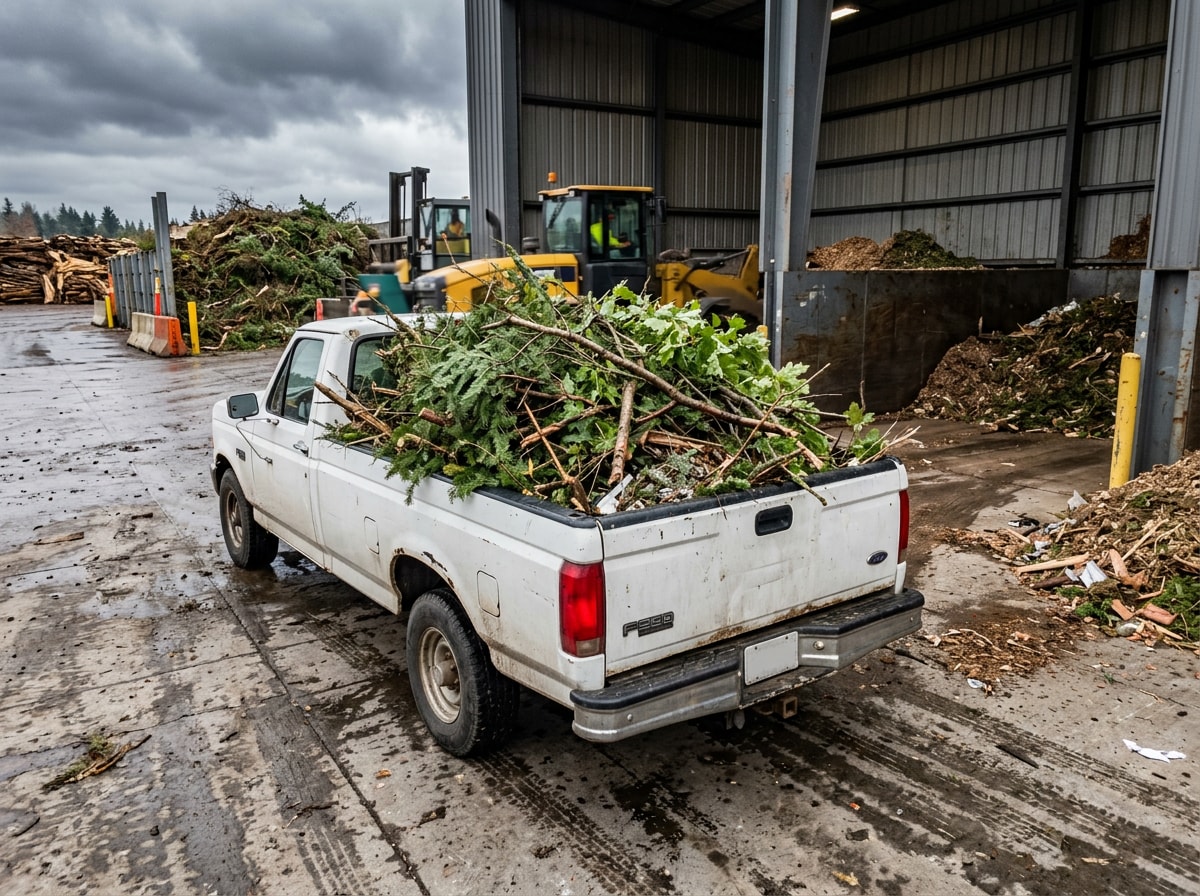
Spokane Valley sits outside Spokane city limits, so residents self-hauling branches and brush use the Valley Recycling & Transfer Station at 3941 N. Sullivan Road, not the City of Spokane's Waste to Energy (WTE) Facility on Geiger Boulevard. That distinction matters because the two run on separate fee schedules.
The Valley station is one of the Spokane County Regional Solid Waste System's disposal sites, providing clean and convenient, one-stop drops for yard waste, food waste, and trash . As of January 1, 2026, the Spokane County Regional Solid Waste System increased garbage rates by 4 percent and organics (yard waste) by 10 percent to cover rising costs for waste disposal and maintaining the operating systems .
Here's what that means at the register:
| Material | Per Ton | Minimum Fee | Covers Up To |
|---|---|---|---|
| Organics / Yard & Tree Debris | $73.31 | $8.00 | 220 lbs |
| Municipal Solid Waste (MSW) | $135.63 | $17.00 | 260 lbs |
| Special Handling MSW | $165.00 | $25.00 | 320 lbs |
Source: Spokane County Regional Solid Waste System, effective January 1, 2026.
If you've seen a lower or higher number online, it's probably the City of Spokane's WTE facility rate ($76.95/ton for clean green, $8.19 minimum, plus a $2.68 self-haul fee) — a separate city-operated site most Valley residents don't need to use. Confirm current pricing and any seasonal hour changes on the Spokane County disposal page before you load the truck.
Most self-haul guidelines across the region cap accepted limbs at roughly 6 feet long and 3 inches in diameter, matching the standard used during past branches (less than 6 feet long and 3 inches in diameter) yard-waste programs in the area. Root balls, stumps, and construction debris typically aren't accepted as yard waste and get billed at the MSW rate instead.
What Counts as Tree Debris? (Accepted vs. Not Accepted)
Tree debris generally includes branches, limbs, brush, bark, and small root sections, plus the usual yard-waste categories like grass, leaves, weeds, pine needles, pine cones, and thin sod. A typical accepted list reads close to flowers and houseplants, grass, leaves, weeds, pine needles, pine cones, thatch, vines, roots, twigs and plant trimmings, small amounts of sod, and branches less than 6 feet long and 3 inches in diameter .
What usually gets turned away or billed at the higher MSW rate:
- Treated, painted, or pressure-treated wood
- Large stumps and oversized root balls
- Construction debris mixed in with yard waste
- Dirt, sod thicker than a few inches, and rocks
If a stump is too big to haul yourself, our stump removal service grinds it down and hauls the grindings, so you skip the special-handling fee entirely.
Curbside Yard & Tree Debris Pickup in Spokane Valley
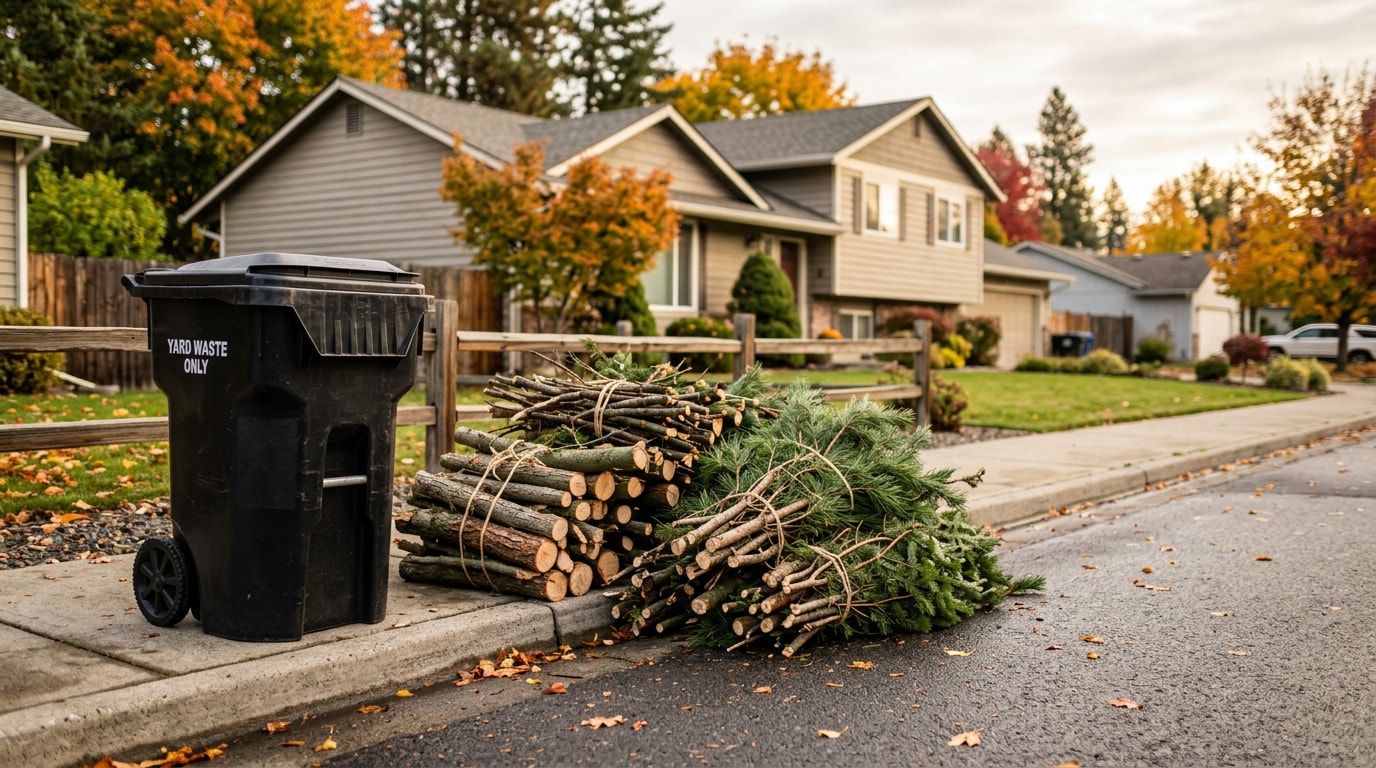
Curbside collection in Spokane Valley is a paid, optional subscription through your residential hauler — it isn't bundled automatically with garbage service. Overflow debris that doesn't fit the cart typically needs to go in a container clearly labeled for yard waste, a paper yard bag, or a bundle tied with compostable twine; plastic bags get billed as regular garbage instead of yard waste.
Many Spokane Valley haulers also run a once-a-year bulk pickup separate from the weekly cart service — worth scheduling before a big fall cleanup if your property backs up to mature trees. Check with your provider for your exact collection day and cart limits, since routes and rules vary block to block.
Handling Storm-Damaged & Seasonal Tree Debris
Windstorms and autumn leaf drop generate the bulk of tree debris Spokane Valley homeowners deal with each year, and the two call for different approaches.
Storm Debris and Emergency Cleanup
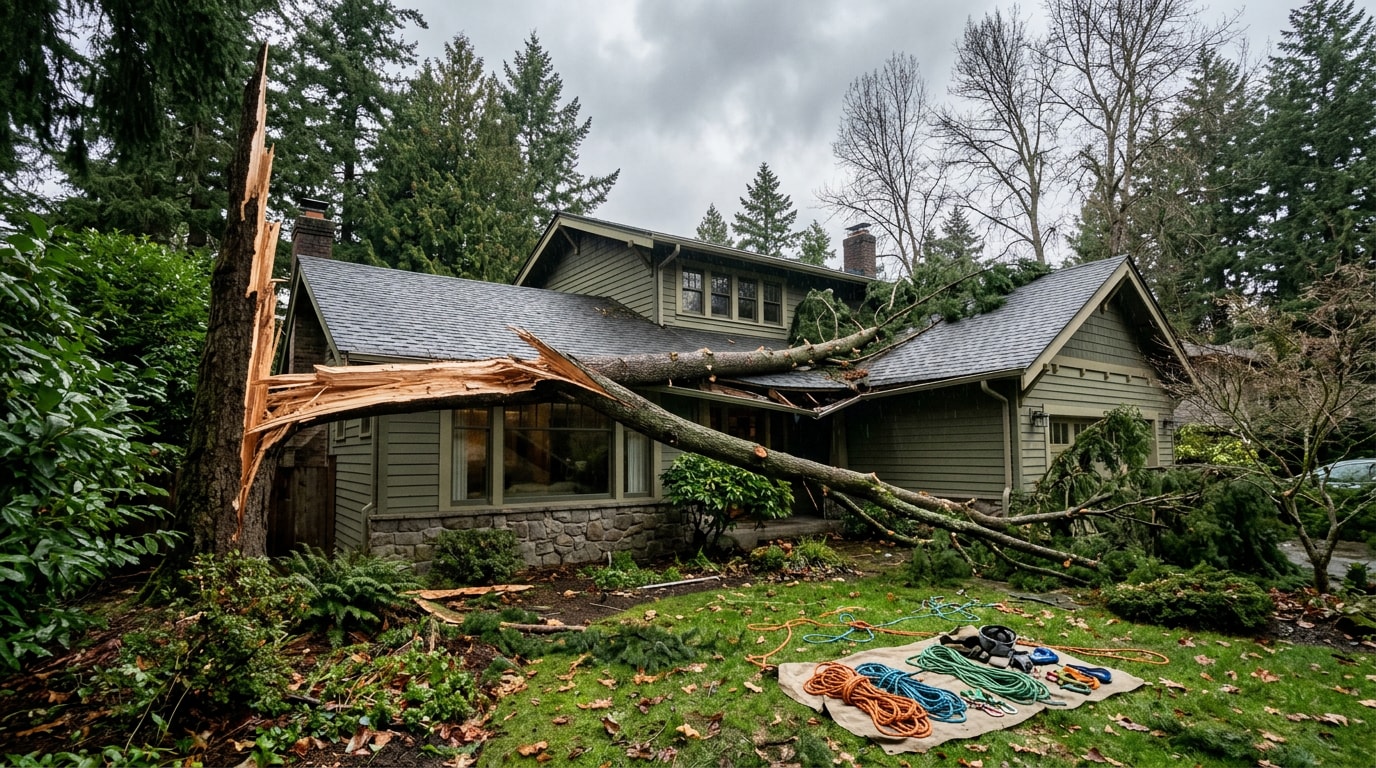
Before touching anything after a windstorm, check for downed power lines or cracked hanging limbs. Assume that all power lines are live or energized and stay at least 10 feet from all downed lines , and watch for strains and sprains from lifting debris — use work gloves, a hard hat, work boots, and eye protection if you're clearing anything yourself. When a tree crew finishes cutting but leaves cleanup to you, our emergency tree removal and storm tree cleanup teams handle both the cut and the haul-away in one visit. For a closer look at how a fast-response job typically runs, see our breakdown of emergency tree trimming in Post Falls, which walks through the same crew process we use on Valley storm calls.
Fall Leaf and Bulk Yard Waste
Mature trees can bury a Valley yard in leaves by late October, quickly exceeding what one cart or a few bags can hold. If limbs are hanging low or a tree looks stressed heading into winter, a tree health consultation before the snow load hits can catch a hazard before it becomes a storm call.
Hiring a Professional Tree Debris Removal Service
Self-hauling makes sense for a trunk-load of trimmings. It stops making sense once you're dealing with heavy limbs, a full-size brush pile, or no truck at all.
| Self-Haul | Professional Pickup | |
|---|---|---|
| Best for | Small loads, routine trimming | Storm debris, large volume, heavy limbs |
| Typical cost basis | Per ton at the transfer station | Per truckload or cubic yard |
| Your time | Loading, driving, unloading, line wait | None — crew handles it all |
| Handles stumps/root balls | Usually not | Yes |
A professional crew also knows which loads actually need to go to the scale and which can be chipped or hauled straight to a composting facility, which saves a trip most homeowners don't realize they're paying for twice. If a recent removal left you with a stump, dead limbs, or a tree that still looks questionable, our tree removal and dead tree removal crews clear the whole job, not just the parts that fit in a truck bed. See recent cleanups on our projects page, or visit the CDA Tree homepage for the full service list.
Serving the Valley regularly means we already know which loads are worth hauling ourselves versus chipping on-site — a judgment call that saves most customers a transfer-station trip. Get a free estimate before you decide which route makes sense for your yard.
FAQ
How much does professional yard waste removal cost in Spokane Valley, WA?
Hiring a hauler typically runs by volume, priced per truckload or cubic yard rather than by weight. That's a different cost basis than the per-ton transfer station fee, so get a flat quote upfront rather than comparing it directly to dump pricing.
Where do I take tree debris in Spokane Valley?
Residents self-hauling typically use the Valley Recycling & Transfer Station at 3941 N. Sullivan Road, part of the Spokane County Regional Solid Waste System. Confirm current hours and fees before you go, since they shift seasonally.
Can I burn tree branches and yard debris in Spokane Valley?
No. Outdoor burning for disposal purposes is illegal in Spokane Valley Fire Department's service area, including yard and garden debris such as tree branches, grass clippings, and leaves . Composting or a transfer station run are the legal options.
What size branches can I put in the yard waste cart?
Most curbside programs in the area require branches to fit inside the cart with the lid closed, generally under 3 inches in diameter. Anything larger needs to be cut down, bundled separately, or hauled to the transfer station.
How can I responsibly dispose of yard waste in Spokane Valley?
Composting at home is the most eco-friendly option — you can compost at home using food scraps from your kitchen and dry leaves and woody material from your yard . For anything too large to compost, the transfer station routes clean green waste to composting facilities instead of the landfill.
Does a tree removal crew clean up the debris, or do I handle disposal myself?
A full-service crew hauls everything away as part of the job. If you hire a company that only cuts and drops the wood, you're left arranging disposal yourself — worth confirming before you book.