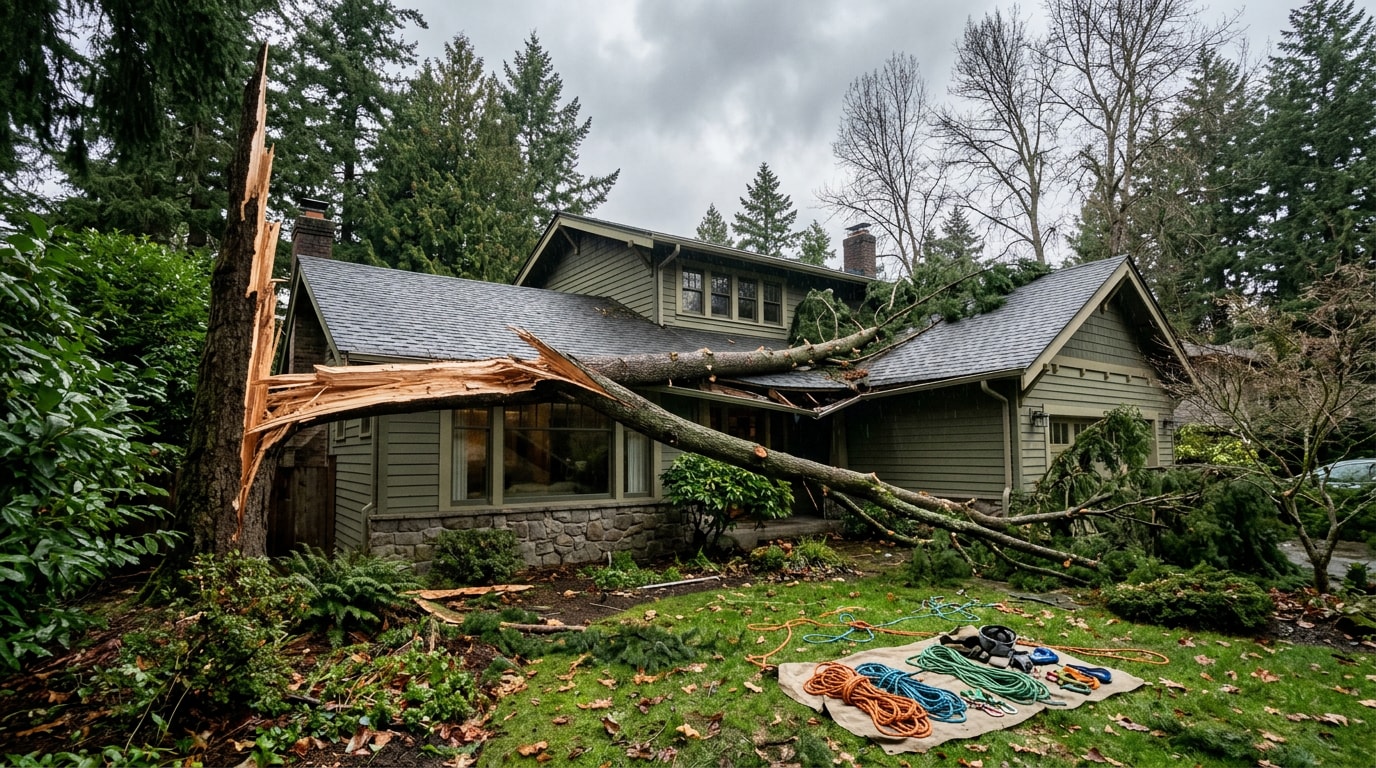
A storm just snapped a limb over your driveway, or a dead branch is hanging above the roofline. Emergency tree trimming in Post Falls, ID means getting that hazard down safely today, not scheduling a callback for next week. Here's what counts as a true emergency, what local crews actually do on arrival, and what the work tends to cost before you request a free estimate.
What Qualifies as a Tree Emergency
Not every broken branch needs a 2 a.m. call. Here's the quick test crews use:
- A limb is resting on a power line
- A branch or trunk is leaning on your roof, fence, or vehicle
- A split limb is hanging directly over a driveway, walkway, or play area
- A tree is uprooted or visibly leaning after wind, snow, or ice
- Debris is blocking the only access to your home
If none of those apply, the job is probably routine tree trimming that can wait for a scheduled visit.
What to Do Before the Crew Arrives
- If a limb is touching a power line, call the utility first and stay back.
- Keep kids, pets, and vehicles away from the area.
- Photograph the damage for insurance before anything is moved.
- Cordon off the space with tape or cones if it's over a walkway.
- Call for same-day service instead of trying to cut it yourself.
Tree Services in Post Falls, ID
Emergency trimming is one piece of a larger menu Post Falls property owners rely on, from routine pruning to full hazardous tree removal. Knowing where each service fits helps you make the right call when a limb comes down.
Emergency Tree Service & Storm Damage Cleanup
An emergency trim addresses split or hanging limbs, storm-damaged canopy, or branches touching power lines or a roof. These are situations that threaten immediate harm, not just untidy growth.
Crews offering 24/7 emergency tree removal and storm response typically aim to reach wind or snow-load damage within hours. Access and road conditions after a major regional event can stretch that window.
A cottonwood limb cracking over the Spokane River corridor after a windstorm is a classic North Idaho case. It needs rope-and-rigging removal, not a quick chainsaw pass, because of overhead lines nearby. Crews handling hazardous branches near structures or utilities follow the consensus safety practices outlined in OSHA's tree care industry standards, which reference the ANSI Z133 arboricultural safety requirements.
Tree Removal & Hazardous Tree Removal
Some situations move past trimming entirely. A dead tree, a diseased trunk, or a storm-damaged tree leaning toward a structure usually calls for full hazard tree removal rather than a partial cut. This is a distinct service from emergency trimming, though the two often get requested on the same call. Dead tree removal is its own line item for exactly this reason.
Tree Trimming & Pruning
Routine pruning manages overgrown branches, improves structure, and keeps limbs clear of rooflines and power lines before they become hazards. Unlike emergency trimming, this work is scheduled and preventative rather than reactive.
Wildfire Mitigation & Defensible Space
As Post Falls expands into wooded lots, wildfire mitigation becomes part of emergency readiness. Defensible space trimming and ladder fuel removal reduce how fast fire can climb into a canopy. The Idaho Department of Lands' wildfire preparedness guidance recommends a minimum defensible space of 100 feet on flat ground, more on sloped lots, divided into three treatment zones around the home.
How We Work
Knowing the process ahead of time reduces panic when a real emergency hits.
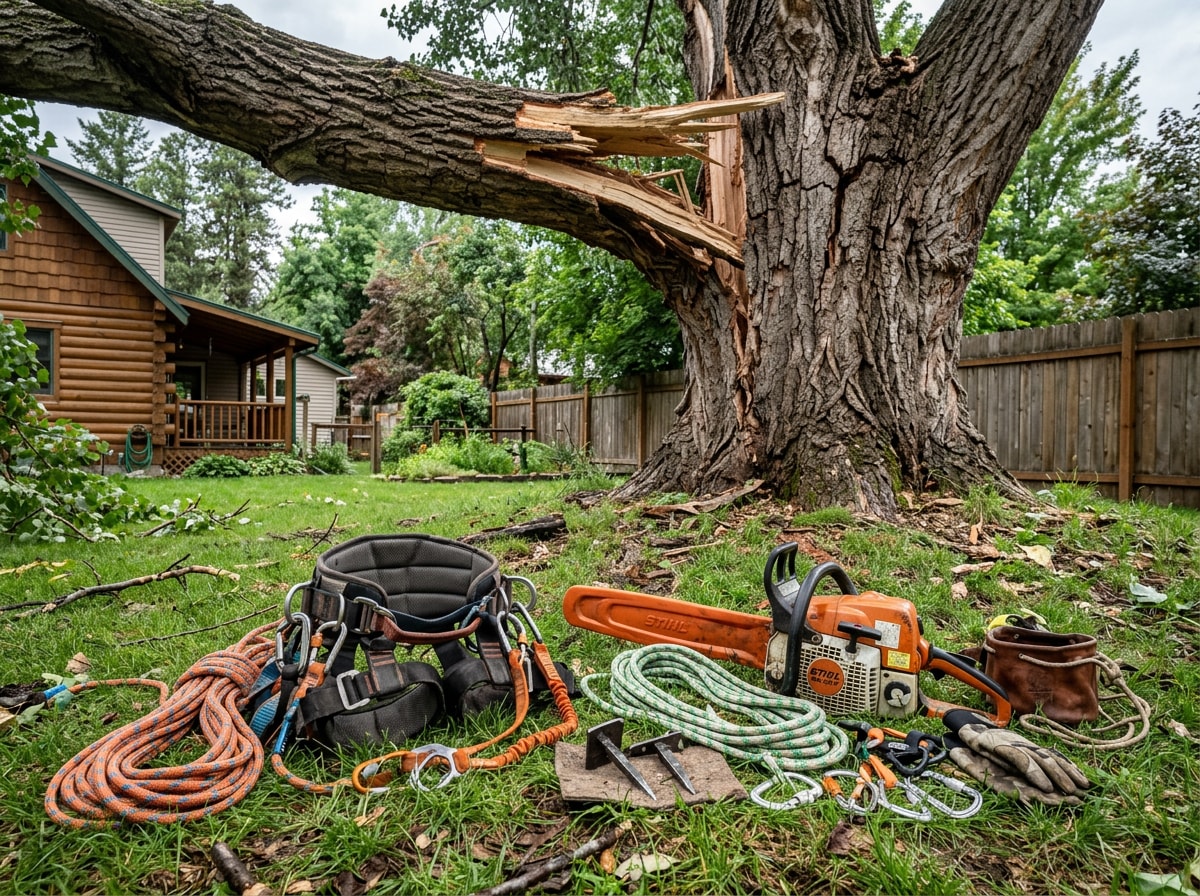
Site inspection. Even on an emergency call, an arborist checks tree health, hazard proximity, root spread, and access before cutting anything. It's a quick tree risk assessment that shapes the whole plan.
Execution. Crews use certified equipment to trim or remove the hazard, protect lawn and fencing, and finish with full debris cleanup, following the same approach documented across completed jobs in our project gallery.
In 30 years of storm response across Kootenai County, the calls that escalate fastest are cottonwoods and ponderosa pines dropping limbs near the Spokane River corridor during spring wind events, not the slow, obvious hazards homeowners expect.
What Emergency Tree Trimming Costs in Post Falls
Emergency pricing runs higher than scheduled trimming because of after-hours dispatch, rigging, and hazard conditions. Real local figures give a better baseline than a flat quote.
| Service | Typical Post Falls Range | Reported Average |
|---|---|---|
| Scheduled tree removal | $209 – $855 | ~$542 |
| Emergency tree removal | Higher due to dispatch + rigging | ~$809 |
| Stump removal | Varies by size/access | ~$168 |
These figures reflect local cost data compiled for Post Falls homeowners. A small tree in an open yard costs far less than a large tree near a structure requiring rigging, and that gap widens after hours.
Homeowners insurance sometimes covers storm-related tree damage. According to the Insurance Information Institute, a standard policy generally covers removal costs up to about $500 to $1,000 per tree, but only if the tree actually hit an insured structure. Ask for a free estimate before work begins so you know what's covered and what isn't.
Seasonal Tree Care in Post Falls
Post Falls weather drives when emergency calls spike.
- Winter: Snow and ice load snaps limbs without warning.
- Spring: Post-storm inspections catch hidden damage before it worsens.
- Summer: Wildfire-season trimming and defensible space work peak.
- Fall: Preventative trimming gets ahead of the next winter's storm damage.
Planning seasonal care around these patterns means fewer surprise emergencies. A tree health consultation before storm season catches weak limbs early. See our Post Falls, ID service area page for local scheduling, or check coverage in Coeur d'Alene, Spokane, and Spokane Valley.
FAQ
Are You Available for Storm Emergencies?
Yes. Reputable local crews offer 24/7 tree service for storm response. That typically means securing the area and clearing access right away, with full cleanup following as soon as conditions allow.
How Much Does Emergency Tree Removal or Trimming Cost in Post Falls?
Emergency tree removal in Post Falls runs around $809 on average, compared to roughly $542 for scheduled removal, due to after-hours dispatch and hazard conditions. A small tree in an open yard costs far less than a large tree near a structure requiring rigging.
What Qualifies as an Emergency Tree Trimming Situation?
A true emergency involves immediate risk: hanging limbs, branches touching power lines, blocked driveways, or visible structural damage risk to a home. Cosmetic overgrowth or slow-growing branches can usually wait for scheduled tree trimming.
How Fast Can You Respond to a Tree Emergency?
Most local crews aim to reach storm-damaged trees within hours of the call, especially if a limb is on a structure or blocking access. Response can stretch after a region-wide storm event when multiple properties need storm tree cleanup at once.
How Much Does Stump Removal Cost After Emergency Tree Work?
Stump removal in Post Falls averages around $168, though price depends on stump size and root spread. It's typically quoted separately from the emergency removal itself. See stump removal for details.
This guide is maintained by CDA Tree & Utility, a family-owned tree care company that has served Kootenai County and the greater Spokane area for 30 years. For a same-day assessment or a free estimate on emergency tree trimming in Post Falls, contact our team directly.