Yes, you can kill an oak tree by trimming it in Spokane Valley, WA, but it almost always comes down to over-removal, bad timing, or poor cuts, not pruning itself. A correctly timed trim rarely threatens a healthy, mature oak; the real damage happens when too much canopy comes off at once or cuts land during the wrong stretch of our Inland Northwest growing season. Here's exactly where that line sits, and how to stay on the safe side of it.
For routine upkeep, our tree pruning and tree trimming crews work within the same safety margins covered below on every oak we service across the valley.
How Over-Trimming Kills an Oak Tree
Oaks make their own food through photosynthesis in their leaves, so the canopy isn't decoration. It's the fuel supply. Strip away too much of it at once, and the tree is left running on reserves it hasn't had time to rebuild.
This creates two failure modes. First, energy shock: a sudden loss of leaf area means less fuel for root growth, pest defense, and winter survival. Second, every cut is an open wound, and large or poorly placed wounds give decay fungi and insects an easy way in.
On the storm and DIY-trim calls we handle around Spokane Valley, the pattern repeats: a homeowner removes a third or more of the canopy in one afternoon, the tree looks fine through summer, and the thinning shows up the following year. Oak stress from over-trimming is a slow decline. Symptoms often take months to appear, which is exactly why so many people never connect a bad spring trim with a sparse canopy twelve months later.
Signs Your Oak Tree Is Stressed After Trimming
An oak showing over-trimming symptoms typically has one or more of these:
- A thinner-than-usual canopy compared to neighboring oaks
- Lopsided or one-sided branch growth
- Dieback starting at the branch tips and moving inward
- Clusters of weak, upright water sprouts along the trunk or main limbs
- Visible decay, discoloration, or cracking at old cut sites
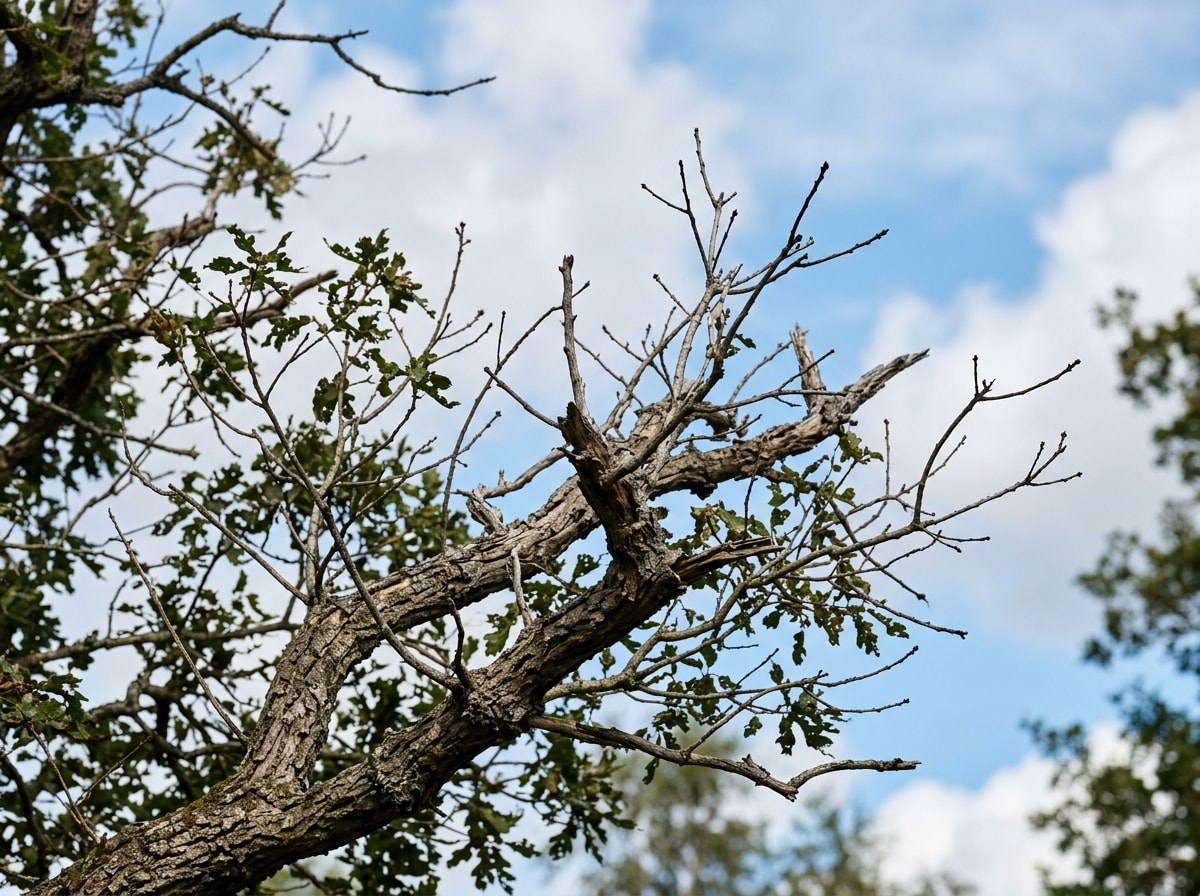
Sparse leaves or a few water sprouts are usually a wait-and-watch situation. Give the tree a full growing season to recover. But dieback spreading inward, soft or discolored wood at cut sites, or fungal growth on the trunk calls for a closer look sooner rather than later. A tree health consultation can tell you whether the tree is bouncing back or declining before it becomes a bigger problem.
When to Trim Oak Trees in Spokane Valley
The safest window is late fall through late winter, while the tree is fully dormant and local insect activity has dropped off. Cutting outside that window exposes fresh wounds during the exact stretch when sap-feeding insects and fungal spores are most active.
| Timing | Status | Why |
|---|---|---|
| Late November – February | Best window | Tree fully dormant, insect activity lowest |
| March | Caution | Finish minor touch-ups before bud break |
| April – July | Avoid | Peak sap flow and insect activity |
| August – October | Caution | Wounds heal more slowly before frost |
Eastern Washington's dormant season is shorter and colder than the milder winters referenced in a lot of national pruning guides, so the practical cutting window here is narrower than a quick online search might suggest. If you're unsure which window applies to your property, a tree trimming provider familiar with Spokane Valley growing conditions can confirm timing for your specific tree.
How to Trim an Oak Tree Without Killing It
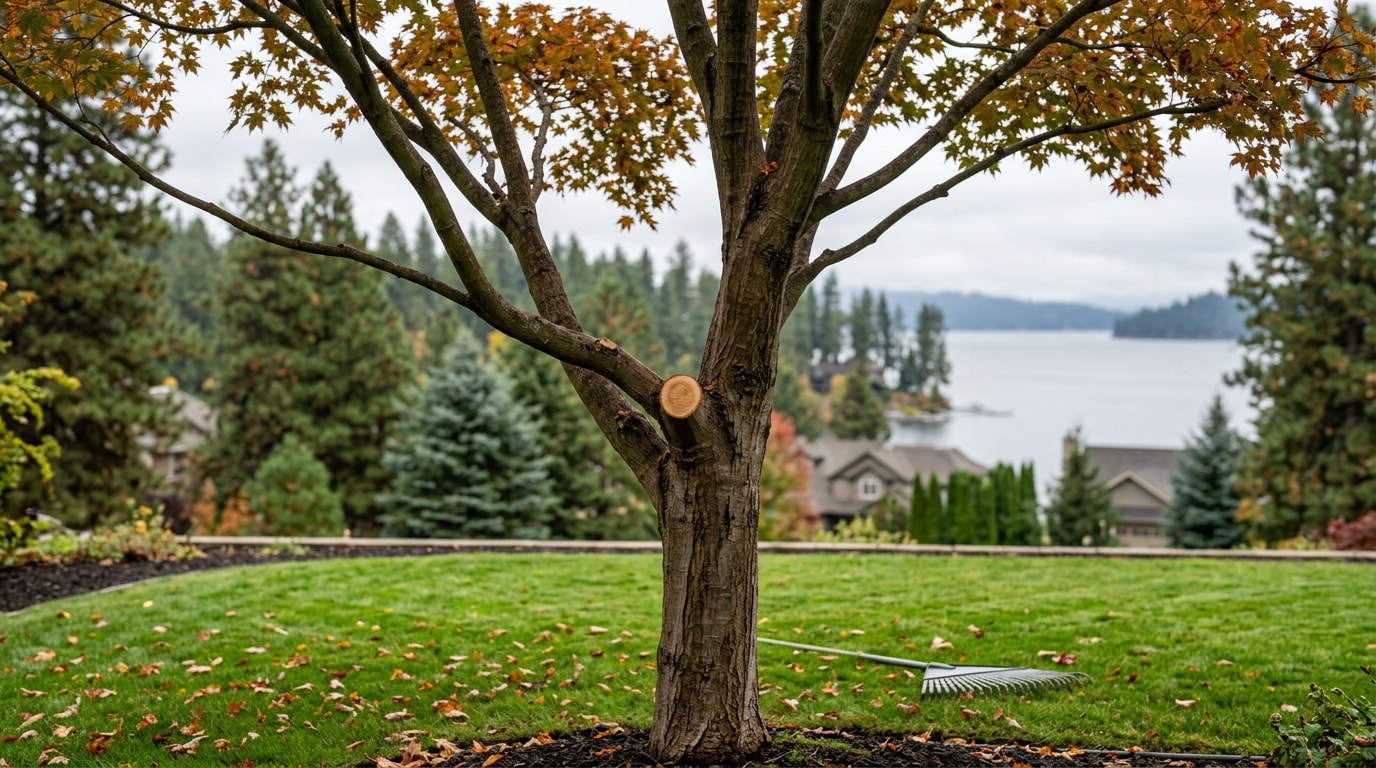
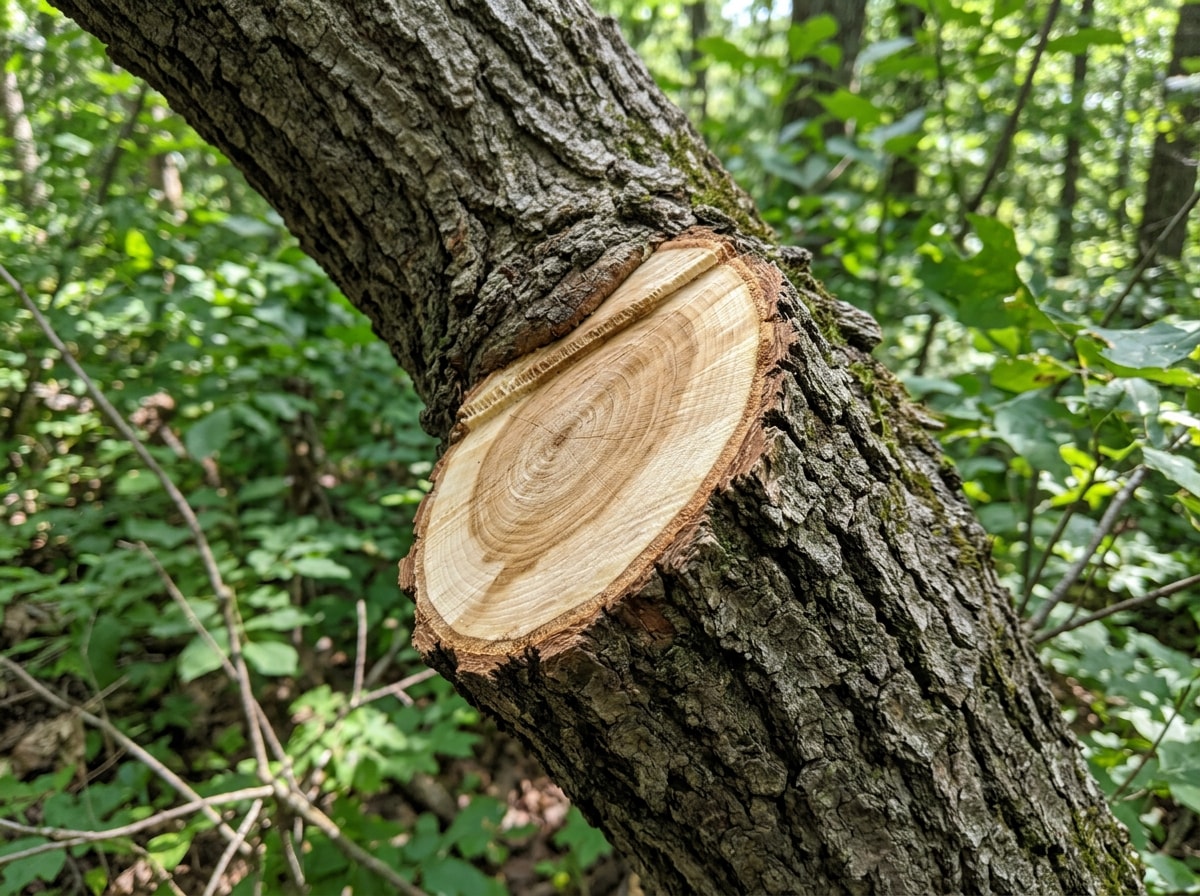
Good technique starts with cutting just outside the branch collar, never flush against the trunk and never leaving a long stub. Clean, sanitized tools between trees matter more than most homeowners assume.
As a general ceiling, avoid removing more than roughly a fifth to a quarter of live canopy in a single season, even on a healthy, mature oak. Topping, cutting main limbs down to stubs, is the single worst thing you can do to an oak. The wounds are too large to seal properly, and the regrowth that follows is weak and poorly attached.
Beyond basic cuts, a few techniques support long-term structure rather than just this year's appearance:
- Crown cleaning – removing dead, dying, or crowded growth
- Structural pruning – removing crossing or inward-growing limbs early, before they become large cuts
- Directional pruning – guiding growth away from rooflines and power lines
These stay within the same canopy-removal ceiling and dormant-season timing already covered. The A300 standards applies to pruning and trimming operations , maintained by the Tree Care Industry Association, and it specifically notes that certain pruning practices are not acceptable and can injure trees , topping chief among them.
Regional Pests and Disease Risk for Spokane Valley Oaks
Fresh pruning wounds can attract sap-feeding insects capable of spreading fungal pathogens. Nationally, oak wilt is the disease most often mentioned in pruning guides, and its documented range covers 22 states, running east into the central Appalachians and south into Texas , with the heaviest damage reported in oak species across the Eastern United States .
The more current regional concern for Inland Northwest oaks is the Mediterranean oak borer. The Mediterranean oak borer poses a growing threat to oak trees in the Pacific Northwest , and it's a nonnative ambrosia beetle that could threaten the health of oak species in the Pacific Northwest . It also matters because it is a known vector of oak wilt, which Oregon white oak is susceptible to .
As of Washington's most recent statewide forest health survey, the Mediterranean oak borer has not been detected in Washington state , and the Washington Department of Agriculture is using traps to monitor it and other invasive insects statewide . That's a genuinely better picture than what most national pruning articles describe, but it's also exactly why dormant-season timing and clean cuts still matter here: fresh wounds are the entry point these insects and fungi look for, whether or not a specific disease has reached our area yet.
When to Call a Professional for Oak Tree Trimming
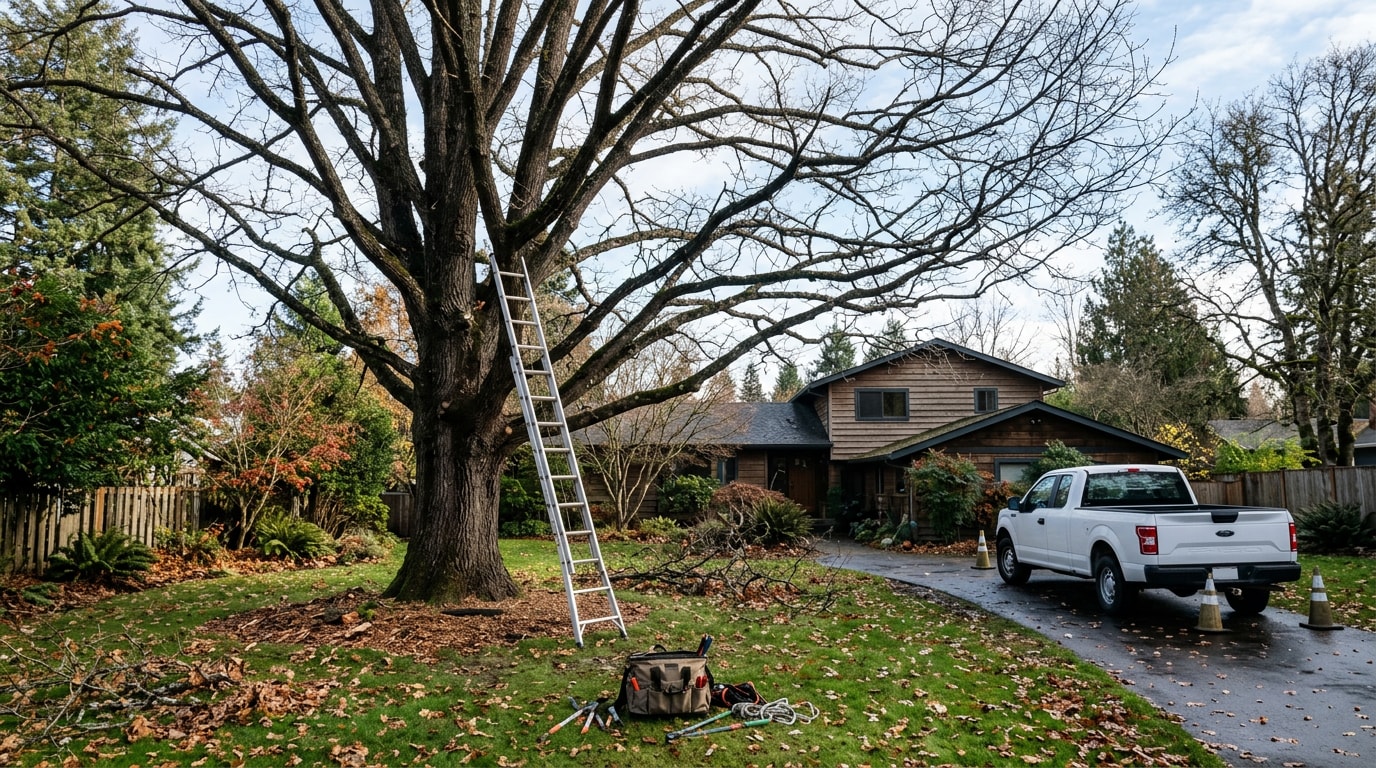
Small deadwood you can reach safely from the ground with hand tools is reasonable to handle yourself. Anything involving a ladder, large limbs, work near structures or power lines, or a mature tree over roughly 15 feet tall should go to a trained professional.
ISA-certified arborists bring real value here beyond safety. Certified arborists have met requirements including three or more years of full-time practical work experience in arboriculture, or a related degree from an accredited institution , which is part of why they can judge cut placement and disease risk in ways that are hard to assess from the ground. If your oak needs attention and you're not confident in the scope, reach out to discuss your tree's specific situation before making the first cut.
What It Costs to Have an Oak Tree Trimmed in Spokane Valley
Pricing depends mainly on tree size and height, how accessible the canopy is, how much material needs removing, and whether the work is routine maintenance or hazard cleanup after storm damage. A short, easily reached ornamental oak costs far less to maintain than a tall, mature tree growing close to a roofline or power line.
Storm or hazard cleanup tends to run higher than scheduled maintenance, since it often involves rigging and debris hauling with less predictable access. For a closer look at how these cost factors typically break down locally, see our guide on the average cost to trim a tree in Spokane, WA. Getting a property-specific quote is still the only reliable way to know what your particular tree will cost to trim safely.
Ready to get your oak trimmed without the guesswork? Get a free estimate and we'll walk your property with you before any cuts are made.
FAQ
How Much of an Oak Tree Can You Trim Without Killing It?
Most arborists stay under roughly a fifth to a quarter of live canopy per season. That ceiling is more conservative for mature, established oaks than for young saplings, which tolerate heavier pruning while they're still building structure.
How Often Should I Trim My Oak Tree?
Structural pruning on a mature oak is generally needed every three to five years. Light deadwood removal can happen more often without adding meaningful stress.
Can You Trim an Oak Tree in Summer?
Not ideally. Summer pruning leaves fresh wounds open during the growing season, when insect activity is elevated compared to a dormant-season cut.
What Happens If You Top an Oak Tree?
Topping removes so much structural wood at once that the tree can't seal the wounds properly. Decay sets in at the cut sites, and the regrowth that follows is weakly attached and prone to breaking in wind or storms, often creating a bigger hazard than the one topping was meant to fix.
Will Cutting Roots Kill an Oak Tree?
It can, especially if the cuts are close to the trunk or remove a large share of the root system. Oaks rely on their root network for both water uptake and stability, so root damage near construction, trenching, or grading is often more dangerous to the tree than canopy pruning.
Why Are My Oak Leaves Turning Brown After Trimming?
A few possibilities: normal post-pruning stress that resolves in a season, sunscald on bark that was suddenly exposed by canopy loss, or early decay at a poorly placed cut. Hold off on further pruning until you understand the cause.
Is Oak Wilt a Concern for Oak Trees in Spokane Valley, WA?
Classic oak wilt's confirmed range is concentrated in the Midwest, Appalachians, and Texas, not the Pacific Northwest. The more relevant regional watch-item is the Mediterranean oak borer, which has not been detected in Washington state as of the latest statewide survey but is being actively monitored. Either way, fresh wounds are the entry point both issues rely on, which is why timing and cut quality still matter here.
Can an Over-Trimmed Oak Recover?
Recovery is possible, especially for younger trees with good soil and water access, typically over two to three growing seasons. Older trees that lost a large share of canopy in one session have a harder, slower recovery path.
---
This guide was reviewed by the arborist team at CDA Tree, an ISA Certified Arborist-led crew serving oak and conifer properties throughout Spokane Valley, Spokane, Post Falls, and Coeur d'Alene. For a closer look at our pruning approach, read our branch removal guide for the region, or visit our homepage to see the full range of tree services we offer. Questions about a specific tree? Contact us anytime.