Branch removal in Coeur d'Alene, ID is the targeted cutting of dead, diseased, or hazardous limbs so the rest of the tree can stay standing and healthy. It costs less and does less damage to the tree than taking the whole thing down, but only if the right branches get cut the right way. Here's what actually drives the price, the warning signs worth walking your yard for, and why the wrong cut can cost you more later.
I'm an ISA-trained crew lead who has spent storm seasons across Kootenai County cutting limbs off maples, Ponderosa pines, and white pines after wind events. The pattern repeats every year: a branch that looked fine in August is on the ground by January, and the owner never saw the crack that caused it.
What Counts as Branch Removal (And What Doesn't)
Branch removal is the selective cutting of specific limbs, not the whole canopy and not the whole tree. It's a form of tree pruning that targets a defect or a hazard instead of shaping the tree's overall silhouette.
That distinction matters because it changes the job. Full tree removal takes out the entire tree, root system and all. Routine trimming usually focuses on appearance. Branch removal sits between the two — it solves a safety or health problem on one part of the tree while leaving the rest of it alone to keep growing.
Signs a Branch Needs to Come Down
Not every ugly branch is a real risk, and not every risky branch looks ugly. Walk your yard and check for these:
- Cracks or splits where a branch meets the trunk
- Deadwood — branches with no leaves or bark, brittle to the touch
- Included bark — a V-shaped union where bark grows pinched between branch and trunk instead of a strong rounded joint
- Fungal growth on bark or at the base of a limb
- A noticeable lean or a heavy branch hanging over a roof, driveway, or fence
Included bark unions deserve extra attention. University extension research on hazard tree defects notes that branch unions can be categorized as U-shaped or V-shaped based on their angle of attachment, and in general, U-shaped unions are stronger, whereas V-shaped unions indicate narrow angles of attachment . That weakness is often invisible until the branch is already on the ground. If you're spotting several of these signs, it's worth having a tree assessment done before the next windstorm makes the call for you. Our guide on falling tree warning signs in Coeur d'Alene covers the full-tree version of this same risk.
How Much Does Branch Removal Cost in Coeur d'Alene?
Cost is the first question almost every homeowner asks before booking. Branch removal cost in Coeur d'Alene varies by job, but a handful of factors drive the final number every time.
Factors That Affect the Price
Branch size, height, and how accessible the tree is from the ground move the quote the most. A limb over a roof, tangled in a fence, or near power lines usually requires rigging or specialized equipment, which adds time and labor. Debris volume, hauling distance, and seasonal demand — storms spike demand fast — also factor in.
| Task | Typical Range |
|---|---|
| Small branch removal (under 4") | $75–$200 |
| Large limb removal | $200–$600 |
| Rigging over roof/structure | $400–$1,200+ |
| Emergency storm branch removal | $300–$900 |
| Debris hauling only | $75–$250 |
These are general planning ranges, not a quote. Actual pricing depends on an on-site look at your specific tree and property. If budgeting across a bigger project, our tree removal cost guide for the Spokane area breaks down how whole-tree pricing compares to branch-level work.
Canopy Thinning: The Technique Behind Most Branch Removal Jobs
Local specialists use a handful of proven techniques to remove problem branches without harming the rest of the tree. One of the most useful for Coeur d'Alene's dense residential lots is canopy thinning — removing selected branches scattered through the crown so light and air can pass through, without changing the tree's overall shape.
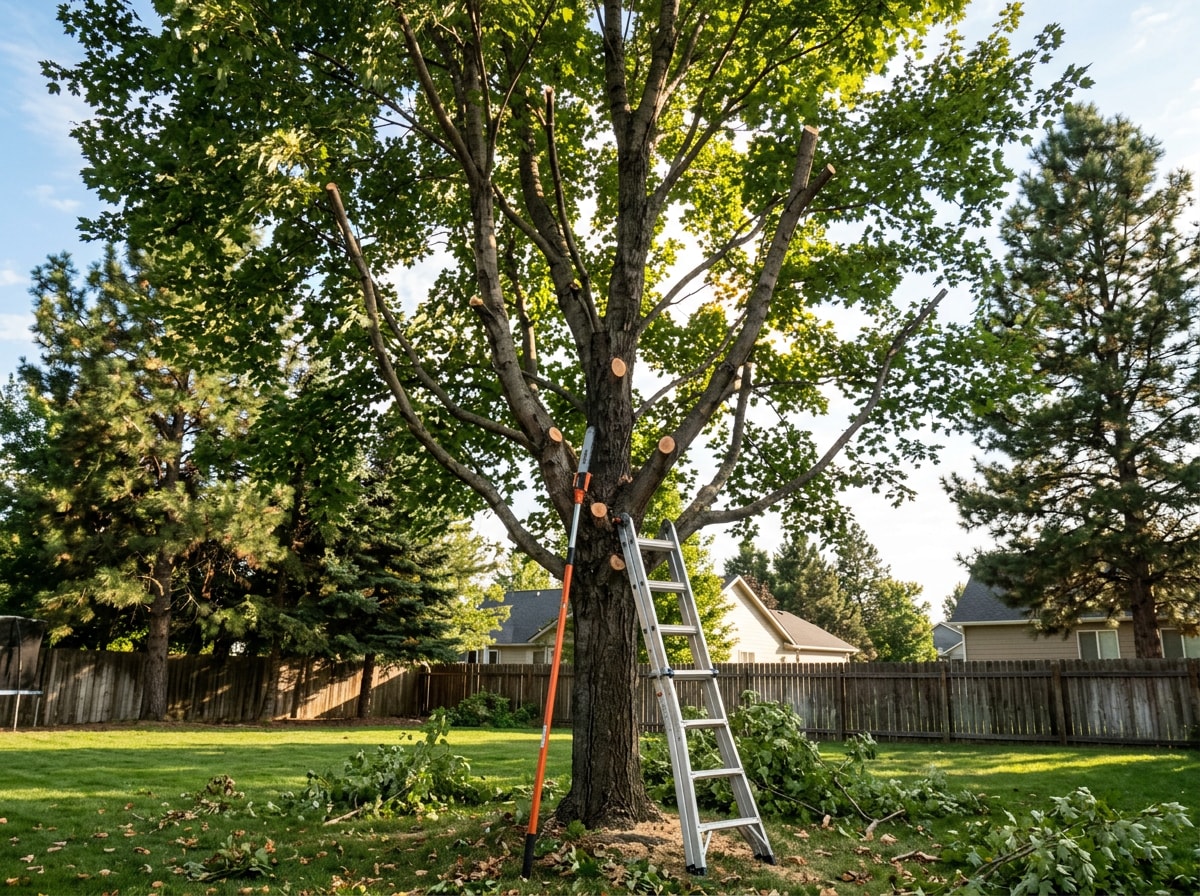
For homeowners, the payoff shows up on the ground. Thick canopies trap moisture and shade out lawns and garden beds underneath them. Opening the canopy with a few well-placed cuts improves airflow, which cuts down on the damp conditions that feed fungal growth and lets grass and plants below get the sunlight they need.
Storm Damage and Yard Debris Cleanup
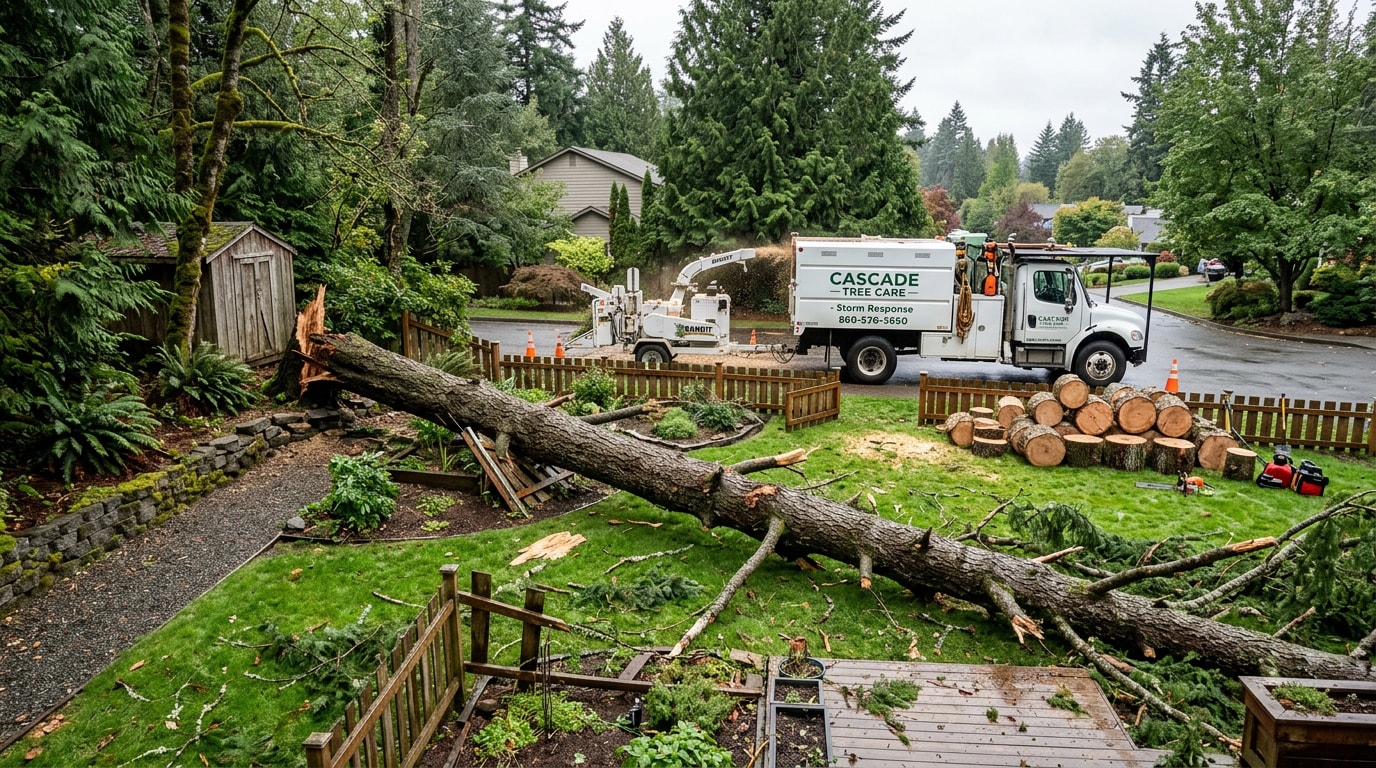
Branch removal jobs cover more than a single problem limb. Broken branches, storm-downed limbs, and split sections are common after the wind events that roll through Coeur d'Alene, especially in late fall and winter. Debris can range from small twigs to limbs heavy enough to damage fencing, vehicles, or outbuildings if left where they fall.
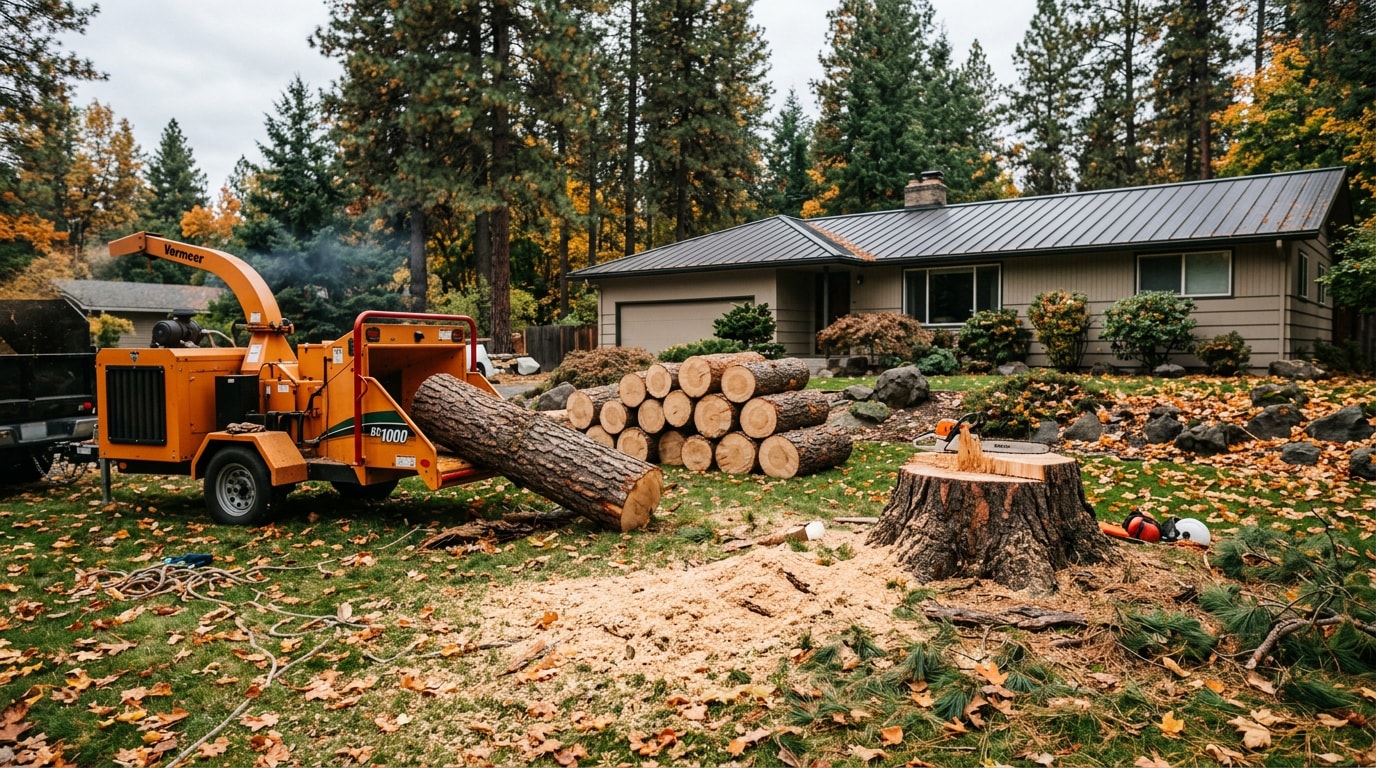
You don't need to drag, cut, or haul any of it yourself. A storm tree cleanup crew handles the cutting, hauling, and full cleanup in one visit, so the only thing left behind is a clear yard. If a limb is already down and blocking a driveway or resting on a structure, emergency tree removal is the faster path — don't wait for a scheduled appointment on something that's actively a hazard.
Why Topping Isn't a Shortcut
Homeowners sometimes ask about just cutting a tall branch back to a stub instead of removing it properly. That's called topping, and it's not a shortcut — it's a setup for a bigger problem. A government-hosted ISA consumer brochure on the practice explains that topping is perhaps the most harmful tree pruning practice known , because topping can remove 50 to 100 percent of a tree's leaf-bearing crown , which is the part of the tree that actually feeds it.
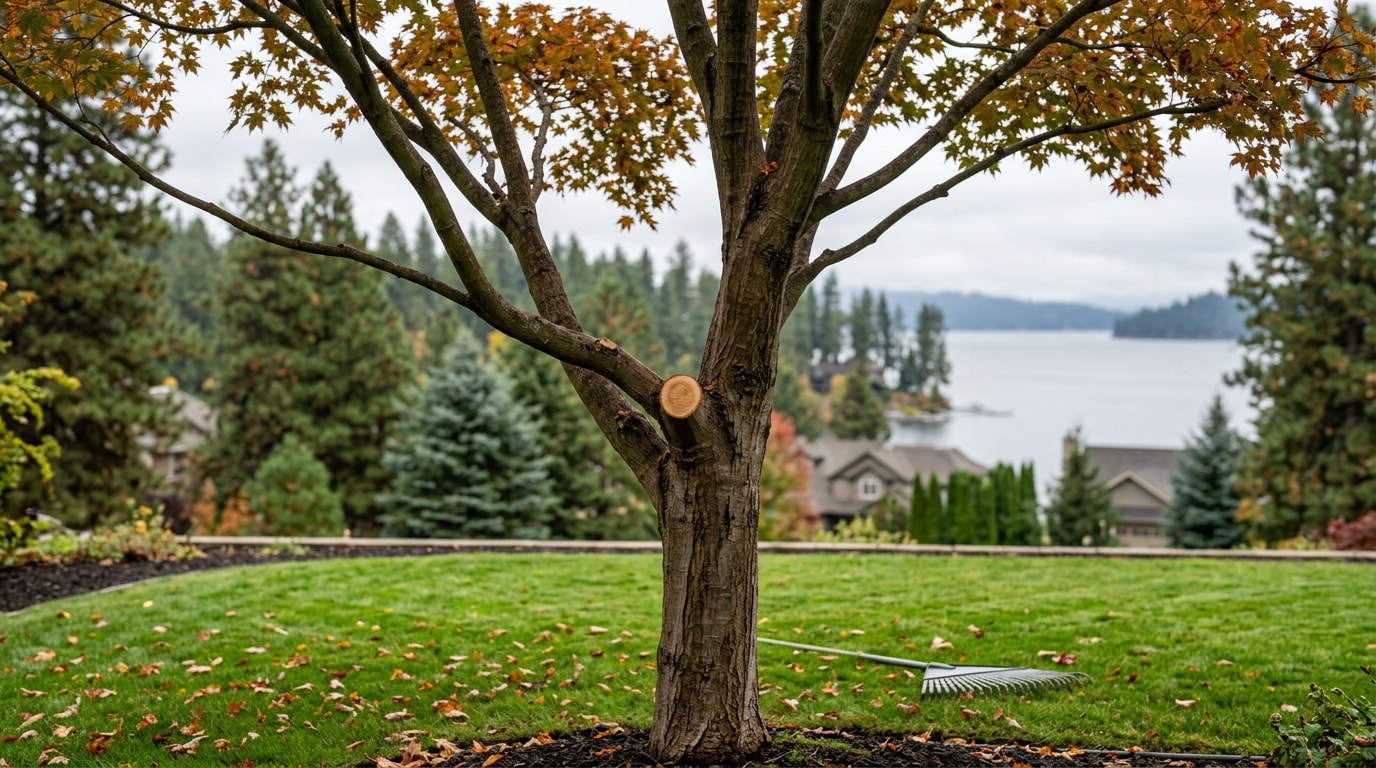
The regrowth that follows is weakly attached and prone to breaking in the next wind event, which just creates another branch removal job down the road. Proper branch removal, by contrast, cuts just outside the branch collar so the tree can seal the wound and keep growing normally.
Hiring the Right Crew
Before you hire anyone for branch work on a mature tree, ask how the cuts will be made and whether they follow ANSI A300 pruning standards. The national trade association for tree care recommends checking that any company you hire has access to the most recent information on tree care practices, and that they are insured and/or bonded to protect you and your valuable property . A five-minute phone call on insurance and certification saves a lot of regret later.
Ready to get a clear look at what your trees need? Request a free branch removal estimate from our Coeur d'Alene crew, or browse our tree service options to see the full range of what we handle.
FAQ
What time of year is best for removing branches?
Hazardous or dead branches should come down as soon as they're noticed, regardless of season. Routine health pruning is best scheduled during the dormant season — late fall through early spring — since trees handle the cuts with less stress and lower disease risk.
Is topping a tree a good way to remove high branches?
No. Topping triggers weak regrowth, stresses the tree, and opens it up to decay and future limb failure. It also doesn't solve the underlying size or clearance problem long-term, so the job usually has to be redone.
Is tree pruning the same as tree trimming?
Not quite. Trimming generally addresses shape and appearance, while pruning — including branch removal — targets tree health, structure, and hazard mitigation. Both matter, but they solve different problems.
When should a whole tree be removed instead of just a branch?
If the trunk itself is cracked, hollow, leaning more than it used to, or has fungal growth at the base, the problem usually isn't limited to one branch. A hazard tree removal assessment can tell you whether trimming the problem branch is enough or whether the whole tree needs to come down.
How often should trees be trimmed?
Most established trees do well with pruning every 2 to 3 years. Young trees benefit from more frequent, lighter structural pruning to build strong branch spacing early, which reduces the number of emergency branch removals later in the tree's life.
What happens to the branches after removal?
Removed branches are hauled away and processed responsibly, often mulched or composted rather than sent to a landfill. Cleanup is part of the service, so nothing gets left piled in your yard.