Falling tree removal in Coeur d'Alene, ID is rarely something homeowners plan for. It's the call you make after a lakefront gust snaps a limb, a trunk cracks overnight, or a pine you've never worried about suddenly looks ready to come down. Here's how to read the warning signs, act fast, and get a safe removal done right.
Warning Signs a Tree Is About to Fail
A hazardous tree usually shows at least one of five visible warning signs before it fails. Catching these early gives you time to act before wind or snow load forces the issue.
Walk the tree slowly and check each of these:
- Lean angle — any new or worsening tilt, especially after wind or rain
- Root-plate heaving — soil lifting or cracking near the base, a sign roots are already failing
- Cracked or split trunk — vertical seams, especially ones that open and close in wind
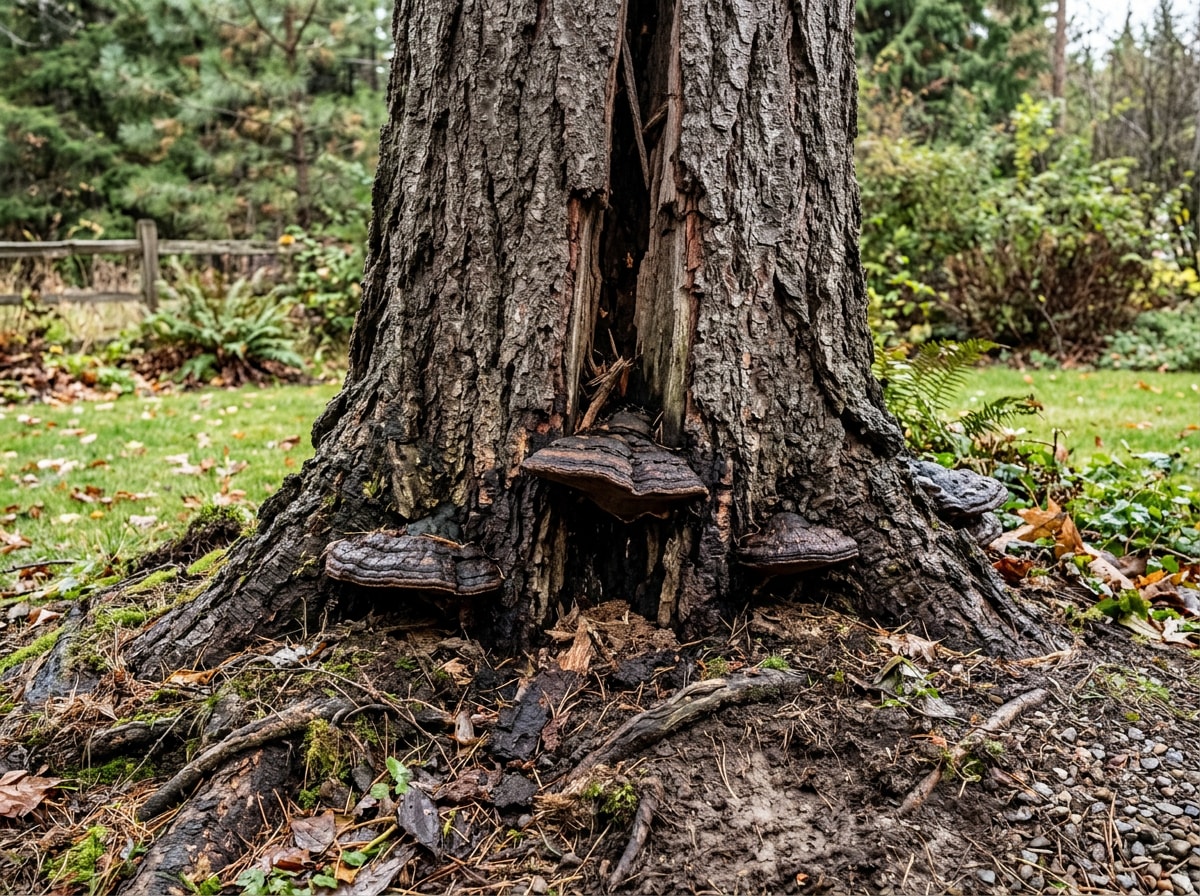
- Fungal growth at the base — mushrooms or conks often signal internal rot
- Dead canopy percentage — a canopy that's noticeably more than a quarter dead points to structural weakness throughout
If more than one of these signs is present, treat the tree as unstable. A single gust can be enough to bring it down once the internal structure has given way, and it doesn't take a full windstorm to do it.
Why Coeur d'Alene Trees Become Hazardous
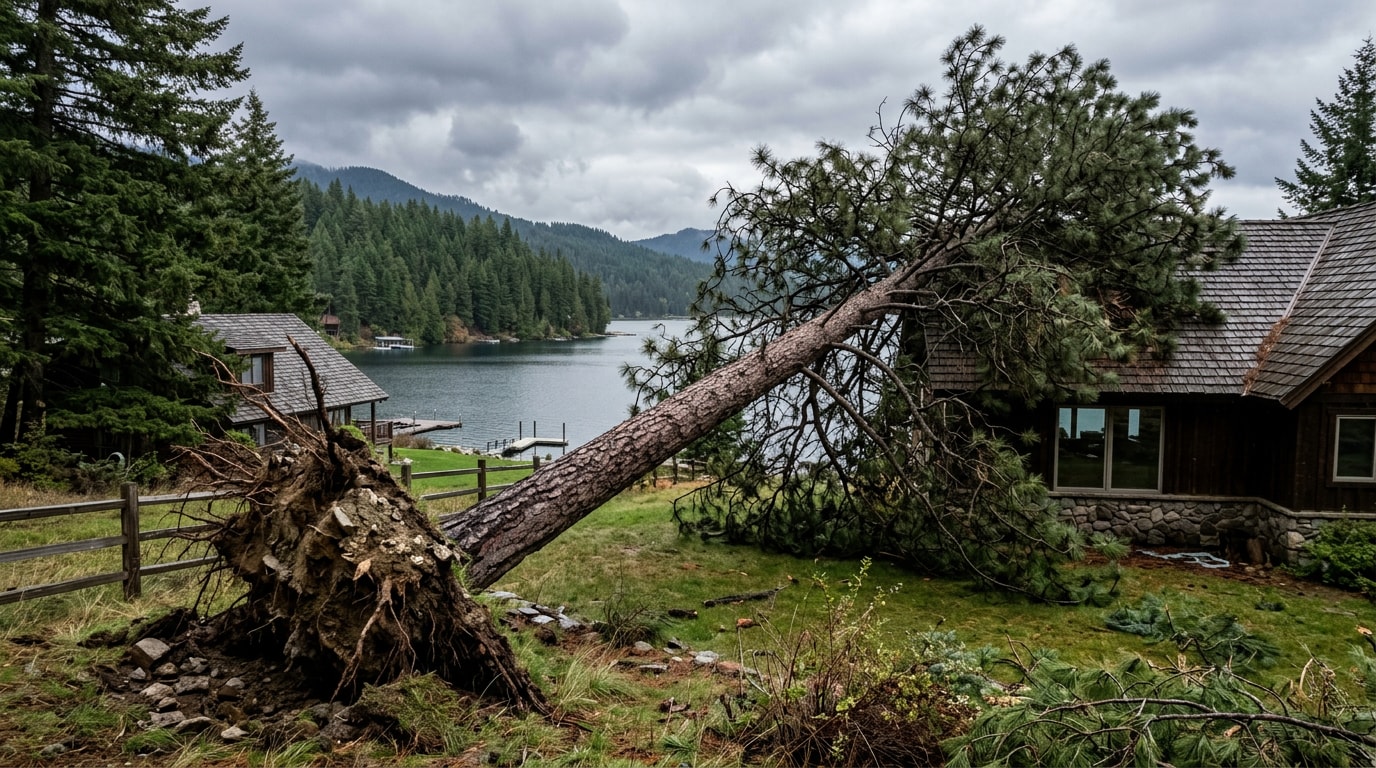
North Idaho's mix of lakefront wind exposure, heavy winter snow loads, and shallow-rooted species creates ideal conditions for falling tree risk. Ponderosa pine and Douglas fir, the two most common large trees in the area, often develop root systems that stay shallow in the region's rocky, compact soils, which is fine in calm weather but a liability once gusts pick up off Lake Coeur d'Alene.
The Inland Northwest sees real damaging-wind events, not just breezy afternoons. A historic 2015 windstorm produced a max wind gust of 71 mph at Geiger Field , and the resulting outages left 83% of customers in the hardest-hit area of Spokane without power for 5 days . More recent events have brought similar risk closer to home: regional forecasters have warned of gusts in the 50-60 mph range specifically for the Coeur d'Alene area during spring wind systems. Add snow and ice loading in winter, and an otherwise healthy-looking tree can become hazardous almost overnight.
What to Do If a Tree Is Leaning or Already Down
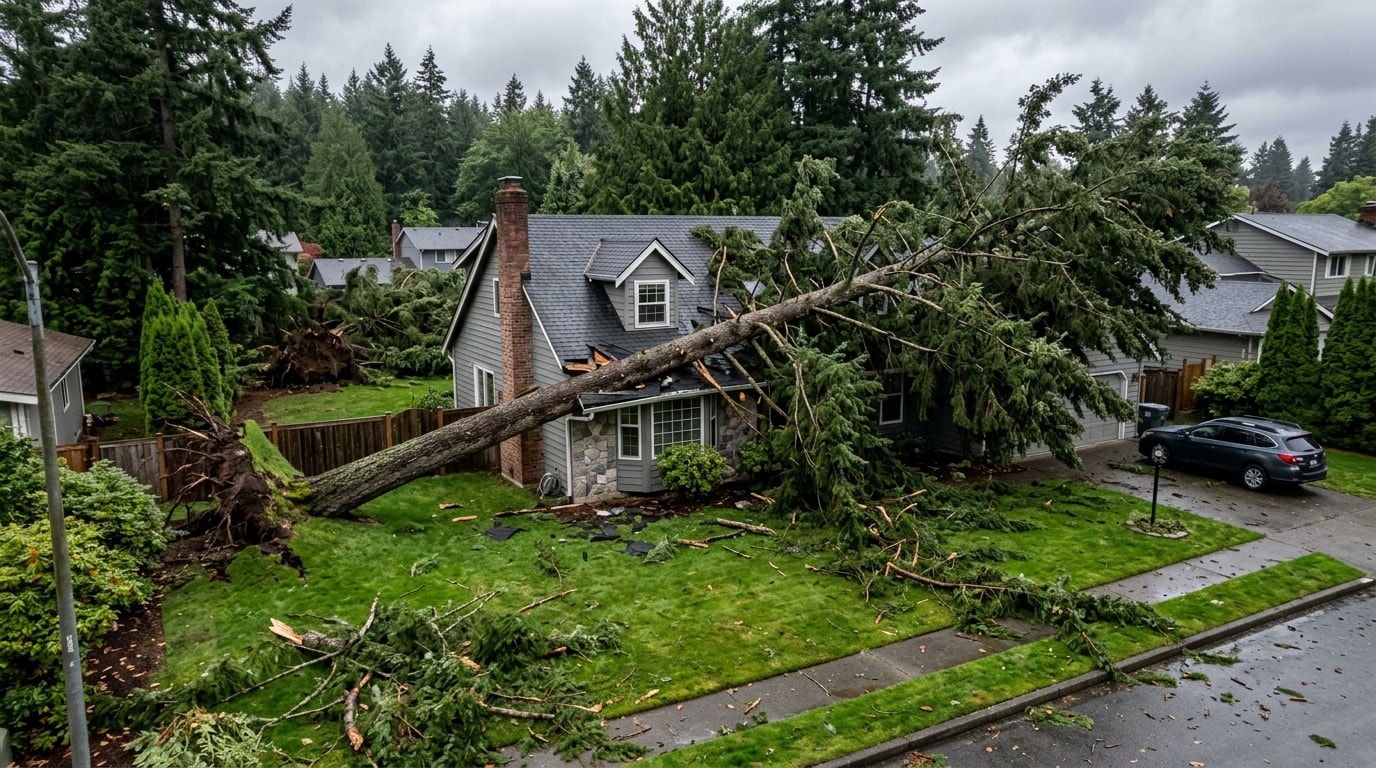
If a tree is actively leaning, cracking, or has already fallen, the priority is keeping people clear, not assessing the tree yourself.
- Clear the area — keep people, pets, and vehicles out of the potential fall zone, including anywhere the canopy could reach if it tips further.
- Check for power lines — if the tree is touching or near a line, stay back and treat every wire as live until the utility company confirms otherwise.
- Don't cut anything yourself — a leaning or partially fallen tree can shift unpredictably the moment weight is removed from any part of it.
- Call for emergency tree removal — a trained crew can assess lean direction, tension, and structural failure before making the first cut.
- Document the damage — photos of the tree and any property damage help if you end up filing an insurance claim later.
Acting on these steps first, before trying to evaluate the tree's condition yourself, is what keeps a bad situation from becoming a dangerous one.
How Professional Crews Plan a Safe Removal
Once a hazardous tree is confirmed, the next step is building a removal plan around the tree's size, lean direction, and proximity to structures, power lines, or fences. This is what separates a controlled removal from a dangerous guessing game.
Crews typically plan directional felling to guide the tree away from the house, rig and lower heavy sections piece by piece rather than letting them drop, and clear a safe work zone before any cuts are made. The goal throughout is simple: minimize property damage while keeping the crew and homeowners well clear of the fall zone.
A tree assessment before the job starts is what determines which of these methods applies, since a tree already leaning toward a structure requires a very different plan than one that's simply dead and upright.
Falling Tree Removal Services We Provide
When a tree is already failing, two services matter most: removal for trees that are down or actively unsafe, and trimming to prevent the next one from reaching that point.
Tree Removal
Tree removal in a falling-hazard context looks different from routine yard maintenance. It typically involves a tree that's already leaning dangerously, partially fallen, or storm-damaged to the point of structural failure, not simply an unwanted tree someone wants cleared for landscaping.
These jobs often move faster than standard removals, since a storm-damaged tree can keep shifting or dropping limbs while the crew works. For trees that are already dead standing but haven't fallen yet, dead tree removal addresses the hazard before a storm does it for you.
Tree Trimming and Pruning
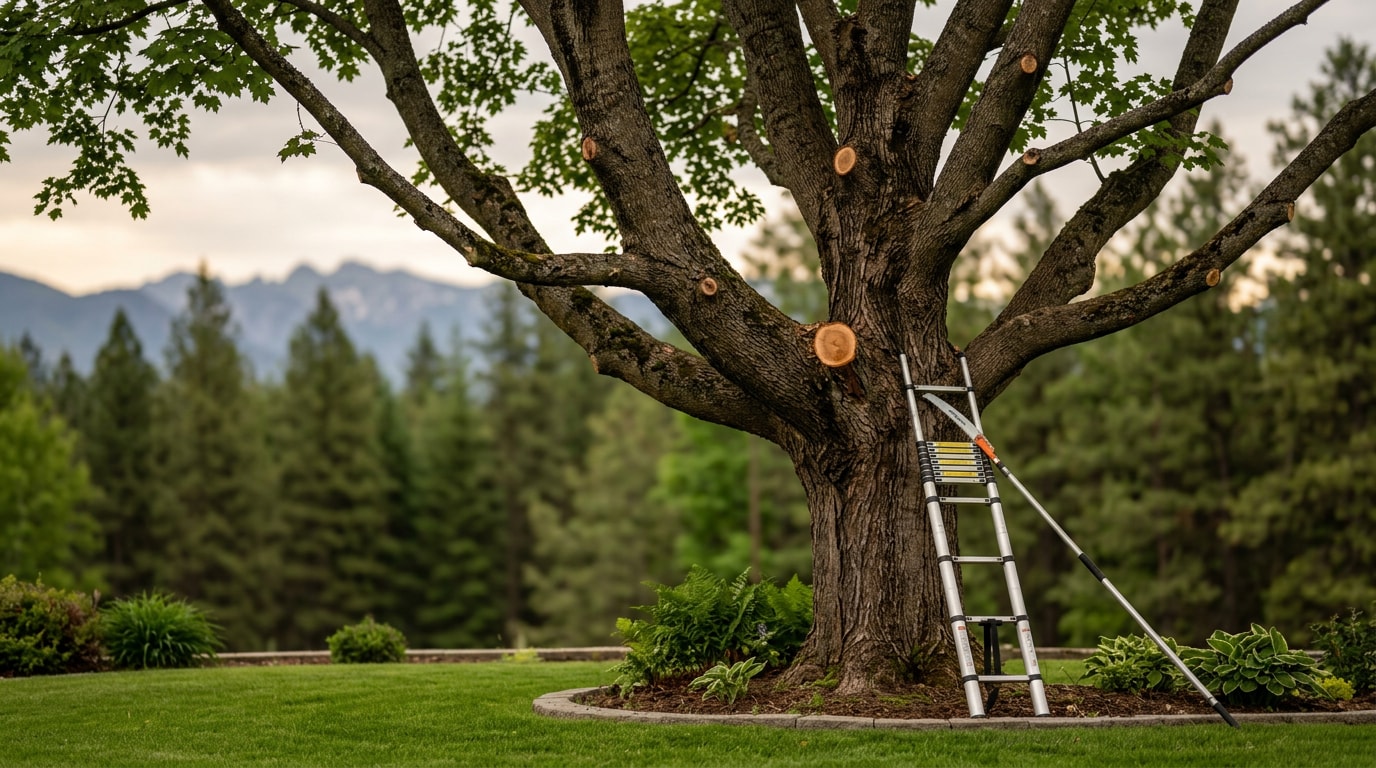
Tree trimming and tree pruning are the preventive side of the equation, removing deadwood and reducing canopy weight before a tree becomes a hazard in the first place. This kind of preventive care is especially common in downtown and lakefront neighborhoods, where mature trees sit close to homes, sidewalks, and power lines.
Regular pruning also improves a tree's wind resistance by reducing sail area in the canopy, which matters during Coeur d'Alene's windier seasons. After a major blow, storm tree cleanup covers the broken limbs and debris left behind even when the tree itself didn't fall.
Crane-Assisted Removal: When It's Needed and What It Costs
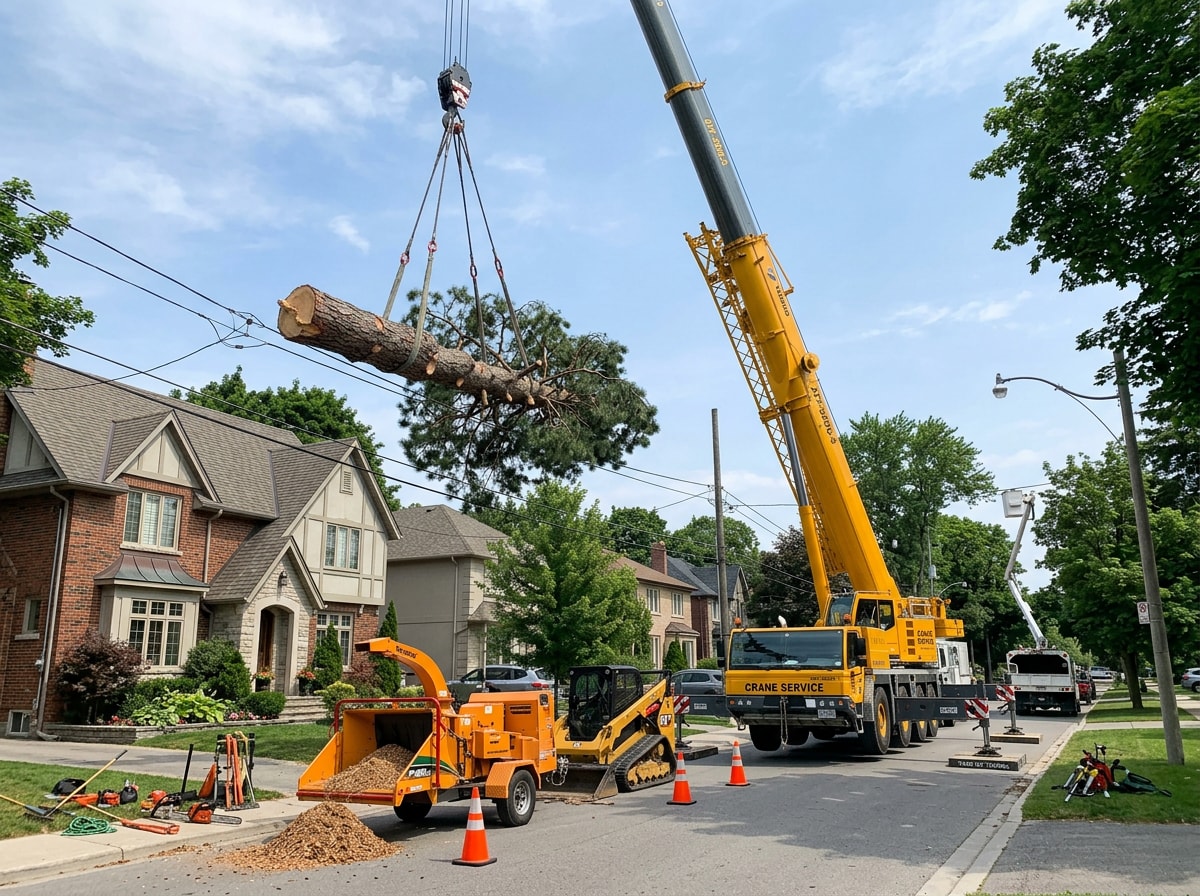
Crane-assisted removal becomes necessary when a large ponderosa pine or Douglas fir sits too close to a home for safe rigging, or when structures surround the tree with no clear drop zone. In these cases, a crane lifts sections straight up and away instead of lowering them through tight spaces by rope.
| Factor | Standard Removal | Crane-Assisted Removal |
|---|---|---|
| Technique | Directional felling or sectional rigging | Crane lifts sections vertically |
| Best for | Open yards with a clear drop zone | Tight lots, tree hugging the house |
| Equipment needed | Chainsaws, ropes, rigging | Crane, rigging, ground crew coordination |
| Relative cost | Lower | Higher, due to crane mobilization and operator time |
Pricing varies with tree size, access difficulty, and crane time required, but crane-assisted jobs typically cost more than a standard ground-based removal once mobilization and setup are factored in. A cost estimate specific to your property should account for driveway access, overhead lines, and how close the tree sits to the structure itself. If you're also weighing how long the job itself will take, this breakdown of tree removal timelines in Coeur d'Alene walks through what affects the schedule.
Emergency Response Times in Coeur d'Alene
True emergencies, a tree on a structure, vehicle, or power line, call for a different response than a scheduled removal. Emergency crews typically aim for same-day or next-available response depending on storm volume and hazard severity.
If a downed tree involves a power line, stay well clear of both the tree and the line until the crew and utility company confirm it's de-energized. Storm damage after major wind events can delay response slightly simply due to call volume, so flagging a true emergency clearly when you call helps get a crew out faster.
Why Local Expertise Matters
A crew that works North Idaho terrain daily understands the difference between a healthy ponderosa pine and one that's quietly failing, something an out-of-area provider may miss. Terrain, soil type, and local permitting rules vary block by block near the lake, and a crew unfamiliar with these specifics can end up proposing the wrong removal method or missing a required permit step.
CDA Tree and Utility LLC is a family-owned tree service built on 30 years of professional arborist experience , and the company is a licensed Idaho contractor led by owner Josh Williamson. That background means a crew that has watched three decades of North Idaho winters and windstorms decide which trees make it through and which don't, and applies that judgment on every hazard call. You can see examples of recent work on the projects page.
Serving Coeur d'Alene and Surrounding Areas
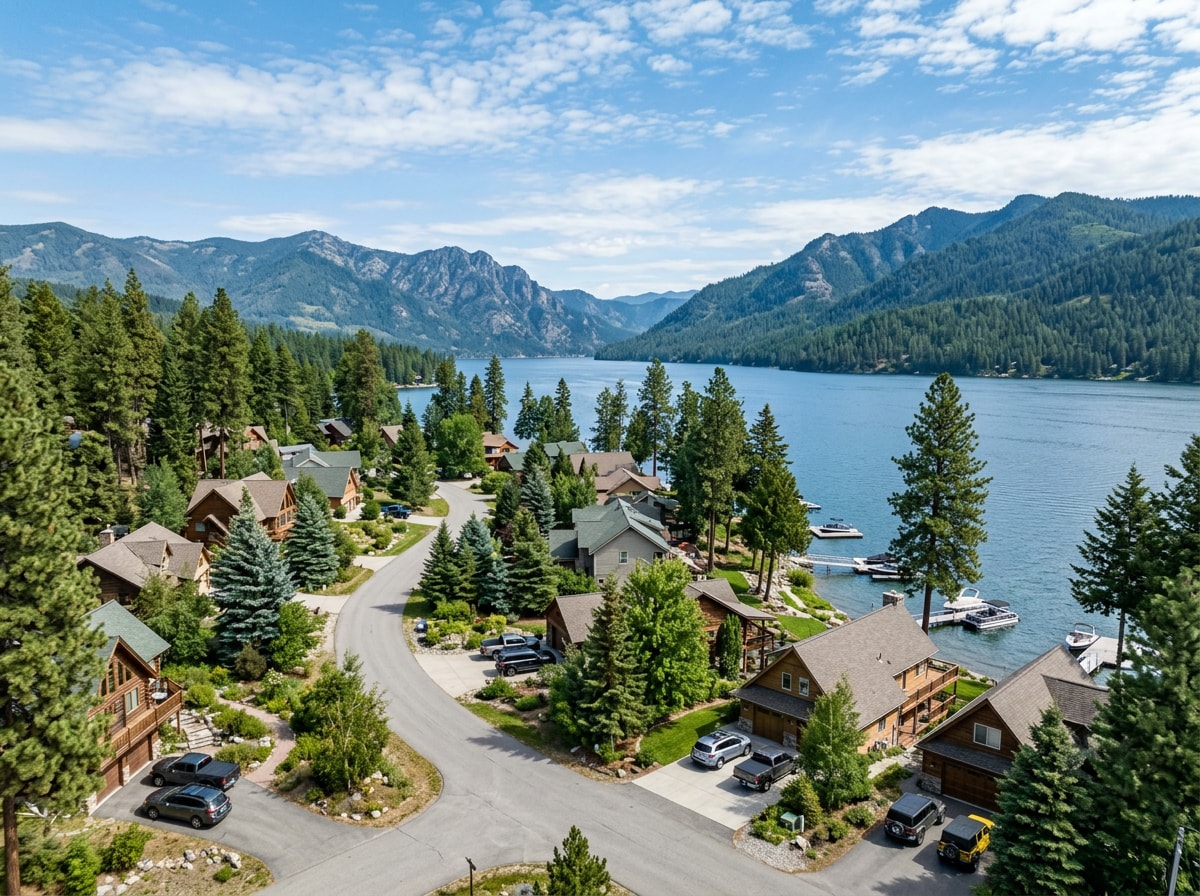
Coverage extends across downtown Coeur d'Alene, Sanders Beach, the Garden District, and the Fernan Lake area, along with nearby Post Falls, Spokane, and Spokane Valley. Properties throughout this part of North Idaho share a common challenge: proximity to both water and mountainous terrain, which drives much of the wind exposure and root instability discussed earlier.
See the full Coeur d'Alene service area details for neighborhood-specific coverage, or visit the homepage for a full look at every service offered. If a tree on your property is already leaning, cracked, or down, contact us for a free estimate and same-day scheduling when conditions allow.
FAQ
How do I know if a tree is hazardous and needs removal?
A tree is likely hazardous if it shows a new lean, cracked trunk, heaving roots, fungal growth at the base, or a canopy that's noticeably more than a quarter dead. If more than one sign is present, treat the tree as unstable and avoid spending time underneath it until it's evaluated by a professional.
Can I remove a hazardous tree myself?
DIY removal is discouraged for any tree showing hazard signs, especially one near a home, fence, or power line. Reading lean direction, internal rot, and weight distribution correctly takes training, and getting it wrong can cause the tree to fall unpredictably. The risk isn't hypothetical: tree care work in the U.S. has averaged about 80 worker deaths a year , which is why professional crews use rigging and retreat paths that most homeowners don't have on hand.
Do I need a permit to remove a tree in Coeur d'Alene?
It depends on where the tree sits. The city requires permits for planting, pruning, root pruning, and removing trees within the public right-of-way , and there's no charge for the permit itself . A separate hillside ordinance also requires permitting for certain private tree removals on steeper lots. A hazard tree removal service familiar with local code can confirm whether your property falls under either rule before work starts.
Who is responsible for removing a fallen tree?
Generally, whoever owns the property where the tree lands is responsible for its removal, regardless of whose yard the tree originally grew in. This principle holds in most property line disputes, though exceptions can apply if negligence or a prior-known hazard was ignored. Storm-related falls complicate this slightly, since insurance often plays a bigger role than property boundaries alone.
Does homeowners insurance cover fallen tree removal?
It depends on whether the fallen tree caused damage. Standard coverage applies to trees felled by wind, lightning, or hail , and if a tree lands on your home, you can file a claim with your insurer . But if the tree falls without damaging any structure, insurance usually won't cover the cost of clearing it away . Policy details vary by carrier, so confirming coverage before assuming it applies is worth the extra step.
How much does falling tree removal cost in Coeur d'Alene?
Cost depends on tree size, lean direction, how close it sits to structures or power lines, and whether crane assistance is needed. Standard removals with a clear drop zone cost less than jobs requiring crane mobilization or extensive rigging around a home. The fastest way to get an accurate number is a free estimate based on your specific property.