How long does it take to cut down a tree in Coeur d'Alene, ID? Most residential removals run anywhere from 30 minutes to a full day, and the gap between those two numbers comes down to size, location, and condition. Here's exactly what shapes that timeline on a North Idaho property, broken down size by size so you can plan around it instead of guessing.
The Quick Answer: How Long Tree Removal Really Takes
Tree removal typically takes between 30 minutes and a full day, with most residential jobs landing in the 2-to-8-hour range. The exact timeline depends on five variables: tree size, location, condition, site access, and whether specialized equipment is required.
A small ornamental tree with clear access might come down before lunch. A mature ponderosa pine tangled near power lines could take an entire day, sometimes longer if scheduling or hazard mitigation gets involved. Coeur d'Alene adds its own wrinkle here: North Idaho's mix of towering ponderosas, grand firs, and tightly spaced residential lots means crews often need extra time just to plan a safe drop zone before the first cut happens.
If you're trying to pin down a timeline for your own property, a free estimate from a local crew will give you a far more accurate number than any size chart.
Average Tree Removal Time by Size
Tree size is the single biggest predictor of removal time, and it's the easiest variable for homeowners to estimate before ever calling a crew. The catch is that companies don't fully agree on where "small" ends and "medium" begins, so instead of repeating one source's chart, here's a side-by-side look at how three published tree service guides break it down, plus a reconciled range you can actually plan around.
| Source | Small | Medium | Large | Very Large |
|---|---|---|---|---|
| ADM Tree Services | Under 25 ft: 30 min to 1 hr | 25 to 50 ft: 1 to 3 hrs | 50 to 75 ft: 3 to 6 hrs | 75+ ft: Full day or more, sometimes multiple visits |
| Prees Tree Service | Under 20 ft: 30 min to 2 hrs | 20 to 50 ft: 2 to 5 hrs | 50 to 80 ft: 5 to 10 hrs | 80+ ft: Extra time for complex or multi-tree jobs |
| Ole Man RB's | Under 30 ft: 30 min to 2 hrs | 30 to 60 ft: 2 to 4 hrs | 60+ ft: 4 to 8 hrs or more | Not broken out separately |
| Reconciled estimate | Up to ~25 to 30 ft: 30 min to 2 hrs | ~25 to 60 ft: 1 to 5 hrs | ~50 to 80 ft: 3 to 10 hrs | 80+ ft: Full day to multiple days |
Small Trees
Small trees under roughly 20 to 30 feet typically take 30 minutes to 2 hours to remove, and most can come down without heavy rigging or sectional cuts. Cleanup often takes nearly as long as the actual cutting.
The size cutoffs vary by source, some guides define "small" as under 20 feet, others stretch it to under 30, so treat "small" as a loose category rather than a fixed rule. A young maple in an open front yard is a quick job either way.
Medium Trees
Medium trees, generally 25 to 60 feet tall, usually take 1 to 5 hours depending on which source you check. If the tree sits near a structure, fence, or garden bed, crews typically switch to sectional removal, cutting it down in manageable pieces rather than felling it whole.
At this size, chipping branches and hauling logs start to eat up a noticeable chunk of the job. A 30-foot tree in an open lot moves faster than one wedged between a house and a shed.
Large Trees
Large trees between 50 and 80 feet commonly run 3 to 10 hours, often filling half a day to a full day. That's the range where a 60-foot tree removal stops being a quick afternoon task and becomes a scheduled project.
Tight spaces, nearby hazards, or awkward lean angles push these jobs toward the longer end. Crews may need extra rigging just to control where each section lands.
Very Large Trees
Very large trees above 80 feet typically require a full day, and sometimes stretch into a multiple-day project when equipment, crew size, or staging needs scale up. This tier covers the old-growth ponderosa pines common across Coeur d'Alene yards, many of which clear 80 to 100-plus feet.
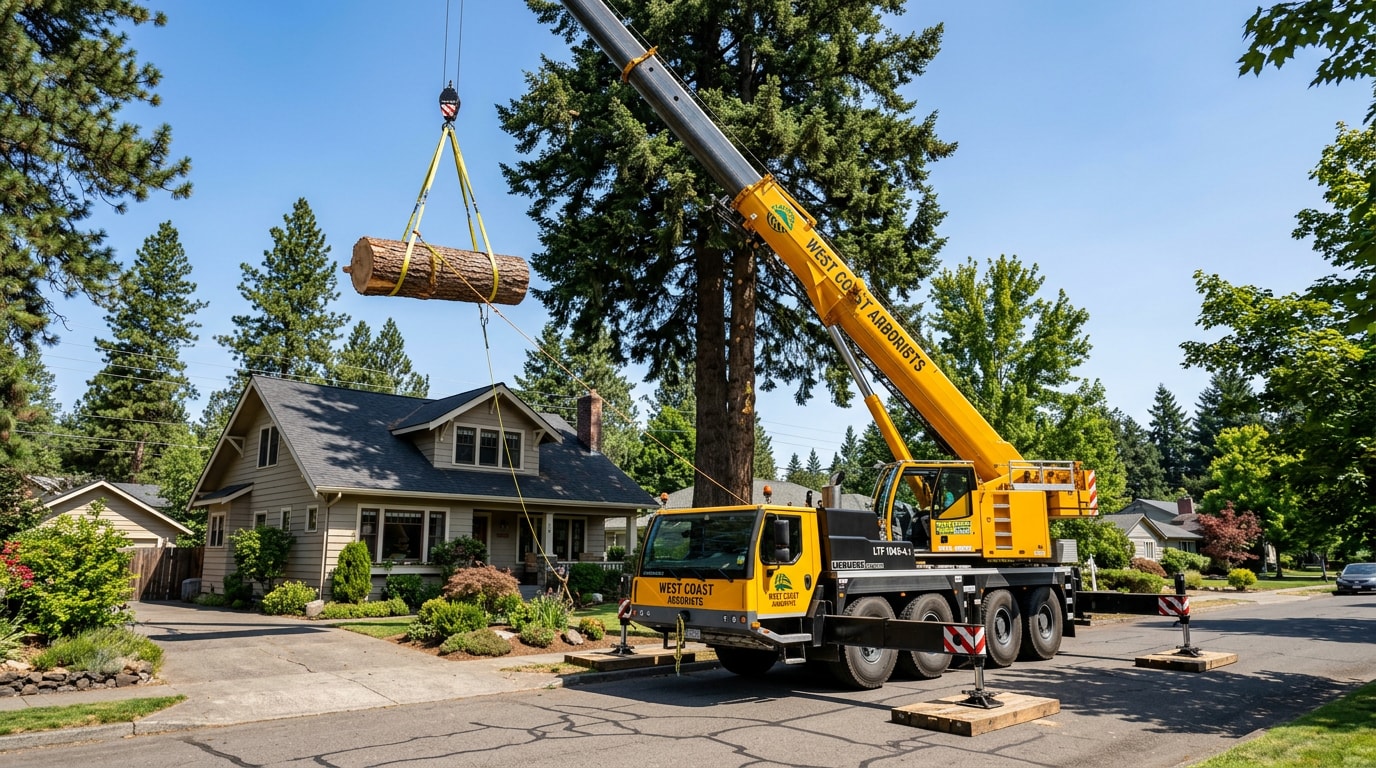
These jobs often call for cranes, bucket trucks, or additional ground crew to manage the volume of material safely. If you're dealing with a tree this size, it's worth reviewing the tree removal services a local crew offers before assuming a standard quote applies.
What Factors Affect How Long Tree Removal Takes?
Size gets most of the attention, but tree removal duration really comes down to five overlapping categories: the tree's own characteristics, site constraints, hazard level, equipment needs, and overall scope of the job. Understanding these helps explain why two "medium" trees can take very different amounts of time.
Tree Size and Species
A 20-foot ornamental tree and an 80-foot oak are not comparable jobs. Bigger trees mean more cuts, more rigging, and more material to haul away. Species matters almost as much as height, since denser hardwoods weigh more and slow down both cutting and hauling.
Coeur d'Alene's landscape leans heavily on grand fir, cottonwood, and ponderosa pine, all of which process differently than faster-cutting ornamental species like flowering cherry or crabapple. Crews factor this in when estimating a timeline. Utah State University Extension's breakdown of wood density confirms that hardwoods tend to pack more mass per volume than softwoods like pine, which is part of why a hardwood tree of the same height can take longer to buck and haul.
Tree Location and Accessibility
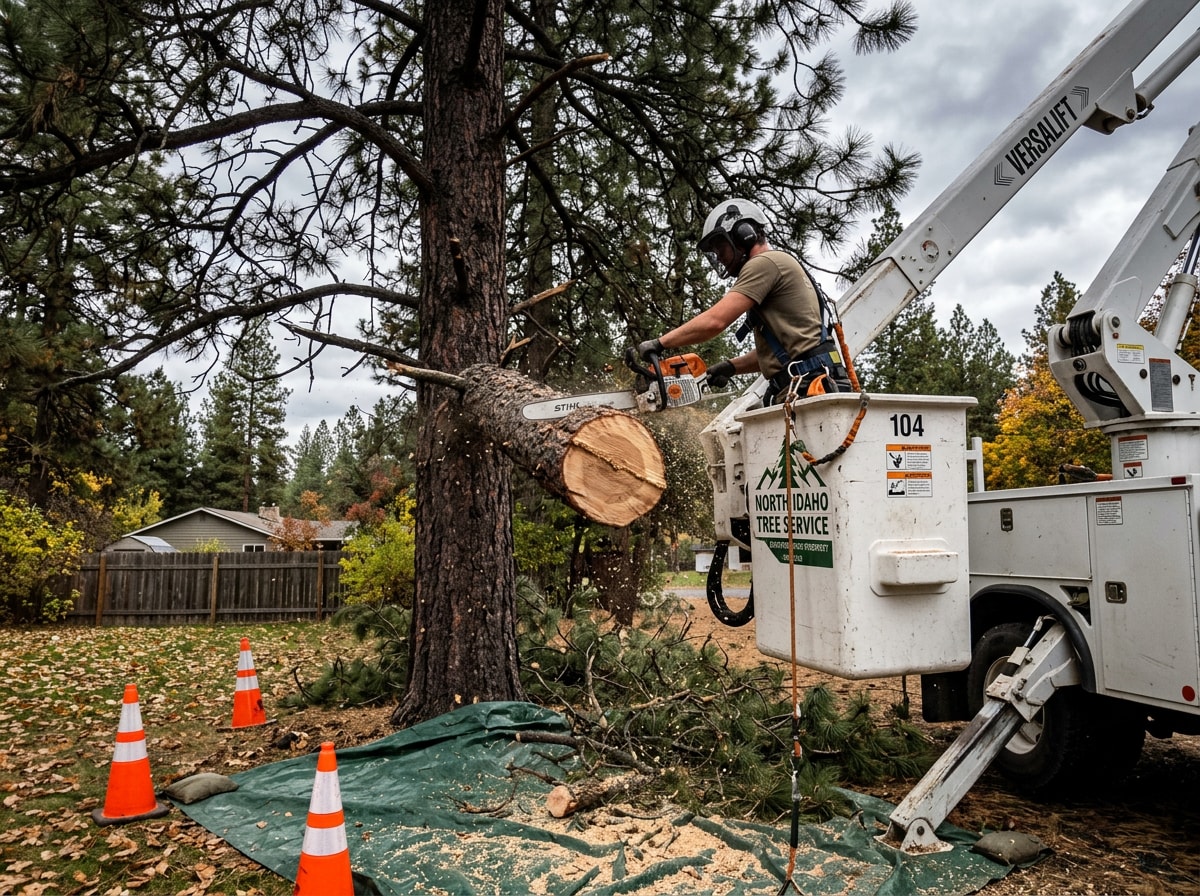
Proximity to a house, fence, shed, or power line slows almost every job. Instead of a direct fell, dropping the whole tree in one motion, crews near structures have to switch to sectional removal, cutting and lowering pieces with rigging to avoid damaging siding, roofing, or landscaping.
This careful, piece-by-piece approach takes longer but protects the property. Backyard trees boxed in by fences or garden beds often take noticeably more time than the same tree standing in an open field.
Tree Condition
Dead, storm-damaged, split, or decayed trees generally take longer, not because they're bigger, but because they demand slower, more cautious work. Weak wood can shift or break unpredictably, so crews add extra safety checks before and during each cut.
This is a detail that's easy to overlook when estimating time from size alone. A hazard tree may be shorter than a healthy one nearby and still take longer to bring down safely. OSHA's tree care standards page lists falling trees and branches, electrical contact, and chainsaw injuries among the leading causes of serious incidents in this industry, which is exactly why crews slow down on compromised trees rather than speed up. If a tree on your property is dead, leaning, or storm-damaged, a hazard tree removal assessment before cutting day helps the crew plan for the added time correctly instead of guessing on-site.
The Tree Removal Process, Step by Step
Knowing the phases of a removal makes the overall time estimate feel less arbitrary. Most jobs follow a similar sequence, even though the hours spent in each phase shift based on the tree.
- Arrival, walk-through, and safety setup (15 to 45 minutes). The crew confirms the scope of work, checks for hazards like power lines or weak limbs, and marks off a safe work zone.
- Limb removal and canopy dismantling (the longest phase on most jobs). This is where the bulk of the day goes, especially when there are targets like a roof, fence, or garden below that require a controlled, methodical order of cuts.
- Trunk sectioning. Once the canopy is cleared, the crew cuts the remaining trunk down into manageable log-sized pieces.
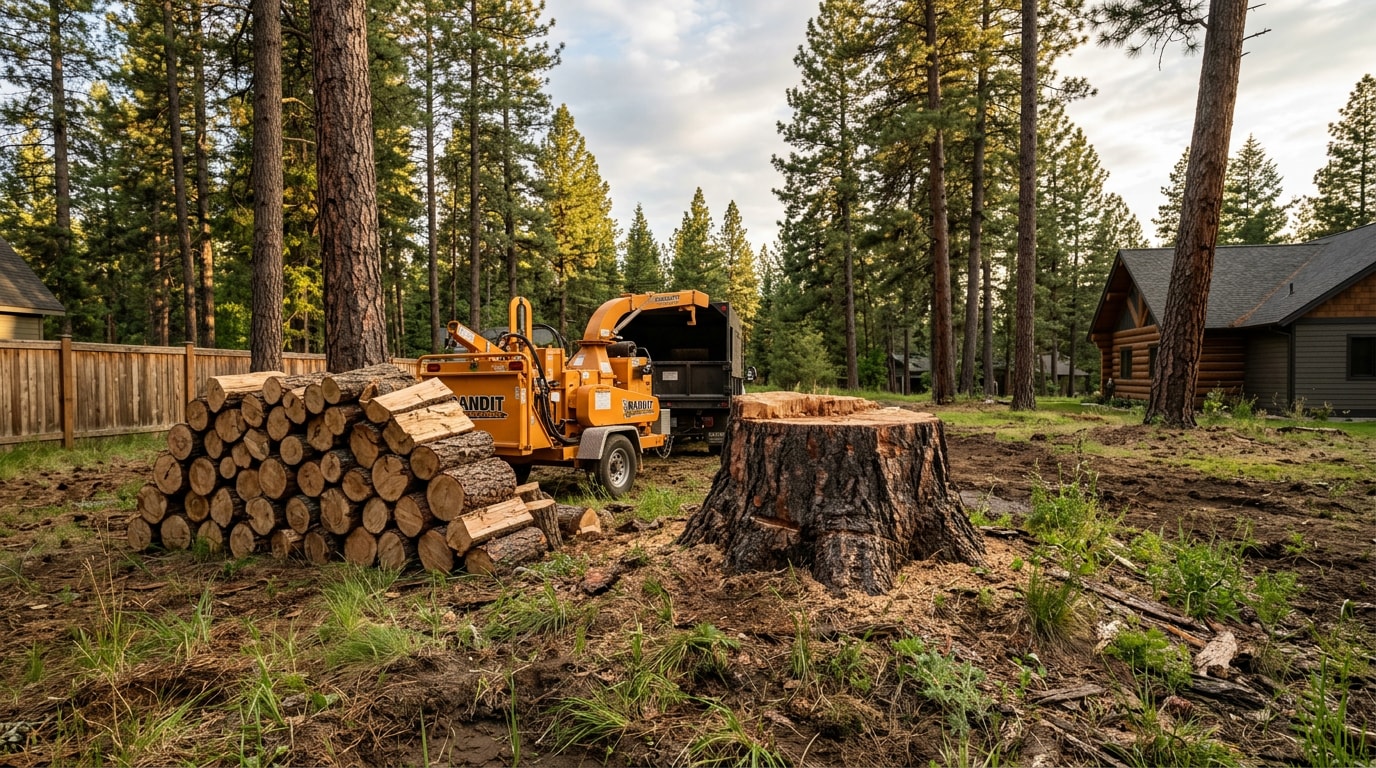
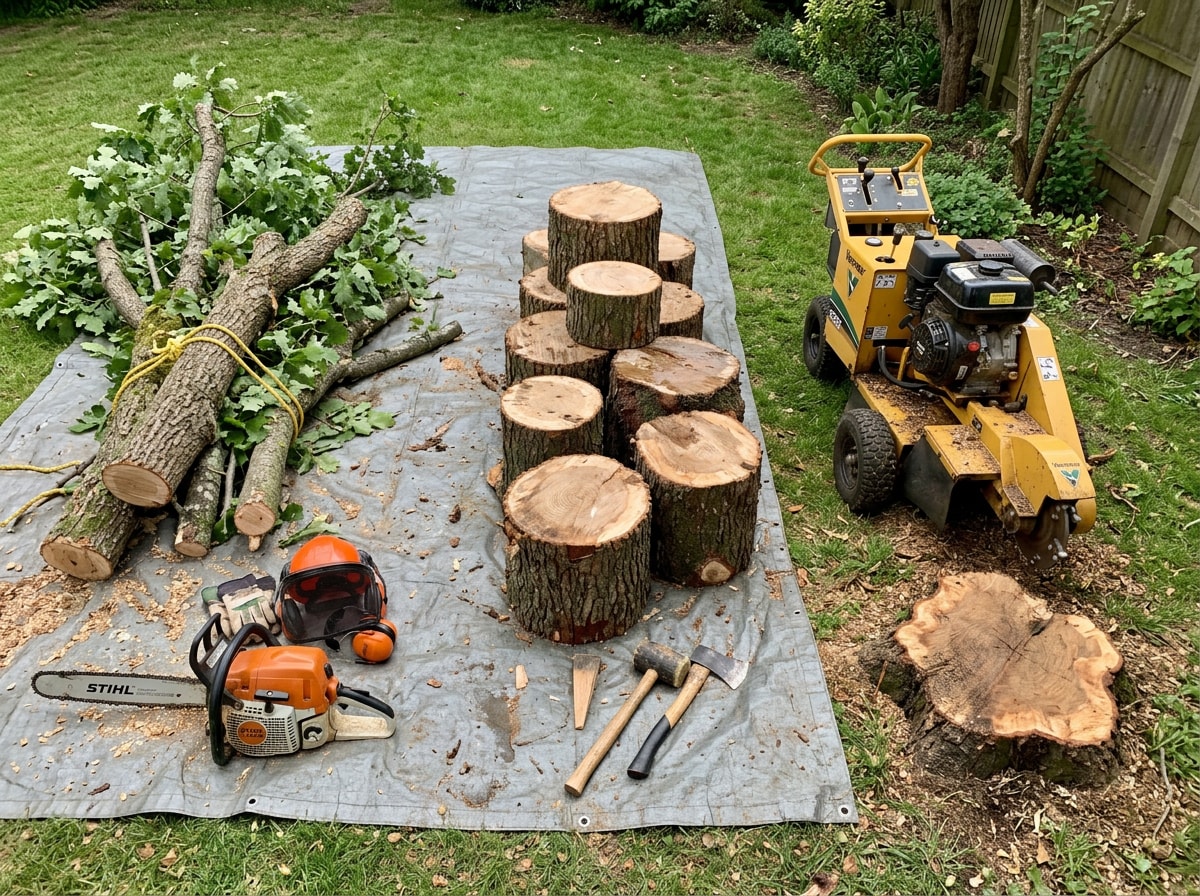
- Stump grinding (30 minutes to an hour for most stumps). This happens after the tree is fully down, and it takes longer for oversized or multi-trunk trees. If grinding isn't part of your scope, it's worth checking a stump removal page to see what's typically included.
- Cleanup. This step can take nearly as long as the removal itself, particularly for large trees that generate a lot of brush, logs, and wood chips.
Can Tree Removal Be Done in One Day?
For most residential jobs, yes. Even large, complex removals can usually wrap up in a single day when handled by an experienced crew with the right equipment. A full-day timeline is the norm rather than the exception for anything short of extreme circumstances.
The exceptions are worth knowing about. Very large multi-tree jobs, removals that require crane coordination, or projects with unexpected complications, like hidden decay or difficult access discovered mid-job, are the ones most likely to spill into a second day. If a storm has already brought a tree down or left one dangerously unstable, an emergency tree removal crew can often prioritize same-day or next-day response rather than slotting you into a normal schedule.
What a Real Coeur d'Alene Removal Looks Like
Size charts are useful for planning, but they can't tell you how a specific crew actually performs on a specific property. On one recent Coeur d'Alene job, a three-person crew felled, cut up, and fully cleaned up a 50-foot tree in under 90 minutes, well inside the "medium tree" range you'd expect from the tables above, and proof that crew experience and equipment matter as much as the chart does.
That kind of pace comes from three decades of hands-on arborist work across Coeur d'Alene, Post Falls, and the greater Spokane area, not from a generic estimate. If you want a number specific to your own tree rather than a size-based average, request a free estimate and a local crew can walk the site with you before cutting day.
Homeowners dealing with related cleanup questions, like what to do with the wood chips a chipper leaves behind, can also check out this guide on what to do with wood chips after tree removal.
FAQ
How Long Does Tree Removal Take?
Most residential tree removals in Coeur d'Alene take between two and eight hours, depending on the tree's size and how accessible the site is. Large trees situated close to structures can stretch into a full day or more.
Do I Need a Permit to Remove a Tree in Coeur d'Alene?
In most cases, removing a tree on private residential property in Coeur d'Alene does not require a permit. Trees located within the public right-of-way are different: the City of Coeur d'Alene requires a free permit before pruning, removing, or planting trees there, and removal is generally only approved if the tree is hazardous, partially dead, or obstructing traffic. Check the City of Coeur d'Alene's urban forestry permit page before cutting down anything near a street, sidewalk, or shared boundary. For property-specific guidance, our Coeur d'Alene service page can also help clarify what applies to your lot.
Can Tree Removal Be Done in One Day?
Usually, yes. Most residential removals, even large ones, finish in a single day when an experienced crew handles them. Multi-tree jobs, crane-assisted removals, or trees with hidden decay are the main exceptions that can push into a second day.
What's the Difference Between Stump Grinding and Full Stump Removal?
Stump grinding shaves the stump down below ground level using a grinding wheel, leaving most of the root system intact underground. Full stump removal pulls out the entire root ball, which takes more time and equipment than the standard 30-to-60-minute grind covered earlier.
How Soon Can I Replant After a Tree Is Cut Down?
Replanting can often happen fairly soon after removal, sometimes within the same season. It's usually best to avoid planting in the exact same spot right away, since leftover roots and depleted soil nutrients can make that specific location less favorable for a new tree.
How Much Does Tree Removal Cost in Coeur d'Alene?
Cost tracks closely with time: the longer a removal takes, the more it typically costs, since crew hours and equipment are the biggest cost drivers. For a detailed, size-by-size cost breakdown, see our tree trimming cost per hour guide for Coeur d'Alene.
Ready to find out exactly how long your tree will take? Get a free estimate from the team at CDA Tree and Utility, and we'll walk your property before we put a number on it.