Tree removal insurance coverage in Spokane Valley, WA comes down to one question: did the tree damage something your policy insures, or did it just fall? That single distinction decides whether your insurer writes a check or you're paying the crew yourself. Here's how Washington homeowners policies actually treat a downed tree, where the payout stops, and what to do before the next windstorm tests your coverage.
Does Homeowners Insurance Cover Tree Removal in Spokane Valley, WA?
Coverage follows the damage, not the tree. A standing tree, even a dying one, is never an insured item on its own.
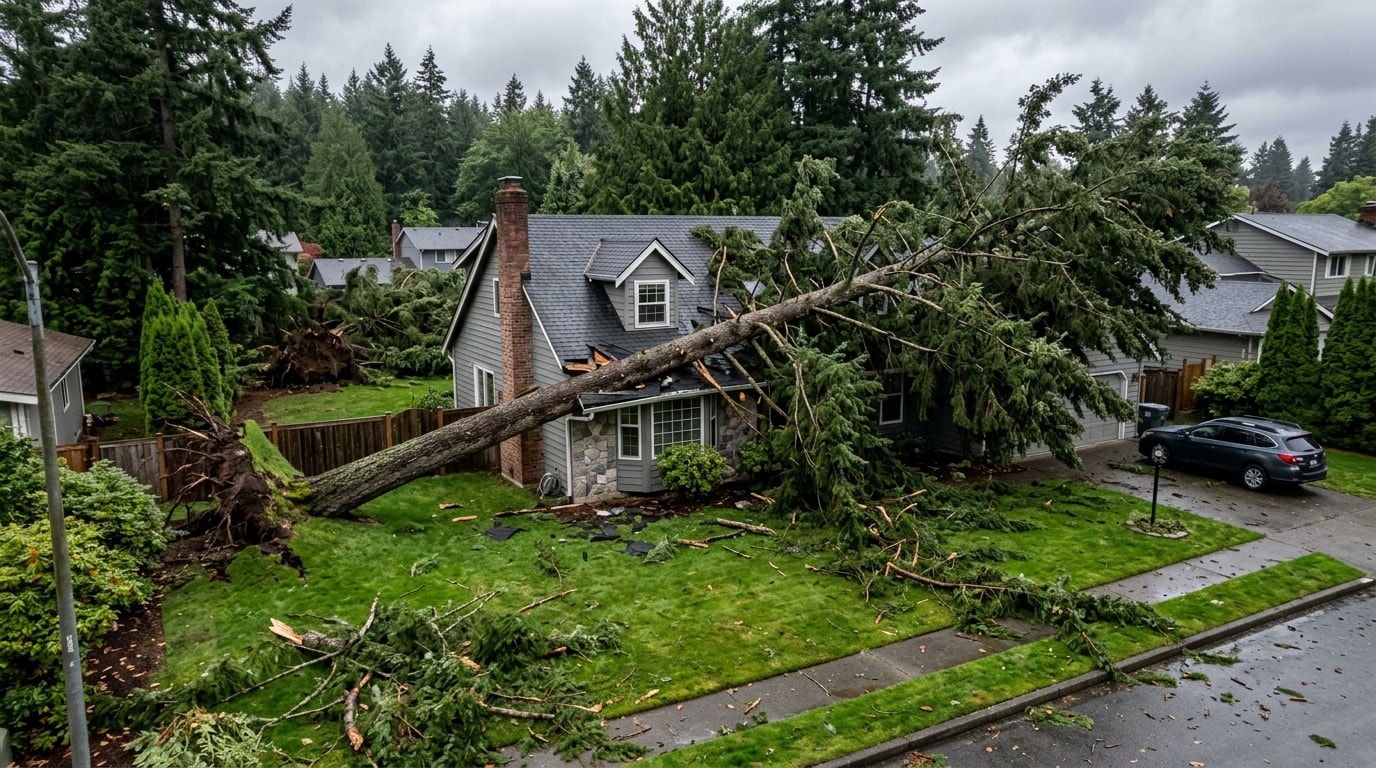
Once a tree falls because of a covered peril, wind, heavy snow load, or lightning, and lands on your house, garage, or fence, removal becomes part of that claim. The same tree falling in open grass tells a different story.
Washington's insurance regulator puts it plainly: homeowner insurance usually doesn't cover tree removal and cleanup unless the tree fell on your home, garage, car, or another insured structure. No damaged structure generally means no claim, and the cost comes out of your pocket.
When Your Policy Won't Pay for Removal
A few scenarios trip up almost every homeowner who assumes insurance is a backstop for all tree problems:
- Preventative removal. Cutting down a leaning or diseased tree before it fails is treated as maintenance, not a loss.
- A dead tree that falls clean. If it misses every structure, there's usually no payout even though it's gone.
- Damage from rot, disease, or neglect. Insurers look at whether the failure was sudden and accidental, not the slow result of years without care.
- Excluded perils. If the tree came down because of an excluded event, debris removal under your homeowner policy typically won't apply either.
If a tree on your property is already showing decay, a professional tree assessment or dead tree removal now is almost always cheaper than waiting for an uncovered failure later.
How Much Will Insurance Actually Pay?
Even an approved claim rarely covers the full removal bill. Debris removal typically rides under its own sublimit inside the policy, separate from whatever pays to repair the roof or fence it crushed.
Washington's insurance commissioner explains how this usually works in practice: debris removal is bundled into rebuilding costs, and if that combined cost runs higher than your dwelling limit, your policy usually provides up to an additional 5% of that dwelling limit specifically for debris removal. Your deductible still applies before any of that kicks in.
| Scenario | Likely Outcome |
|---|---|
| Storm-felled tree lands on house, garage, or fence | Removal and repair usually covered, minus your deductible |
| Tree blocks a driveway or accessibility ramp | Some policies cover removal even without structural damage; check your policy wording |
| Healthy tree removed as a precaution | Not covered, classified as routine maintenance |
| Dead or rotted tree falls on open lawn | Usually not covered |
Whose Insurance Pays When a Neighbor's Tree Falls on Your Property?
Ownership of the tree matters less than most homeowners expect. In most cases your own policy responds first.
Washington's guidance on this is direct: your homeowner insurer will often pay, even if it was the neighbor's tree, and you'll need to pay the deductible. If you can show the neighbor knew the tree was hazardous and ignored it, your insurer may try to recover costs from their policy afterward, but that process happens between the insurers, not you. For a closer look at what to do in the first hour after a tree comes down, our guide to downed tree removal in Spokane Valley walks through the exact order of calls to make.
Spokane Valley Tree Removal Permits: What the Code Actually Covers
Homeowners often assume a city permit is required before any tree comes down. In Spokane Valley, that's not quite how the code is written.
The city's tree ordinance states its purpose clearly: Chapter 6.01 SVMC exists to regulate the planning, maintenance, and removal of trees on City-owned property within the City of Spokane Valley. That's public trees, not the ponderosa in your backyard. The code also makes clear that no person shall damage, remove, or cause the removal of a public tree without written permission from the city manager.
For most residential lots in Spokane Valley, that leaves private tree removal largely unregulated by this chapter. If the tree sits near a right-of-way, drainage easement, or a mapped critical area, check with the city's Permit Center before cutting, since those situations fall outside the "private lot" exemption.
Document Hazard Trees Before the Storm, Not After
Here's something most insurance guides skip entirely: the condition of a tree before it falls can decide whether your claim gets paid or your neighbor's insurer tries to pin the loss on you.
If a tree was visibly dead, leaning, or decayed for months before it failed, an adjuster or a neighbor's attorney can argue negligence, which undermines a claim either way. A dated, professional [tree health consultation]({{SITE_URL}}/services/arborist/tree-health-consultation} or hazard assessment creates a paper trail showing you acted on a known risk in good faith.
We recommend having a hazard tree removal evaluation done each fall, before wind and heavy snow season puts weak limbs and root systems to the test. It's a lot cheaper than disputing a denied claim in the spring.
Filing a Tree Damage Claim: Step by Step
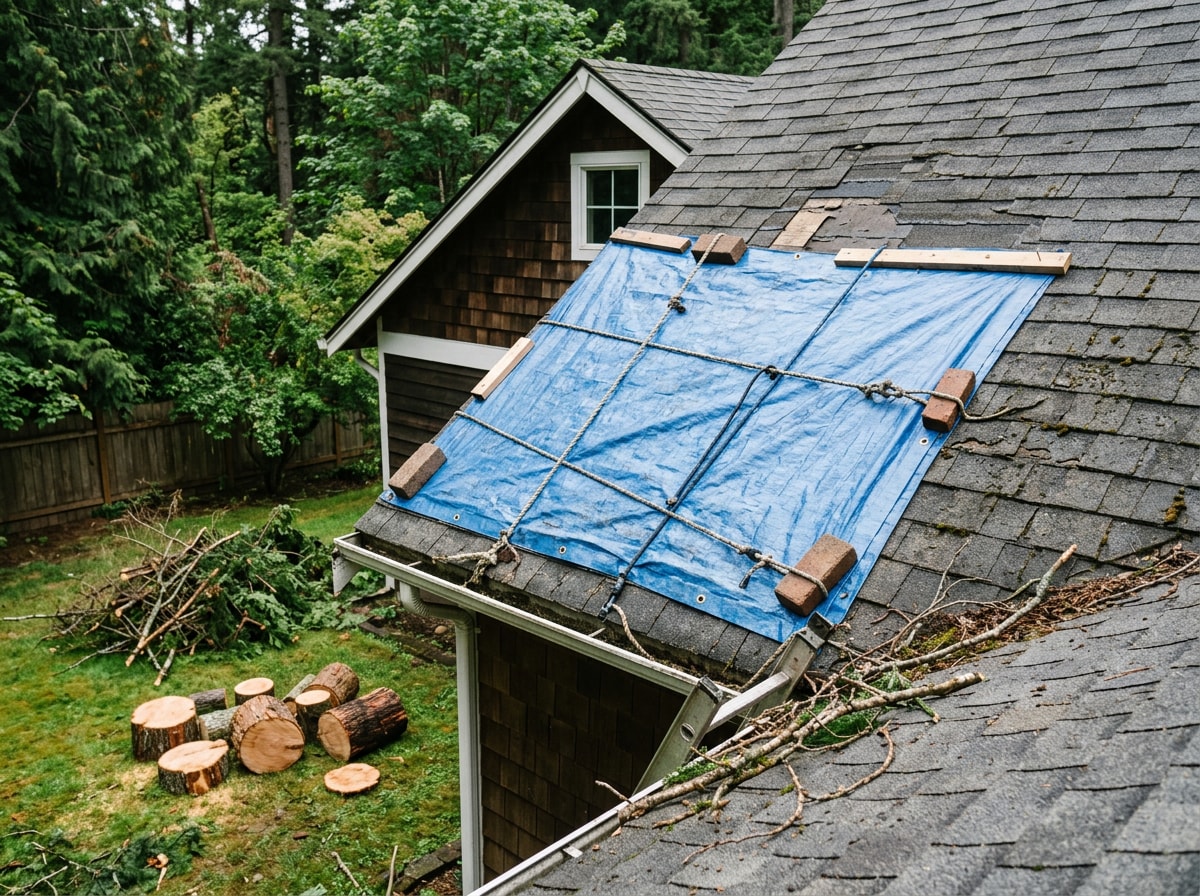
Once a tree is down on your property, the order of operations matters almost as much as the coverage itself.
- Photograph everything before anything is moved, from multiple angles, while it's safe to do so.
- Call your insurer the same day to open the claim and ask about your debris removal sublimit.
- Hold off on permanent repairs. Insurers advise that you shouldn't make permanent repairs until your insurer has seen the property and you've agreed on repairs, though tarping and temporary fixes are expected.
- Hire a licensed, insured crew to stabilize or remove the tree safely.
- Save every receipt, including tarps, temporary repairs, and the itemized invoice from the removal crew.
If a tree is actively resting on your home or blocking an exit, don't wait on the paperwork first. Our emergency tree removal crews get the hazard stabilized, then provide the documentation your adjuster needs.
How to Verify a Spokane Valley Tree Crew Is Actually Insured
Washington doesn't issue a tree-specific license, so "licensed, bonded, and insured" means something more specific here than it does in states with a dedicated trade license. What a crew actually carries is a general contractor registration through L&I, which confirms they're bonded and legally allowed to operate, separate from whether they carry enough liability coverage for a large removal.
L&I's own description of its lookup tool is the fastest way to check: it lets you verify a contractor's registration, bond, insurance, and infractions before anyone climbs anything on your property. Ask for a certificate of insurance naming you as the homeowner, and confirm the registration is active using that tool directly, not just a number printed on a flyer.
General liability protects your property if something gets damaged during the job. Workers' comp protects the crew if someone gets hurt, and protects you from being pulled into a claim. A legitimate tree removal company should hand over both documents without hesitation.
What Tree Removal Typically Costs, and Why It Affects Your Claim Decision
Removal pricing swings on height, species, lean, and whether the wood is already compromised from storm damage. A small ornamental in the open yard is a different job than a mature conifer hanging over a roofline with broken limbs still caught in the canopy.
That range matters because of the debris sublimit math above. If your policy's removal payout, minus your deductible, barely covers a fraction of the actual bill, it's worth asking your adjuster for the exact number before you commit to a crew. Sometimes the "covered" removal and an uncovered preventative removal next door cost nearly the same out of pocket once the math is done.
If you're weighing whether to wait for a windstorm or remove a leaning tree now, our team can walk the property and give you a straight answer, not a sales pitch. Get a free estimate before you decide either way.
FAQ
Does homeowners insurance cover tree removal in Spokane Valley, WA?
Usually only if the tree fell because of a covered peril, like wind or snow load, and landed on an insured structure such as your home, garage, or fence. A tree that falls without hitting anything, or one removed as a precaution, is typically the homeowner's own expense.
How much will my insurance pay for a fallen tree?
It depends on your policy's debris removal provision. Many policies fold removal into the cost of repairing the damaged structure, with an additional allowance, often up to 5% of your dwelling limit, if combined costs exceed that limit. Your deductible is subtracted first, so the actual check is often smaller than homeowners expect.
Do I need a permit to remove a tree on my own property in Spokane Valley?
Generally no. Spokane Valley's tree ordinance regulates trees on city-owned property, not private residential lots. If the tree is near a right-of-way, easement, or a mapped critical area, check with the city's Permit Center first.
Whose insurance pays if a neighbor's tree falls on my house?
Your own homeowners policy typically pays first, even though it wasn't your tree. If negligence can be shown, like a visibly dead tree the neighbor ignored, your insurer may pursue reimbursement from theirs afterward.
Will insurance pay to remove a tree that's leaning but hasn't fallen yet?
No. Insurance responds to sudden, accidental damage that has already happened, not to preventive maintenance on a tree that might fail later. Removing a hazard before it falls is on you, but it's far cheaper than the repair bill if it doesn't wait.
Is a Spokane Valley tree company required to carry insurance?
Washington requires contractor registration and bonding, but that's not the same thing as adequate liability insurance for a large removal. Always ask for a certificate of insurance and confirm the registration is active through L&I's official verify tool before work starts.
Our crews at CDA Tree handle storm cleanup and insurance-adjacent removals across Spokane Valley every season, and we're happy to provide documentation your adjuster will actually accept. Contact us for a free, no-pressure estimate.