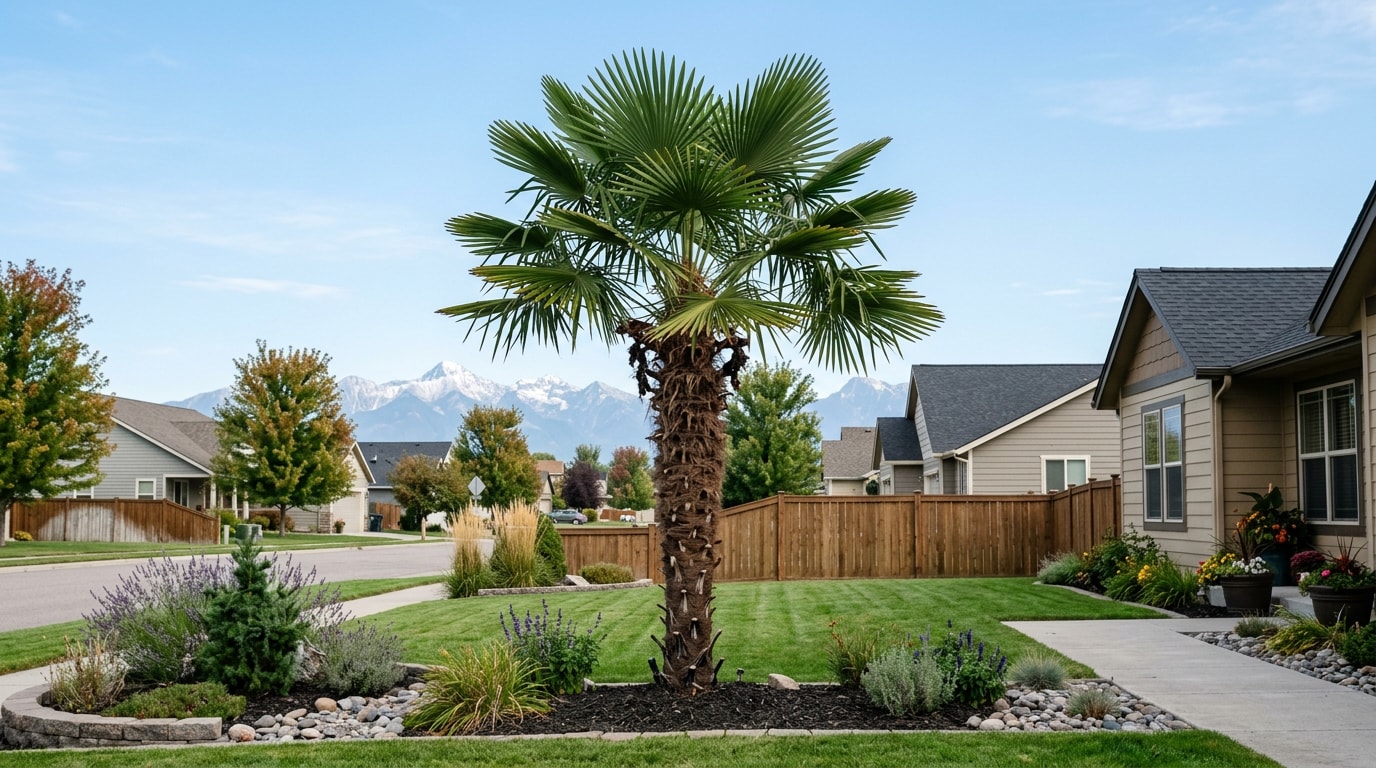
Palm tree trimming in Post Falls, ID means caring for a species that technically has no business surviving here. Homeowners who've planted cold-hardy varieties need frond management timed to our winters, not advice copied from a Florida or California gardening site. Get the season or the cut wrong and you can kill a tree that took years to establish.
If you already know you need hands-on help, contact our Post Falls tree care team for a free on-site assessment before you make a single cut.
Visit CDA Tree and Utility LLC to see our services and request a free estimate.
When to Trim Palm Trees in Post Falls, ID
Post Falls sits in USDA Plant Hardiness Zone 6b, with an average annual extreme minimum temperature between -5 and 0°F . That number matters more for palms than for almost any other tree you'll grow here, because most species are only rated hardy to warmer zones.
The average first frost in Post Falls lands around October 18, with the last frost around April 22 . That's the window a palm has to recover from any pruning wound before cold weather returns.
Timing follows the tree, not the calendar. Fronds should be left alone until they're fully brown and dead; removing dead fronds won't harm a palm, but cutting green or partially green fronds can . In practice, that means most Post Falls palms are ready for a trim in late spring to early summer, since spring and early summer is the best time to prune a palm tree because it can recover more easily during that period .
Cutting earlier, while frost risk is still active, exposes fresh wounds right before the tree needs every green frond it has to survive winter.
Cold-Hardy Palm Varieties That Actually Survive Here
This is the part most national guides get wrong for North Idaho: not every "cold-hardy" palm sold at a nursery is actually suited to a Post Falls winter.
| Variety | Cold Tolerance | Fit for Post Falls (Zone 6b) |
|---|---|---|
| Needle Palm |
Hardy in Zones 5b-11 ; withstands temperatures as low as -5 to -15°F
| Best fit; reliably survives unprotected |
|---|
| Windmill Palm |
Often grown in Zones 8a-10, with established specimens sometimes succeeding in warmer pockets of Zone 7
| Marginal; needs winter protection, frequent losses | ||
|---|---|---|
| Sabal Minor (Dwarf Palmetto) | Hardy to roughly zone 6a-6b in sheltered microclimates | Possible with protection; less reliable than needle palm |
| Mediterranean Fan Palm | Rated to Zone 7b-9 in most references | Not recommended without heavy winter wrapping |
We see this play out on real properties: more of the Windmill Palms planted on a whim end up winter-damaged than the Needle Palms homeowners chose on purpose. If you're planning new plantings alongside a trimming visit, it's worth asking your crew which species they've actually watched survive a Kootenai County winter, not just which one is labeled "cold hardy" at the garden center.
Palm Tree Trimming Cost in Post Falls, ID
Because palms are uncommon in North Idaho, there isn't a deep well of palm-specific local pricing data the way there is for pines, maples, or arborvitae. Cost tracks the same variables that drive any tree trimming job:
- Tree height and frond volume – taller palms with a heavy skirt of dead fronds take longer to clear
- Access – fence lines, power lines, or tight side yards slow the work down
- Number of trees – multiple palms on one property typically cost less per tree than a single visit
- Debris hauling – whether dried fronds are chipped on-site or hauled away
For a breakdown of current regional hourly rates and what drives them up or down, our tree trimming cost guide covers the pricing factors that apply to palms and conifers alike.
Proper Pruning Technique: The 9-to-3 Rule
Most of the damage we see on North Idaho palms isn't from cold, it's from bad pruning. The rule to know: never prune fronds above the 9 o'clock to 3 o'clock line, or the horizontal centerline of the canopy .
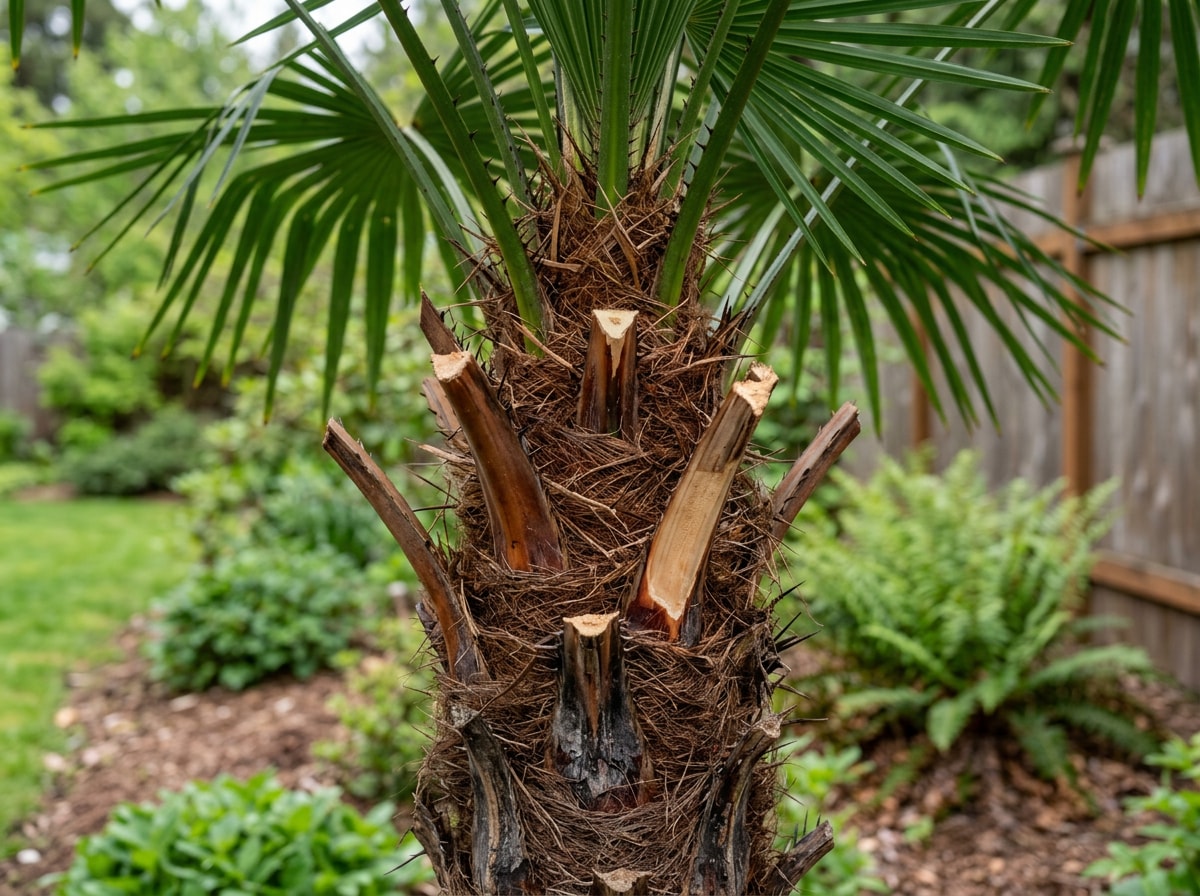
Cutting above that line is called over-pruning, and pruning past this line can harm your tree and increase the chances of storm damage . The practice of stripping a palm down to a tuft of fronds has a name too: it's called "hurricane cutting," and it weakens trees rather than protecting them .
Keep it simple:
- Only remove fronds that are fully brown and dead
- Leave every green or partially green frond in place
- Cut at least a couple of inches from the trunk, never into it
- Skip flower stalks and fruit clusters only if they're not causing a mess or hazard
A certified pruning visit should follow recognized standards, not guesswork. For public right-of-way trees, Post Falls references ANSI Z133.1, ANSI A300 Tree Care Operations, and ISA Tree Pruning Guidelines , and the same standards are a reasonable bar to hold a residential crew to. Our tree pruning service follows the same cut placement and timing principles on every species we touch, palms included.
Palm Tree Trimming vs. Removal: How to Decide
Not every struggling palm needs another round of cuts. If the trunk is leaning, the crown has lost most of its living fronds, or rot has reached the core, removal usually makes more sense than continued pruning.
A palm that's simply overgrown with dead fronds is a good trimming candidate. One with structural damage, a soft or discolored trunk, or a spear leaf that pulls out easily is a different conversation. That second scenario is worth a tree assessment before you spend money on pruning that won't fix the underlying problem. If the tree has already become a falling hazard, our hazard tree removal crew can evaluate it the same visit.
Hiring a Professional Post Falls Arborist
Deciding whether to trim or remove a palm isn't always obvious with a species growing outside its natural range. A crew that's actually worked on Idaho's cold-hardy palms, not just tropical species, will know the difference between a palm that's merely ugly and one that's actually dying.
Before scheduling work near a public right-of-way, it's worth a quick check with the city. Post Falls' Urban Forestry Division operates out of City Hall at 408 N Spokane Street, Monday through Friday, 8 a.m. to 5 p.m., at 208-457-3315 , and can confirm whether your project needs sign-off. You can review current standards on the City of Post Falls Urban Forestry page before booking.
Our Post Falls service area page covers the full range of tree work we handle locally, and you can see examples of past jobs on our projects page. For a broader look at how we work across North Idaho and Spokane, visit {{SITE_URL}}/.
FAQ
Why should I consider palm tree pruning?
Pruning removes dead or dying fronds before they become loose and fall, which protects people, roofs, and vehicles underneath. It also reduces fire risk from a dry, dead frond skirt and keeps the canopy from harboring pests.
What are the benefits of hiring a local contractor for palm tree pruning?
A local crew has actually seen which "cold-hardy" varieties survive a real Kootenai County winter and which ones don't. That matters more here than almost anywhere else, since standard national palm-care advice assumes a much warmer climate than Post Falls gets.
How much does it cost to trim a palm tree in Post Falls?
Cost depends on tree height, frond volume, access, and debris hauling rather than the fact that it's a palm specifically. See our tree trimming cost guide for the variables that typically move pricing up or down in this region.
How often should palm trees be trimmed?
Most palms only need a trim once a year, when the oldest fronds have fully browned. Idaho's shorter growing season and cold-sensitive varieties often mean fewer trims per year than a palm in a tropical climate would need.
Can palm trees actually survive winter in Post Falls, ID?
Some can, but only specific varieties. Needle Palm is the most reliable choice for our zone 6b winters; Windmill Palm and most other "cold-hardy" nursery palms are marginal here and often need winter protection or replacement after a hard freeze.
Do I need a permit to trim a palm tree in Post Falls?
Permits generally apply to public right-of-way and street trees, not private residential pruning. If your palm sits near a sidewalk, street, or public easement, check with the city's Urban Forestry Division before cutting.