Emergency tree removal in Post Falls, ID means getting a licensed crew to a hazard tree, storm-damaged limb, or trunk on your roof before it causes more damage. A tree resting on a structure or blocking your driveway can't wait for a regular appointment. Here's what actually qualifies as an emergency, what it costs, and how fast a local crew can get there.
What Counts as a Tree Emergency in Post Falls, ID
Not every leaning branch is a 2 a.m. call. These situations are:
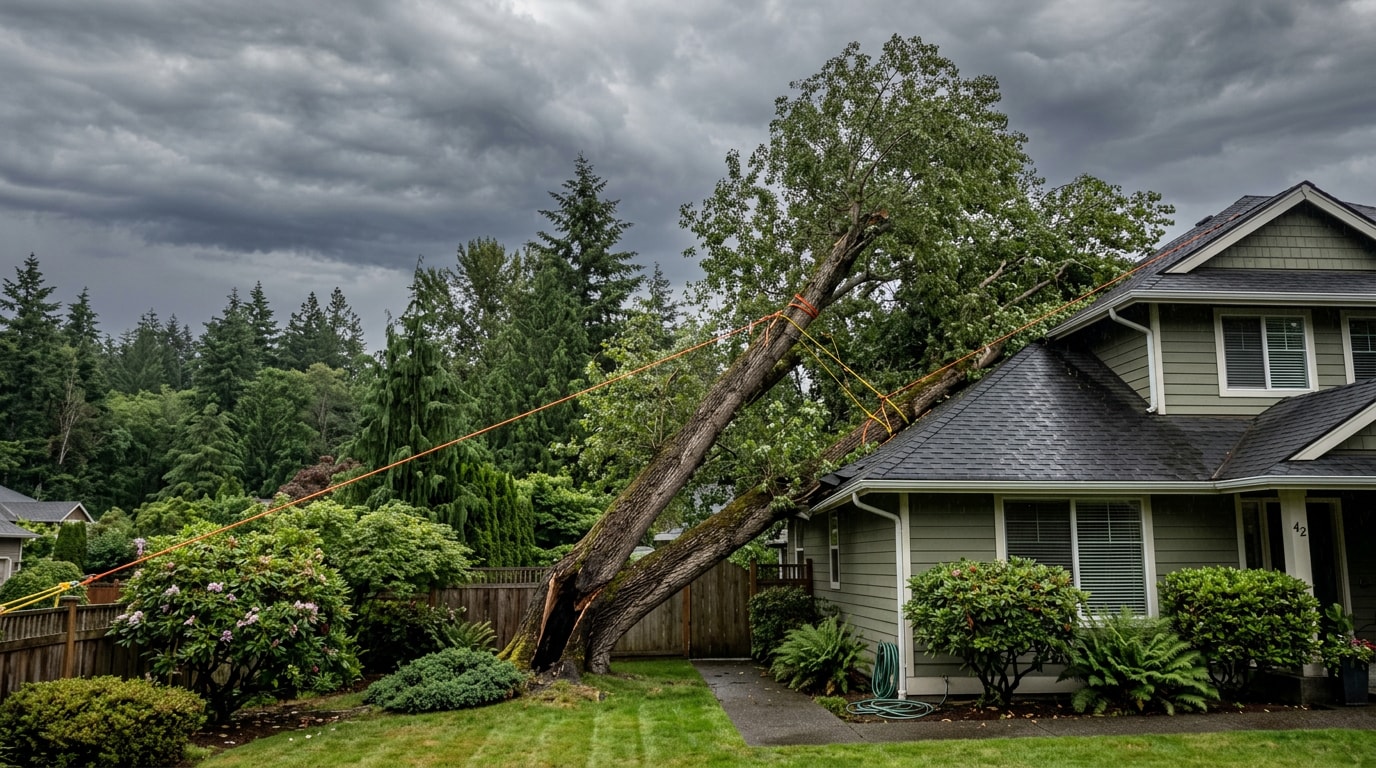
- A tree or large limb is resting on your roof, deck, fence, or vehicle
- A trunk or branch is blocking your driveway or a public road
- A tree is leaning toward a structure, power line, or shared property line
- A storm has split a trunk or torn out a root ball, leaving the tree unstable
- A dead or beetle-killed tree is visibly cracking or shifting in wind
If any of these describe your yard right now, get a free estimate and a crew can walk you through next steps before the situation gets worse. For jobs that aren't urgent, our full tree removal page covers scheduled removals, pricing factors, and permitting basics.
How Fast Can a Crew Respond?
Same-day response is common for genuine emergencies, depending on crew availability and the weather at the time of the call. Calling the moment a hazard appears, rather than waiting to "see if it gets worse," gives a crew the best shot at same-day or next-day dispatch.
During widespread storms, response times stretch because every homeowner in Kootenai County is calling at once. Trees already resting on a structure or blocking the only driveway out of a property get priority dispatch over leaning trees that are stable for now.
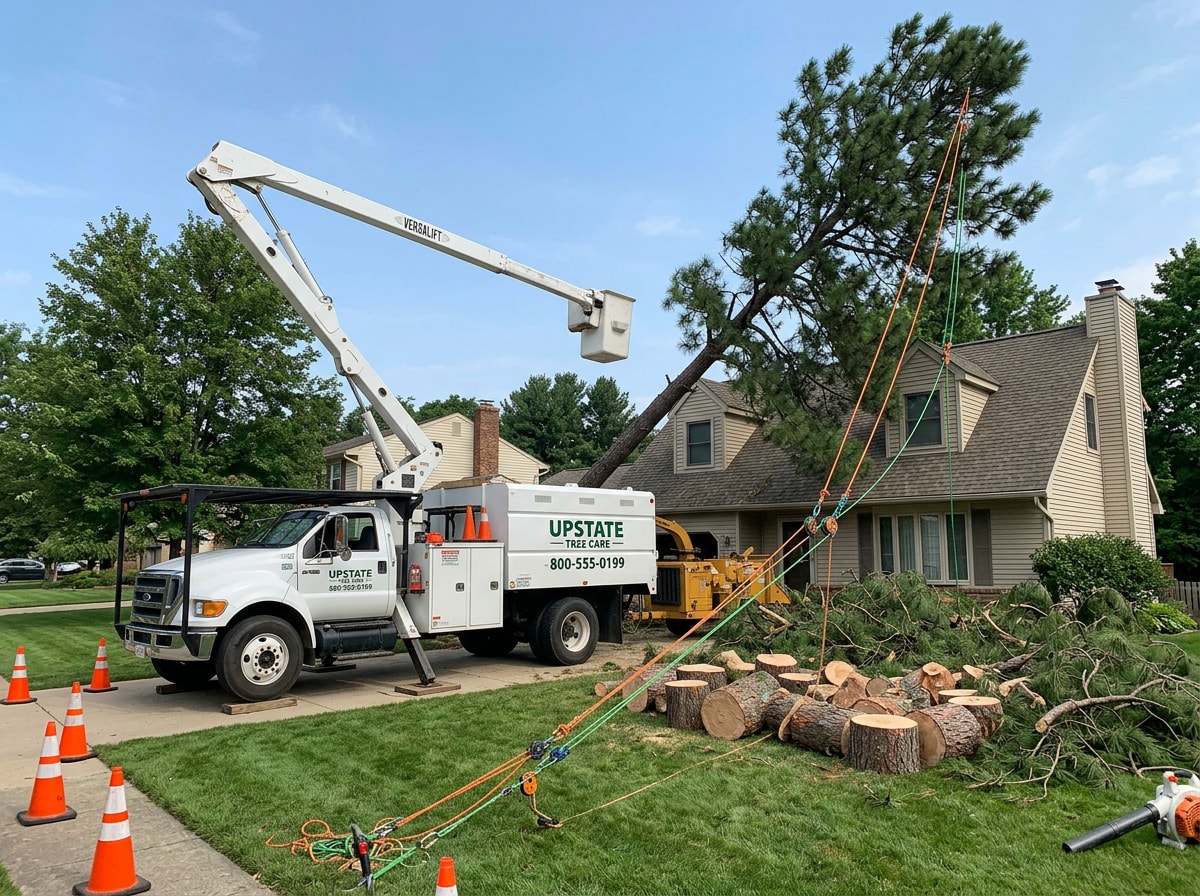
Storm Damage Cleanup in Post Falls, ID
Post Falls sits in a path of strong Spokane River valley wind and heavy winter snow load, and both bring trees down fast. Cottonwoods along the river are notorious for dropping large limbs with almost no warning, often during the first real wind event of the season.
When a limb or trunk lands on a fence, driveway, or roof, a fast response limits secondary damage from weather exposure, pests, or further structural shift. Our storm tree cleanup service covers:
- Emergency felling of unstable trees and hanging limbs
- Debris hauling and site restoration
- Photo documentation to support insurance claims
- Temporary tarping coordination for roof damage
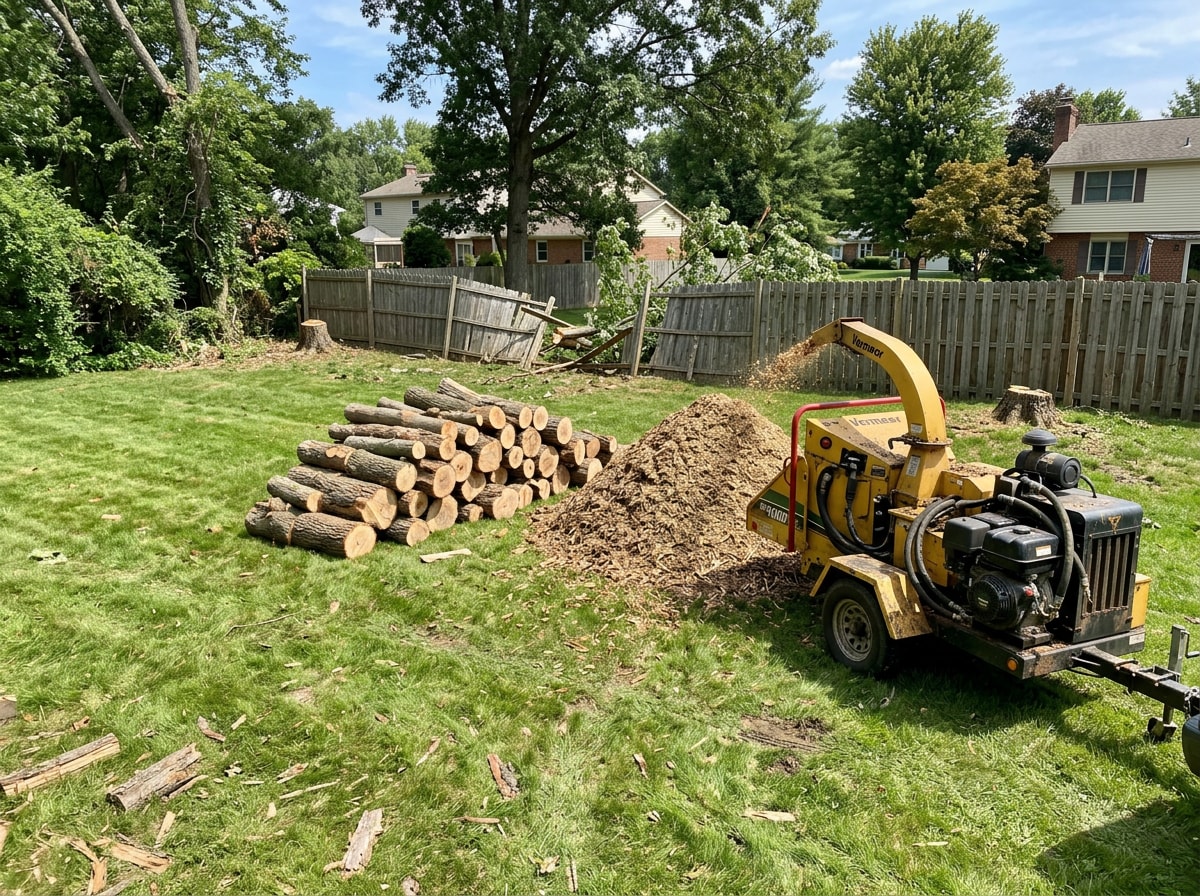
Why Post Falls Trees Fail Without Warning
Not every dangerous tree looks dangerous. Internal decay, root rot, and bark beetle damage can weaken a tree for years before a windstorm or heavy snow load finally brings it down.
Ponderosa pine across North Idaho is a known host for mountain pine beetle, and the Idaho Department of Lands notes the beetle can attack and kill all species of pines found in Idaho, including lodgepole, ponderosa, and western white pine . Drought-stressed trees are especially vulnerable, and once a tree is successfully attacked, preventative strategies can reduce mortality, but trees cannot be saved once successfully attacked .
Root rot works more slowly, eroding a tree's anchoring underground so a tree that survives one storm fails in the next. Our crews have pulled cottonwood limbs off roofs along the Spokane River and taken down ponderosa pines leaning over driveways after wind events. That hands-on history is how we tell a tree that can wait from one that can't.
A hazard tree assessment from a certified arborist catches these risks before they become 2 a.m. calls, and dead tree removal clears out beetle-killed trees before they fail in the next storm. See our Post Falls service area page for coverage details across Kootenai County.
Emergency Tree Removal Cost in Post Falls, ID
In Post Falls, the typical expense for emergency tree removal is $809 , though pricing swings with tree size, location, and access difficulty. Nationally, emergency tree removal can cost up to $5,000 when a tree is on a structure or requires a crane, compared to an average standard removal cost between $820 and $992 .
| Scenario | Typical Cost Driver |
|---|---|
| Tree down, nothing hit | Lowest cost; mostly cutting and hauling |
| Tree on fence or driveway | Moderate; access and debris volume |
| Tree on roof or garage | Highest; rigging, possible crane, tarping |
| Leaning over power line | Utility coordination adds cost and time |
Standard, scheduled removals generally cost less than same-day emergency jobs, since crews charge a premium for immediate dispatch and after-hours labor.
Does Insurance Cover It?
Coverage depends on whether the tree damaged a covered structure. According to the Insurance Information Institute, if a tree hits an insured structure, a homeowners policy covers the cost of removing the tree, generally up to about $500 to $1,000, depending on the insurer and the type of policy purchased . If the fallen tree did not hit an insured structure, there is generally no coverage for debris removal, though some insurers may pay if it blocks a driveway or accessibility ramp .
Ask your crew for dated photos and an itemized invoice before work starts. That documentation is what insurers typically request when processing a tree-related claim.
Choosing the Right Emergency Tree Service in Post Falls
Cost matters, but reliability during an actual emergency matters more. A few traits separate a dependable crew from a risky one.
- Range of services. A full-service company handling felling, limb removal, stump grinding, and arborist consultation lets one crew manage the entire job instead of juggling contractors mid-emergency.
- Credentials. Look for ISA certified arborists and proof of licensing and insurance. Tree work is physically dangerous, which is exactly why federal workplace safety rules apply. OSHA notes that
voluntary ANSI standards may be applicable to the tree care industry, though compliance with ANSI standards does not by itself ensure compliance with OSHA policy — a crew that actually trains to those standards is a different experience than one that doesn't.
- Clear scope. A written estimate should spell out debris removal, stump handling, and any crane or utility coordination before the saw starts.
Our tree assessment service gives homeowners a written risk evaluation, whether you're deciding on an emergency removal today or planning ahead for storm season. For non-emergency maintenance questions, our guide on emergency tree trimming in Post Falls covers what to expect when a storm damages limbs but the tree itself is still sound.
What to Do Right After a Tree Falls
- Get everyone away from the tree, including pets — don't assume it's done moving.
- Check for downed power lines before approaching; treat any line as live.
- Photograph the damage from multiple angles before cleanup starts.
- Call your insurer if the tree hit a structure, fence, or vehicle.
- Call a licensed, insured tree crew for removal — don't attempt a leaning or hung-up tree yourself.
Visit our homepage to see our full range of tree and storm response services across Kootenai County, or jump straight to a free estimate.
FAQ
Do you offer emergency tree removal in Post Falls, ID?
Yes. In addition to trimming, limb removal, and pruning, full emergency tree removal is available throughout Post Falls, with same-day service when crews are available.
How much does emergency tree removal cost in Post Falls?
Expect to pay around $809 on average for emergency removal in Post Falls, though the final price depends on tree size, hazard level, and how fast the crew needs to respond.
Does homeowners insurance cover emergency tree removal?
Usually only if the tree damaged a covered structure like a roof, garage, or fence. If it fell in the yard without hitting anything, most policies won't pay for removal, though some make an exception for a blocked driveway or wheelchair ramp.
How fast can a crew get to a fallen tree?
Same-day service is common for genuine emergencies. Response times stretch during widespread storms when many homeowners call at once, so the earlier you call, the better your odds of same-day dispatch.
What should I do immediately after a tree falls on my property?
Keep people and pets away from the tree, check for downed power lines, photograph the damage, and call your insurer if a structure was hit. Then call a licensed tree crew rather than attempting removal yourself.
Do you provide free tree removal estimates?
Yes. Free estimates are typically provided within 48 hours of a request, giving you a clear price before committing to the job.