A brush removal service in Post Falls, ID clears storm debris, dead branches, and overgrown undergrowth faster and more safely than doing it yourself. Local crews handle everything from a single curbside pile to acres of tangled underbrush. Here's what the job actually costs, how the process works, and what to confirm before you book.
Brush Removal vs. Land Clearing: What's the Difference
A brush removal service hauls away cut vegetation, storm debris, and overgrown plant growth from a property. Full land clearing goes further, cutting, grinding, and grading the land itself to prepare it for building or heavy landscaping.
Knowing the difference matters because pricing and equipment change with it.
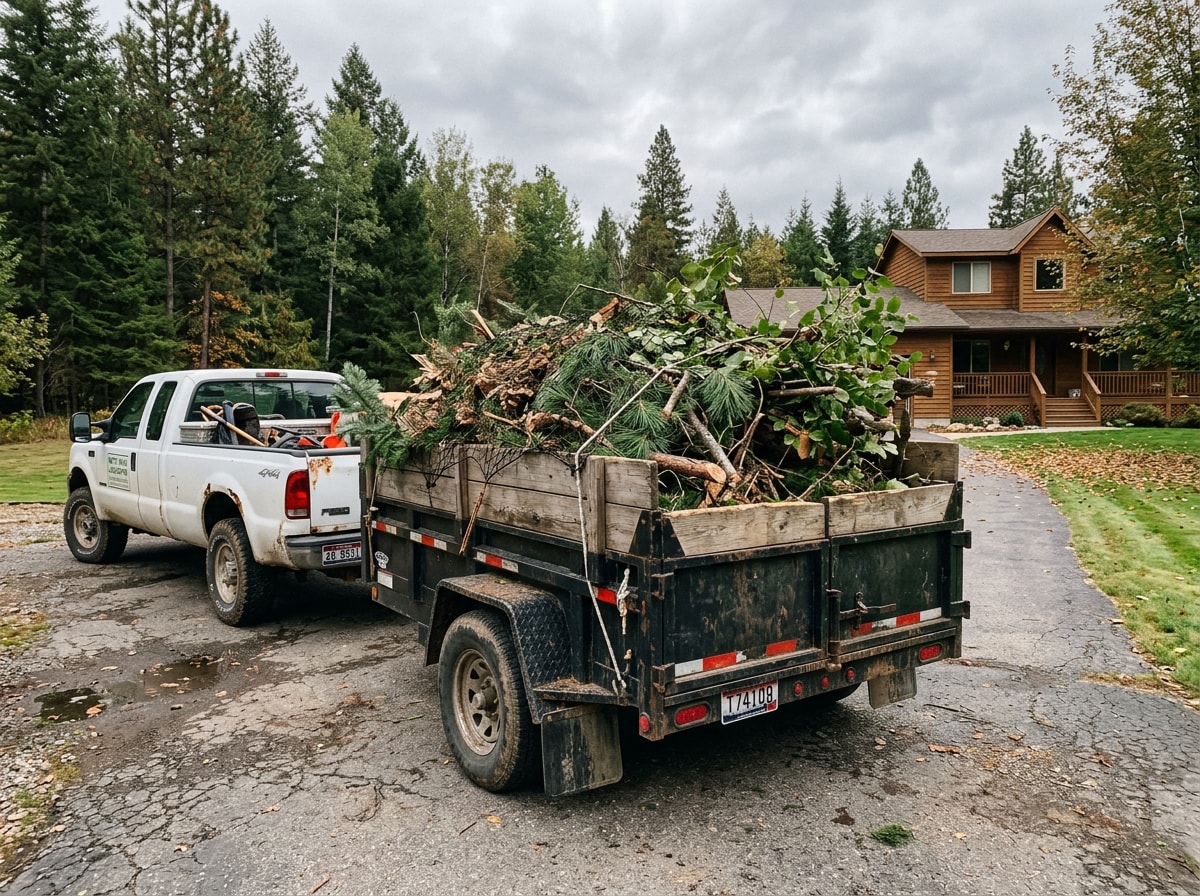
- Pile hauling: crews pick up brush already cut from landscaping work or storm cleanup.
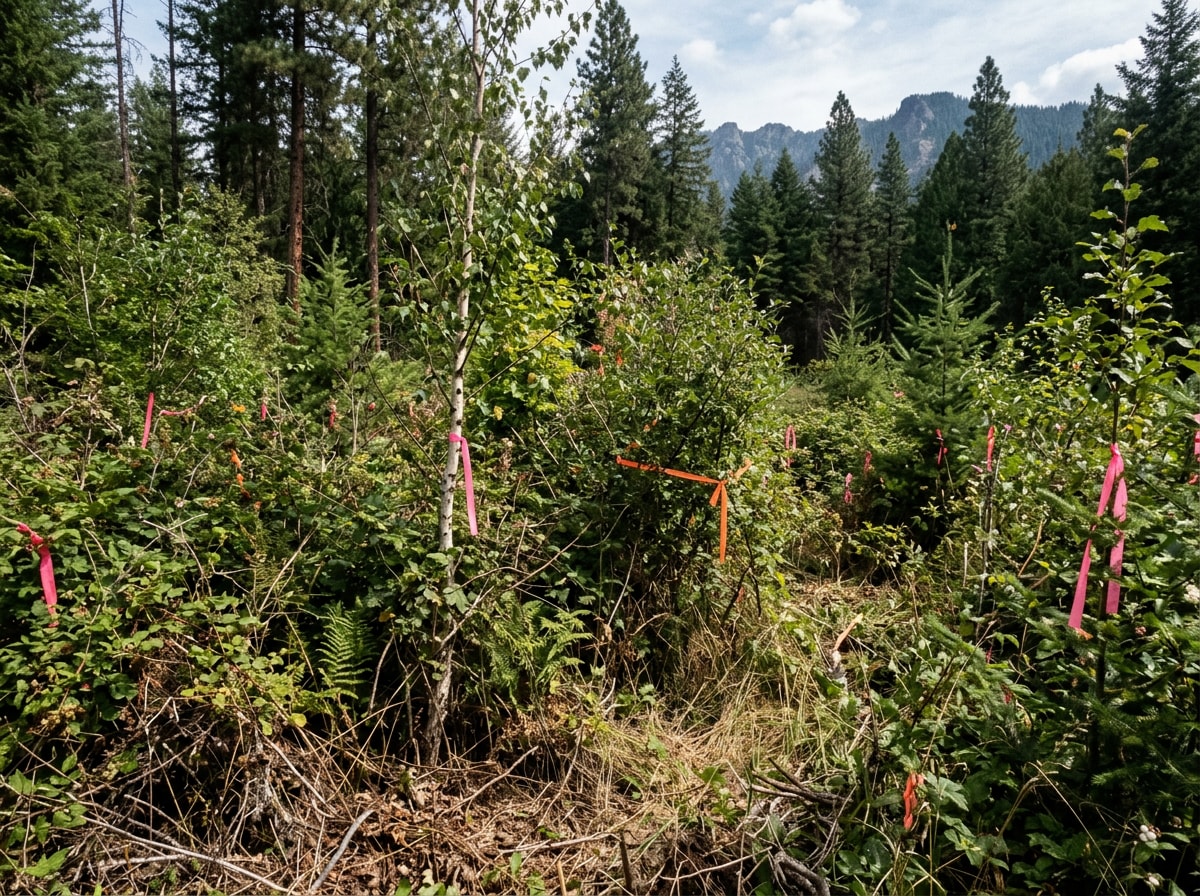
- Underbrush clearing: crews remove tangled vines, invasive species, and dense undergrowth still rooted in the ground.
- Land clearing: crews clear, grind, and grade an entire lot for construction or new landscaping.
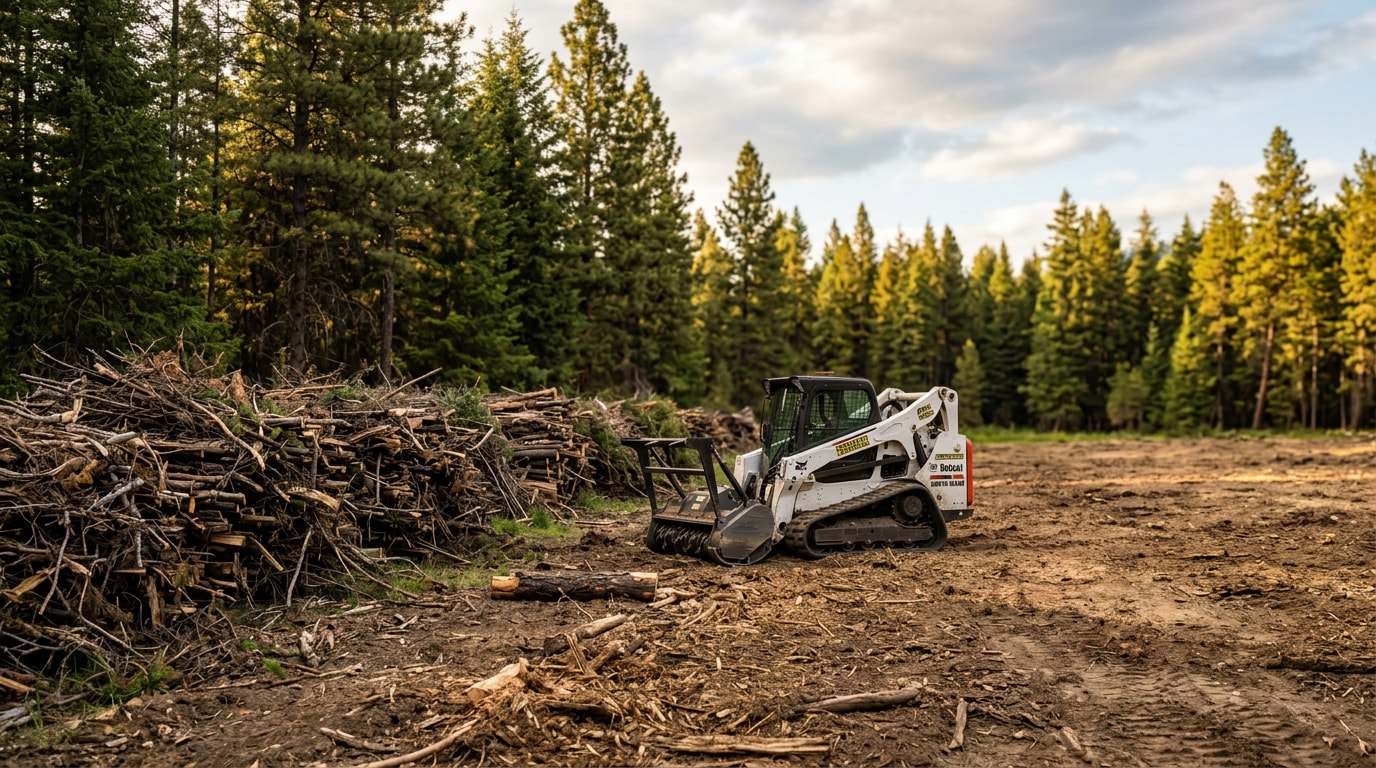
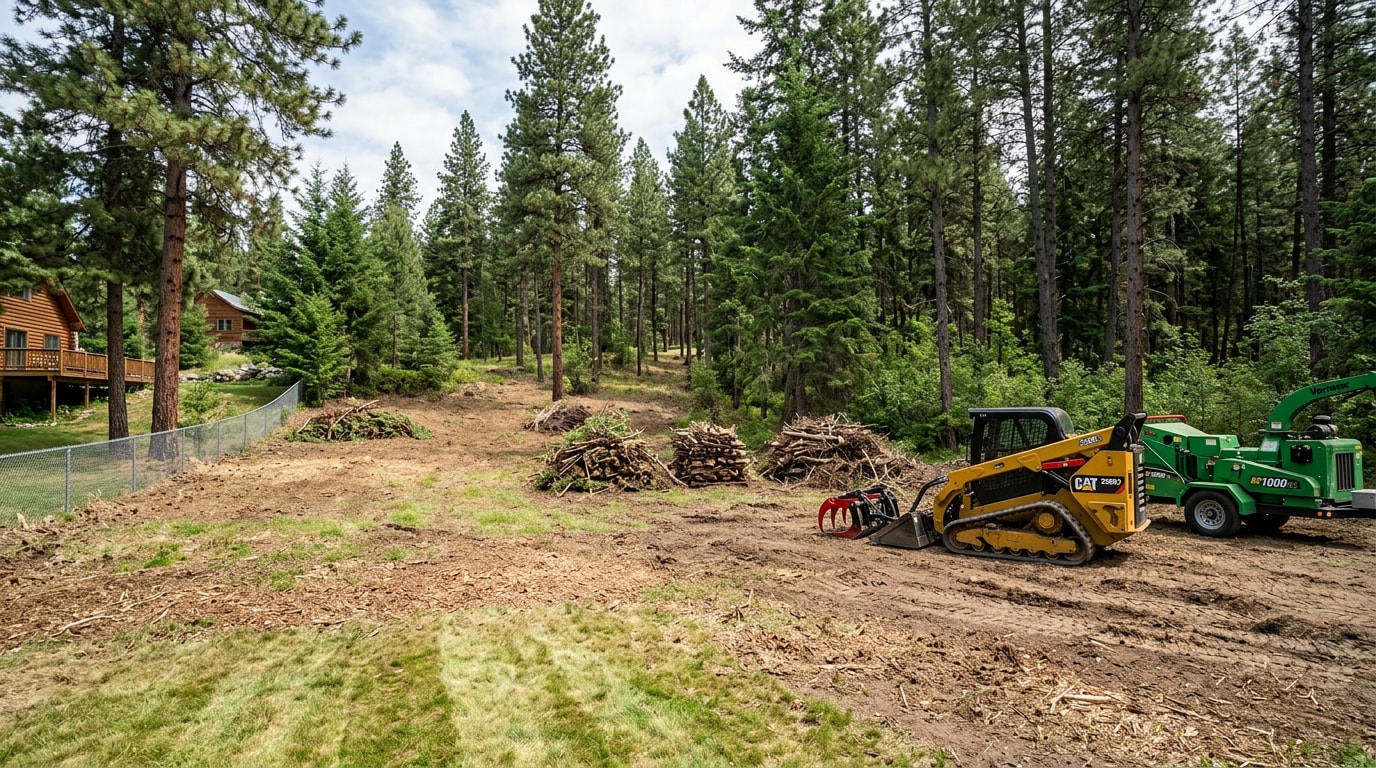
Equipment scales with the job. Hand tools and chippers handle small residential piles, while mulchers and skid steers take on dense underbrush across larger acreage. If your project also involves standing dead or hazardous trees, that typically falls under hazard tree removal rather than brush removal alone. You can see the full range of options on our tree service page or get specifics from our home page.
Brush Removal Cost in Post Falls, ID
Small brush pile pickups in Post Falls typically run $250 to $600. Larger cleanups with multiple piles or thicker material often land closer to $1,000. Price scales with pile size, how far equipment has to travel on the property, and whether the crew needs to grind stumps along with the brush.
| Job Size | Typical Range | What Drives the Cost |
|---|---|---|
| Single small pile | $250 - $600 | Volume, access to the pile, curbside vs. backyard pickup |
| Multiple piles or storm debris | $600 - $1,000+ | Total volume, vehicle access, sorting/separation needs |
| Underbrush clearing (per acre) | Varies widely | Vegetation density, terrain, equipment type |
Per-acre underbrush and land-clearing costs are harder to pin down because vegetation density and terrain matter more than acreage alone. For reference, USDA's Natural Resources Conservation Service lists Idaho brush management practice rates for fiscal year 2025 ranging from about $17 per acre for light-density mechanical clearing up to roughly $44 per acre for high-density mechanical clearing . Those are federal cost-share rates for conservation work, not retail quotes, but they show how much vegetation density alone swings per-acre pricing before a contractor even factors in labor, hauling, or disposal.
Get an exact number by requesting a free estimate rather than relying on averages, since lot access and brush type change the quote more than anything else.
Why Professional Brush Removal Matters in Post Falls
Dense, dry brush is wildfire fuel. Clearing it creates defensible space, the buffer between your home and anything that could carry a fire toward it.
The National Fire Protection Association recommends property maintenance with varying degrees of allowed vegetation based on distance from the structure, defining an immediate zone of 0 to 5 feet, an intermediate zone of 5 to 30 feet, and an extended zone of 30 to 100 feet , according to a Department of Energy resource guide on defensible space. Following that zone system does more for your property than a general "clean it up" pass, since fuel load close to the structure matters most.
Reputable brush removal crews are also insured and background-checked. That matters because you're letting equipment operators and chainsaws onto your property, often near fences, septic lines, or landscaping you want to keep intact. If the cleanup turns up dead or leaning trees near the house, pair the brush work with a dead tree removal so the whole defensible-space zone gets addressed at once.
Our Brush Removal Process in Post Falls
Local providers generally run one of two models: a flat-rate pile pickup, or a full consultation with site assessment and permit guidance.
| Service Model | Best For | What's Included |
|---|---|---|
| Pile pickup | Small cleanups, post-storm debris | Upfront pricing, fast scheduling, no site visit required |
| Consultation + assessment | Larger lots, dense underbrush, acreage | On-site evaluation, terrain review, permit guidance, custom quote |
Upfront Pricing and Fast Scheduling
For smaller jobs, many Post Falls brush removal companies quote pricing the moment you describe the pile size and location. No waiting on a callback.
Most of these pickups can be scheduled same-day or next-day. It's the faster path for homeowners who just want the brush gone without a drawn-out process.
Site Assessment for Larger Projects
Larger underbrush or land-clearing jobs usually start with an on-site visit. A crew walks the property and reviews:
- Vegetation density and type
- Terrain and slope
- Distance from structures
- Desired final grade
- Equipment access points
Depending on project scale and zoning, certain permits may apply before work starts. Requirements vary by lot size and whether protected trees, wetlands, or critical habitat areas are nearby, so confirm specifics with the Kootenai County Building Division, which has jurisdiction over structures and ground disturbance work outside city limits , or the City of Post Falls directly if your property sits inside city boundaries.
Sustainable Disposal Through Recycling
Most Post Falls and Kootenai County haulers prioritize recycling cleared brush into mulch or compost instead of sending it to a landfill. Usable wood may also be set aside for donation where a partner can accept it.
Check the Post Falls service area page to confirm local coverage, and browse recent projects to see completed cleanups in North Idaho. If your cleanup overlaps with a storm event, a storm tree cleanup crew can coordinate the brush hauling and downed-limb removal in a single visit. For a side-by-side look at how a similar job runs just up the road, our brush clearing guide for Coeur d'Alene covers the same process in more detail.
FAQ
How much does brush pile removal cost in Post Falls?
Small piles typically start around $250, with final cost depending on volume, access, and whether the crew needs to separate materials for disposal. Pricing should be upfront with no added fees after the work is finished.
Where can I dispose of a brush pile in Post Falls?
Local crews haul tree branches, shrubs, yard waste, and overgrown vegetation directly from your property. You don't need to bag, bundle, or transport anything yourself.
Do I need a permit for land clearing in Post Falls, ID?
It depends on project scope, tree size, and whether the parcel is inside city limits or unincorporated Kootenai County. Areas with protected trees, wetlands, or critical habitat often face stricter rules, so confirm current requirements with the Kootenai County Building Division or the City of Post Falls before starting work.
How long does a typical brush removal job take?
A single residential pile pickup usually takes under an hour once the crew arrives. Underbrush clearing on a half-acre to full acre lot typically runs a few hours to a full day, depending on density and equipment access.
What types of land clearing services are available locally?
Local contractors typically offer tree removal, brush clearing, stump grinding, and site preparation, covering everything from a single overgrown lot to full property prep for construction. If stumps are left behind after clearing, stump removal is usually quoted as a separate line item.
Does brush removal actually reduce wildfire risk?
Yes. Removing dry, dead vegetation and thinning dense brush near a structure reduces available fuel in the zones closest to the home, which is the core idea behind defensible space recommendations from fire-safety agencies.
Ready to get your property cleared before the dry season sets in? Request a free estimate and a crew will walk the pile size, access, and timeline with you before any work starts.