A tree limb trimmer in Spokane, WA usually gets called for one of three problems: a branch creeping toward the roofline, deadwood left over from winter, or a canopy that's gotten heavier and messier than it used to be. The right fix depends on the tree's species, its condition, and exactly where that limb sits relative to your house or the power lines. This guide covers what a trim actually includes, where Spokane's own tree rules kick in, and when a problem branch stops being a weekend project and starts being a liability.
The ISA Certified Arborists at CDA Tree Service handle limb trimming calls across Spokane and Spokane Valley year-round, and call volume for storm-damaged limbs reliably spikes after the season's first heavy wet-snow event. If you want a second opinion on a specific branch, get a free estimate before you climb a ladder.
What a Professional Tree Limb Trimmer Does
A trimming visit in Spokane generally involves one or more of three services: crown thinning and deadwood removal for tree health, clearance trimming to protect structures and utility lines, and emergency response for storm-damaged limbs. Which one applies depends on the tree's age, species, and recent weather.
Crown Thinning & Deadwood Removal
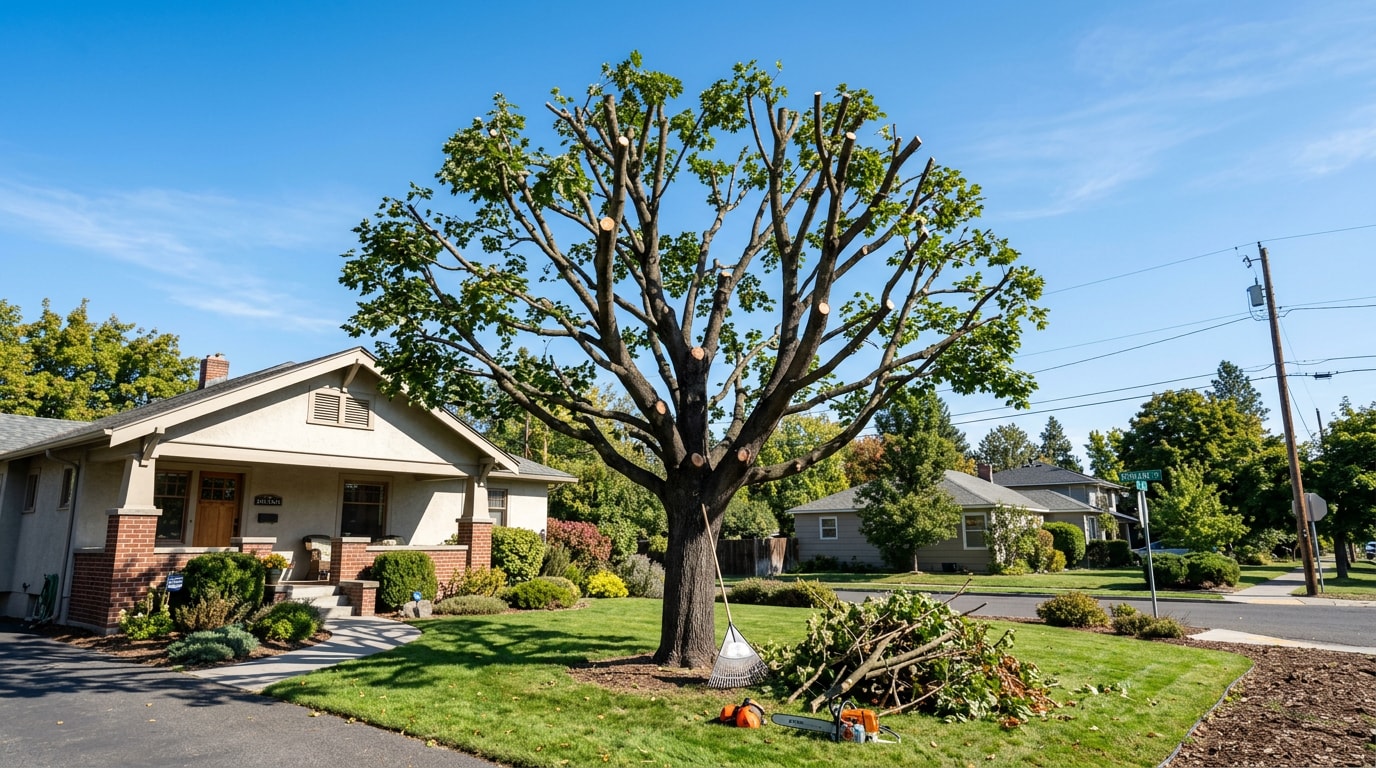
Crown thinning selectively removes branches to reduce density, which improves airflow and sunlight through the canopy. Deadwood removal targets limbs that are dead, dying, or already broken.
A good arborist will also check for old storm damage or poorly placed cuts from a prior trim, sometimes called crown restoration, and correct the shape over a season or two rather than all at once. If a tree has looked lopsided or stressed since a past prune, this is usually the fix. See our tree trimming and tree pruning pages for a full breakdown.
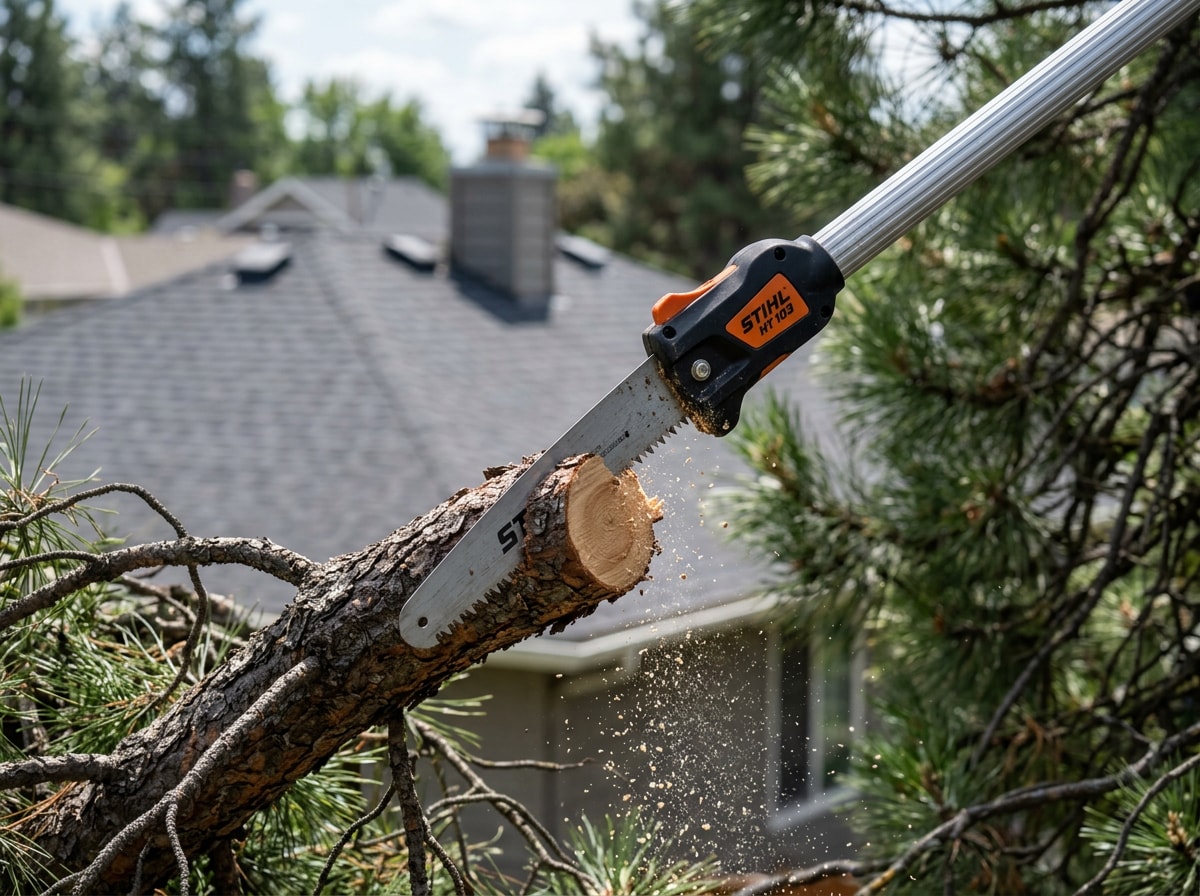
Clearance Trimming for Structures and Utility Lines
Clearance trimming keeps branch overhang away from rooflines, siding, fences, driveways, and, in Spokane's older neighborhoods, overhead utility lines. Roofline clearance alone can prevent gutter damage, moss buildup, and animal entry points. Utility clearance reduces the risk of outages during wind events.
Emergency Limb Trimming After Storms
Spokane's wind gusts and heavy wet snow loads can turn a healthy-looking limb into a hazard overnight. A hanging limb or partially broken branch can drop without warning, and waiting even a day or two raises the risk to people, cars, and anything parked or sitting underneath it. Our emergency tree removal and storm tree cleanup crews handle this kind of call on short notice.
How Much Does Tree Limb Trimming Cost in Spokane?
There's no flat rate that applies to every yard. Tree size, species, accessibility, and how much work is needed all move the price up or down, and a tree tangled in power lines or wedged between two houses costs more to trim than one standing alone in an open yard. For current ranges and what drives them, see our Average Cost to Trim a Tree in Spokane, WA guide. The most accurate number for your property still comes from an in-person estimate, not a generic online quote.
Tree Trimming Pros and Cons
Regular trimming benefits almost every tree, but it isn't without downside if it's rushed, done at the wrong time, or handled by someone without training.
Pros:
- Removes hazardous limbs before they fail
- Improves long-term tree health through better air circulation and drainage
- Boosts curb appeal, which can support property value on homes with mature landscaping
Cons:
- Wrong cuts, made at the wrong time of year, can stress or even kill a tree
- There's a real cost involved, especially for large or hard-to-reach limbs
- Improper technique can create entry points for pests and decay
A trained professional largely neutralizes all three cons, since proper technique and timing prevent the damage that amateur cuts often cause.
Is DIY Limb Cutting Worth the Risk?
Cutting your own limbs sounds straightforward until you're ten feet up a ladder holding a running chainsaw. Tree and landscape work carries real occupational risk. From 2011-2021, the Bureau of Labor Statistics reports 1,072 work-related fatalities occurred in the landscaping and groundskeeping industry , and OSHA's own enforcement data on tree trimming and clearing work confirms falls, struck-by hazards, and electrocution as the leading causes.
Ladders combined with chainsaws are a particularly bad pairing. A kickback or a shift in balance has nowhere good to go, and there's no way to drop a running saw safely mid-cut.
Power lines add another layer of danger. Many homeowners underestimate how far electricity can arc from an energized line, and a branch still touching a tree can conduct current even without direct contact from a saw blade.
Here's a useful real-world line: Spokane's own right-of-way pruning rule only lets property owners handle minor pruning themselves if branches being pruned do not exceed two inches in diameter, pruning does not exceed 15% canopy loss, and the tree is more than 10 feet from a power line . That threshold, set by the City of Spokane's Urban Forestry program, is a reasonable line for private trees too. Anything bigger, anything requiring a ladder or chainsaw, or anything near a power line is a job for a professional tree limb trimmer, full stop.
Best Time of Year to Trim Trees in Spokane
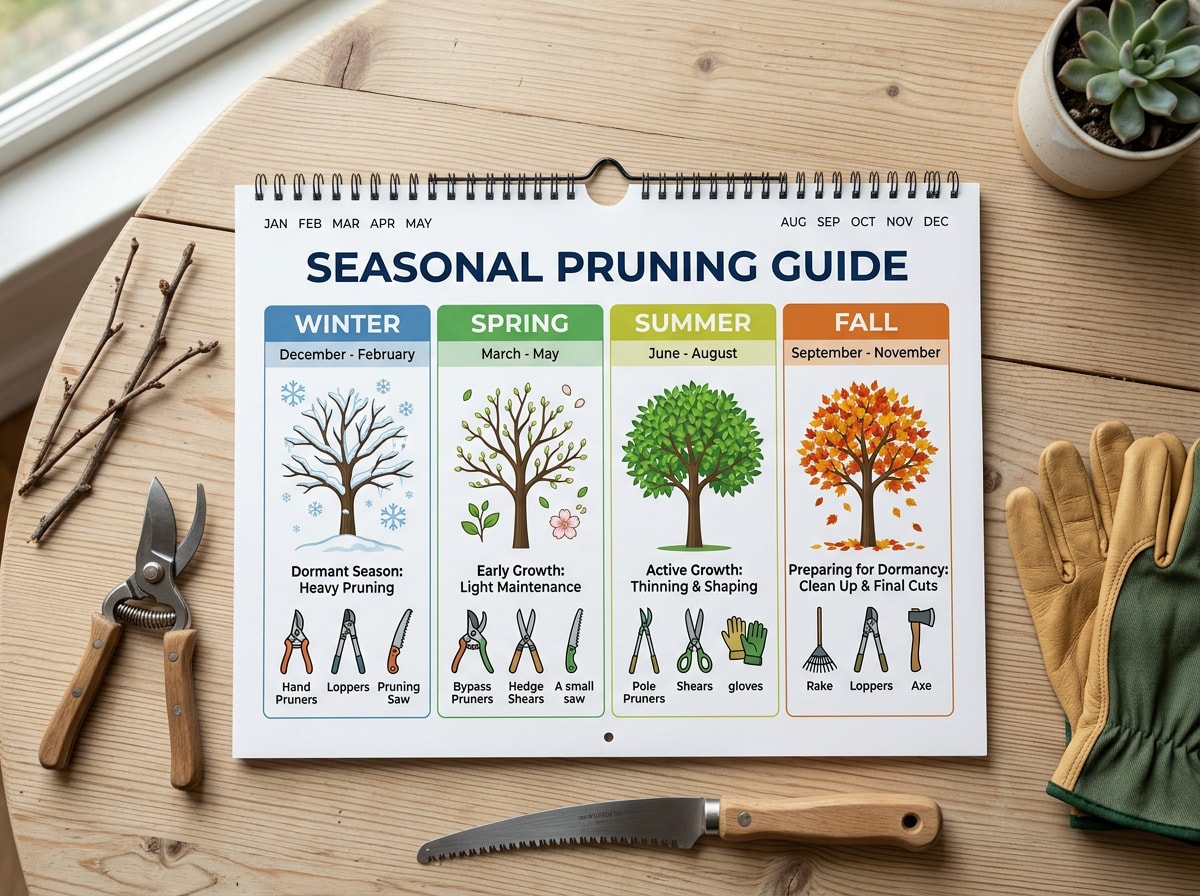
Spokane's cold, often snowy winters followed by dry summers make timing matter more than most homeowners expect. The best time of year for pruning most landscape trees and shrubs is during the dormant season, late winter to early spring , since dormant-season pruning reduces the risk of pest and disease issues affecting the pruning cuts .
| Season | Best Use | Avoid |
|---|---|---|
| Late Winter | Major structural pruning, crown thinning | N/A, ideal window |
| Spring | Light shaping only | Heavy cuts that stress new growth |
| Summer | Deadwood removal, clearance work, storm response | Major structural pruning |
| Fall | Minimal, light maintenance | Heavy cuts before winter stress |
Do You Need a Permit to Trim a Tree in Spokane?
Trimming a tree on private property generally doesn't require a permit. Trees in the public right-of-way are a different story. If your existing or planned tree is in the public right-of-way, you may need a tree permit depending on the kind of work you will be doing on the tree . The only exception is minor pruning that meets all three conditions above (branch diameter, canopy loss, and distance from power lines). Anything larger, or any removal of a right-of-way tree, requires hiring a Certified Arborist from the city's list and filing a permit application.
Why Spokane Homeowners Choose a Local Tree Limb Trimmer
Spokane homeowners consistently cite a few things when picking a crew: ISA Certified Arborist credentials, proof the company is licensed and insured, and real local experience with the region's soil, growth patterns, and weather swings. Honest, itemized pricing matters more than a flashy quote.
Before hiring anyone, ask directly about:
- Insurance coverage and what it includes
- Debris cleanup and haul-away
- Whether a permit applies to your specific job
A reputable tree limb trimmer in Spokane, WA will answer all three without hesitation. If a tree looks sick or declining rather than just overgrown, a tree health consultation or tree assessment is a smarter first step than a trim. For a dead or clearly hazardous tree, see our hazard tree removal and dead tree removal services.
Areas We Serve Near Spokane
Our crews regularly serve Spokane, WA, Spokane Valley, WA, Coeur d'Alene, ID, and Post Falls, ID. Response time can vary slightly by address, so it's worth confirming coverage before you book. Browse recent work on our projects page or get a free estimate for your property.
FAQ
Do I need a permit to trim a tree in Spokane?
Not for most private-property trees. Trees in the right-of-way need a permit unless the work is minor: branches under two inches, under 15% canopy loss, and more than 10 feet from a power line. Confirm your specific case with the city's Urban Forestry program before cutting anything near a sidewalk or street.
How often should trees be trimmed or pruned?
Most mature, healthy trees do fine with trimming every three to five years. Younger trees, or ones near structures or utility lines, often need more frequent attention to guide their structure early.
How much does tree trimming cost in Spokane?
It depends on tree size, species, accessibility, and scope of work, so there's no single flat rate. A free, in-person estimate is the only reliable way to get your actual number.
What's the best time of year to trim trees in Spokane?
Late winter, while trees are still dormant, is the best window for most structural pruning. Spring is for light shaping only. Summer works for deadwood and storm response. Fall should stay minimal, since heavy cuts going into winter can stress the tree.
How do I know if a limb needs emergency removal?
If a limb is hanging, cracked, or partially broken and sitting over a roof, driveway, car, or walkway, treat it as urgent. Don't wait for it to fall on its own; call for same-day assessment instead.
Tree limb trimming in Spokane is rarely a one-size-fits-all job. If a branch is close to the roofline, hanging after a storm, or you're just not sure what it needs, get a free estimate from a local crew before you decide anything.