Picking the right tree trimming tool in Spokane Valley, WA comes down to three things: branch diameter, tree species, and how high you need to reach. Grab the wrong one and you'll either crush healthy wood with an anvil blade or spend an hour fighting a branch that needed a saw, not shears. Below is what actually works for Inland Northwest yards, what it costs to buy or rent locally, and where a tool stops being enough and a professional crew takes over.
Match Your Tool to the Branch, Not the Other Way Around
Tree trimming tools fall into three groups: hand tools for small branches, saws and pole tools for mid-height reach, and power tools for thicker wood. Which one you need depends on branch diameter, species, and how far off the ground the cut sits.
Hand Pruners & Loppers (Up to 2 Inches)
Bypass pruners use two curved blades that slide past each other like scissors, giving clean cuts on live wood up to roughly ¾ inch thick. Anvil pruners close a single blade against a flat edge instead, which works on dead or dry wood but can crush living stems.
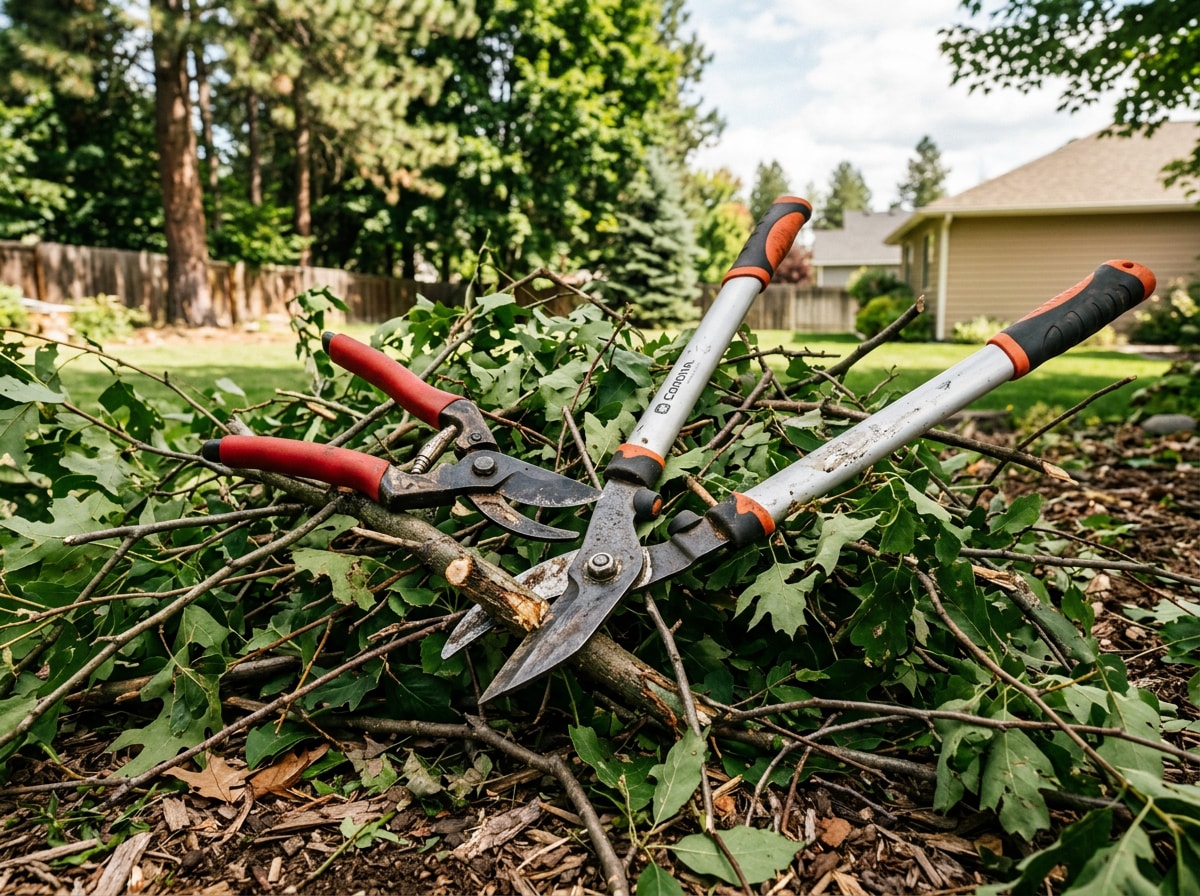
For most Spokane Valley homeowners pruning fruit trees, roses, or ornamentals, bypass pruners are the more versatile everyday pick. Loppers extend that same bypass mechanism onto long handles, stretching your cutting capacity to about 2 inches in diameter with far less bending.
Pruning Saws & Pole Pruners (2 to 5 Inches, or Out of Reach)
Once branches exceed 2 inches, shears and loppers stop being practical and a pruning saw takes over. Fixed-blade saws handle 2 to 5 inch branches with a coarse tooth pattern built to cut on the pull stroke, while folding saws trade some rigidity for easier storage.
Pole pruners solve the height problem without a ladder. A telescopic pruner mounts a small bypass blade on an extendable pole with a rope-and-lever mechanism, and a pole saw swaps that blade for a small saw when the branch is too thick for the pruner head. Both are worth owning on a property with mature trees and high branches that need regular shaping.
Power Tools: Chainsaws & Electric Pole Saws
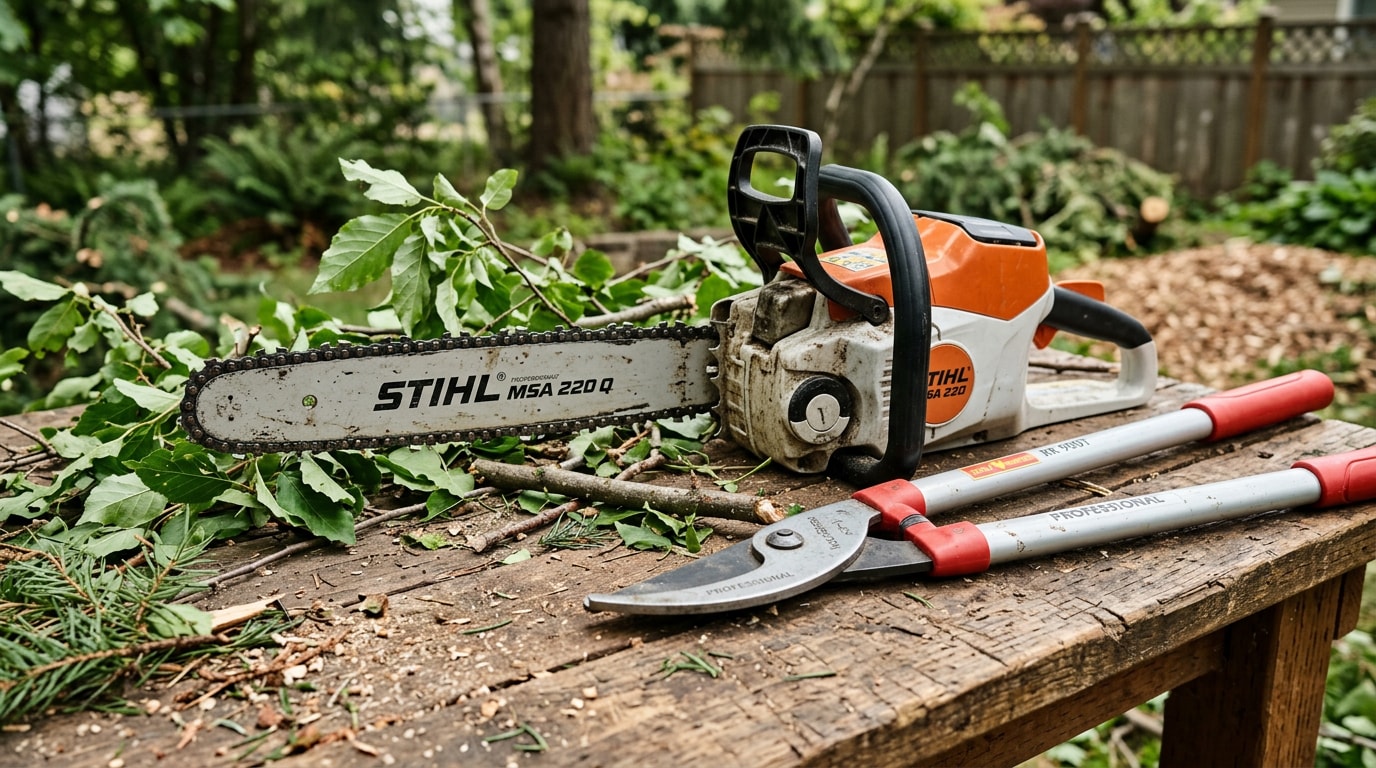
A chainsaw cuts thick limbs and trunk sections far faster than any hand tool. Choosing gas, battery, or corded-electric mostly comes down to how often you'll use it and how much noise, weight, and maintenance you're willing to manage.
| Type | Power | Run Time | Noise | Weight | Maintenance | Typical Cost |
|---|---|---|---|---|---|---|
| Gas chainsaw | Highest, best for large trees | Limited by fuel tank, refillable | Loudest | Heaviest | Mixed fuel, air filter, spark plug | $200-$600 |
| Cordless chainsaw | Strong for mid-size jobs | 20-45 min per battery charge | Moderate | Mid-weight | Battery care, chain sharpening | $150-$450 |
| Corded-electric chainsaw | Lower, best for light trimming | Unlimited while plugged in | Quieter | Lightest | Minimal, just chain upkeep | $80-$200 |
Most chainsaws, gas or battery, are built with a chain brake and other standard safety features designed to cut injury risk, which is worth confirming before buying a used saw. All modern chainsaws are equipped with four safety features that can significantly reduce the risk of injury. Kickback is the bigger everyday hazard: operators are told to watch for branches under tension, since they may spring out when cut , and that single habit prevents a lot of trips to urgent care.
Where to Buy or Rent a Tree Trimming Tool in Spokane Valley, WA
If you trim trees once or twice a year, renting a chainsaw or pole saw usually makes more financial sense than buying one outright. Big-box home improvement stores and dedicated rental counters around Spokane Valley stock pole saws, chainsaws, and pruning tools by the day or week.
Demand for rental equipment spikes in early spring and again after fall windstorms, when storm-damaged limbs push more people toward the same rental counters at once. Calling ahead or reserving equipment a few days early is a reasonable precaution during those windows. For routine pruning, a solid set of hand pruners and loppers is cheap enough that the buy-versus-rent question barely matters; it's the bigger power tools where that decision counts. If renting isn't the right fit for your property, our Spokane Valley service area page covers local tree care options.
When a Tool Isn't Enough: Permits, Power Lines & Professional Gear
Beyond what a homeowner typically owns, licensed tree crews carry equipment built for scale and safety rather than convenience: climbing harnesses, rated ropes, rigging systems, and bucket trucks. Rigging lets a crew lower cut limbs in a controlled way instead of dropping them onto a roof or fence.
This is safety-certified equipment that takes real training to use, not something to improvise with hardware-store rope and a borrowed harness. Our crew has walked plenty of Spokane Valley homeowners through the difference between a DIY pruning job and one that needs a bucket truck and a rigging plan, and the deciding factor is almost always height plus proximity to a structure or power line. If a job calls for that level of gear, our tree trimming and tree removal pages outline what that work typically involves.
Power lines add a legal wrinkle, too. Just over the city line, minor pruning within the right-of-way is only exempt from a permit if branches don't exceed two inches in diameter, pruning doesn't exceed 15% canopy loss, and the tree is more than 10 feet from a power line. Spokane Valley properties near Avista infrastructure face similar practical limits: the utility recommends keeping shrubs no more than 25 feet tall near poles, trees no more than 40 feet tall within 50 feet of a pole, and reserving taller trees for spots farther away . If your tree is anywhere close to that range, a phone call beats a pole saw.
Choosing the Right Tool for Your Tree Type and Size
Matching the tool to the tree, rather than grabbing whatever's closest, means cleaner cuts and less wasted effort.
- Fruit trees: Soft wood, frequent light shaping. Bypass pruners and loppers handle most of the work without stressing the tree.
- Hardwoods (maple, oak, elm): Denser wood dulls blades faster. A quality pruning saw or chainsaw is often needed once branches thicken past a couple of inches.
- Palm trees: Fibrous trunks and fronds respond better to curved-blade saws designed to avoid tearing, not standard straight-blade tools.
Getting this match right matters, since the wrong blade type crushes or tears tissue instead of cutting it cleanly. Our tree pruning services page covers species-specific approaches for common Inland Northwest trees.
Safety and Ease of Use
Tool choice matters, but how you use it matters just as much. A basic checklist for Spokane Valley conditions: safety glasses, cut-resistant gloves, long sleeves, steel-toe boots, hearing protection for power tools, and an ergonomic grip on hand tools to reduce strain.
Fall storm-damage season adds risk, since broken limbs under tension can snap unpredictably. Slower, deliberate cuts are worth the extra time. Never trim branches touching or near power lines; assume all power lines are energized , and leave any work within ten feet of a power line to trained, experienced line-clearance tree trimmers , not a homeowner with a pole saw.
Budget & Availability
Tool costs span a wide range:
- Bypass pruners: $15-$40
- Quality loppers: $30-$80
- Telescopic pole saws: $100-$250
- Professional-grade chainsaws: $150-$600, depending on power source and build quality
Availability shifts seasonally, too. Rental inventory tightens during spring cleanup and fall storm season, and retail stock of popular pole saws can thin out after a big windstorm moves through the area. Budget a little flexibility into timing rather than assuming same-day availability during peak demand weeks.
Maintaining Your Tree Trimming Tools
Clean blades cut better and last longer. Wipe sap and dirt off pruners and loppers after each use, then apply a light coat of oil to prevent the rust that quietly ruins otherwise good tools over a single wet Spokane winter.
Sharpen hand pruners every few weeks during heavy use, and at least once per season otherwise. Disinfecting matters too: disinfect pruning tools if there's a danger of spreading infection from one diseased plant to another, cleaning tools between cuts with 70 percent alcohol or bleach diluted one to nine with water. That habit stops disease from one infected tree spreading to a healthy one a few feet away.
Common Mistakes to Avoid
- Using an anvil pruner on live wood. It crushes stems instead of cutting cleanly and leaves the tree more vulnerable to disease.
- Over-pruning. Removing more than about a quarter of a tree's live canopy in one season stresses the tree and can trigger weak, fast regrowth.
- Cutting at the wrong angle. A flush cut instead of one just outside the branch collar slows healing and invites decay.
- Mismatched tool size. Forcing loppers through a branch that needed a saw leads to ragged cuts that take longer to close over.
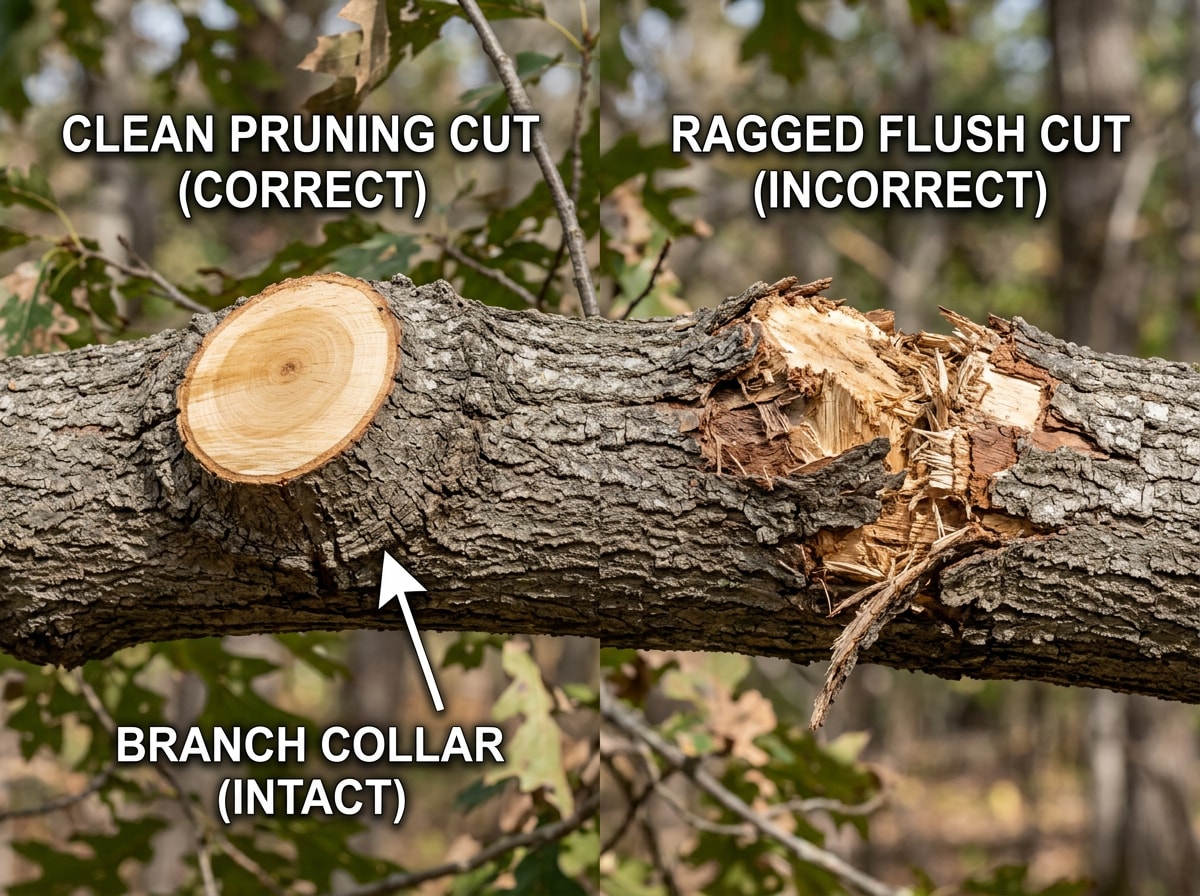
Clean, correctly sized cuts heal faster and keep the tree healthier long-term. When a tree's size, location, or condition pushes past what hand tools can safely handle, request a free estimate and we'll walk the property with you before anyone picks up a saw. For more on reach and technique, see our related guide on the tree limb trimmer options Spokane homeowners rely on.
FAQ
What Is the Best Tool for Trimming Trees?
It depends on branch size. Bypass pruners or loppers handle branches up to 2 inches, a pruning saw or chainsaw covers thicker branches, and a telescopic pole tool or a professional arborist handles anything too high to reach safely from the ground.
What Are the 5 Rules of Pruning Trees?
Remove dead or diseased wood first. Cut just outside the branch collar, not flush against the trunk. Avoid removing more than a quarter of the canopy at once. Use sharp, properly sized tools. Prune during the tree's dormant season whenever possible.
How Do You Cut Tree Limbs That Are Too High to Reach?
Telescopic pole pruners, pole saws, or electric pole saws extend your reach several feet without a ladder and handle most ordinary high-branch trimming. Any limb near a power line, or anything requiring a ladder plus a chainsaw, calls for a professional.
How Do You Maintain Pruning Tools?
Wipe sap and debris off blades after every use, disinfect between cuts on different trees to avoid spreading disease, and sharpen regularly based on how often the tool sees use. This keeps blades cutting cleanly instead of tearing or crushing wood.
Should I Rent or Buy a Tree Trimming Tool?
Rent if you only trim once or twice a year, especially for a chainsaw or pole saw. Buy if you're pruning multiple trees every season, since a quality set of hand pruners and loppers pays for itself quickly. Visit the homepage to see which services make sense if a tool ends up being the wrong call for your tree.