Cedar clearing in Spokane, WA usually means one of two jobs: mulching volunteer cedar off acreage, or felling a single mature tree that's grown too close to a home, fence, or driveway. The two jobs use different equipment, different timelines, and different price tags. Here's how to tell which one your property needs, what it costs, and which permits actually apply before you book a crew.
How Much Does Cedar Clearing Cost in Spokane, WA?
Pricing swings more than most homeowners expect, because "cedar clearing" covers everything from grinding brush on five acres to dropping one 80-foot tree six feet from a foundation. Acreage work is usually priced per acre; single-tree work is usually priced per tree.
| Project Type | Typical Price Range | Main Cost Drivers |
|---|---|---|
| Forestry mulching (volunteer cedar, acreage) | $1,500 - $6,000 per acre | Density, slope, access, debris left as mulch vs. hauled |
| Single mature cedar removal + stump grinding | $800 - $3,500 per tree | Height, proximity to structures, root flare size |
| Fence-line or driveway cedar clearing | $500 - $2,500 per 100 linear feet | Number of trees, equipment access, cleanup scope |
These ranges are general industry estimates, not quotes. The only reliable number comes from a site visit, since slope, soil, and equipment access change the math fast. Request a free estimate and a crew will walk the property before giving you a figure.
Do You Need a Permit for Cedar Clearing in Spokane County?
Most residential cedar removal, a tree or two near a house, doesn't trigger a permit. Larger clearing tied to construction or grading is a different story.
Spokane County and the City of Spokane Valley define a "major" land-disturbing activity as activities that disturb an area equal to or greater than one acre, or create additional impervious surface area greater than or equal to 5,000 square feet . Cross that threshold and you'll need an Erosion and Sediment Control plan submitted with your permit application, because an Erosion and Sedimentation Control plan is required to be submitted to Spokane County with your permit application when you are planning a major land-disturbing activity, and this needs to be done prior to any land-disturbing activities .
If your plan includes burning the debris instead of hauling or mulching it, there's a separate rule most homeowners miss. Washington's land-clearing burn permit is only valid for outdoor burning tied to a genuine change in land use, and it comes with location restrictions: land clearing burning is not allowed inside of urban growth areas, within city limits of cities with a population of 10,000 or more, or within an area having a general population density of 1,000 or more persons per square mile . That rules out burning for most lots inside Spokane or Spokane Valley city limits, permits are also seasonal: permits are valid January 1st to June 30th and July 1st to December 31st .
Bottom line: check your parcel's zoning and acreage against Spokane County or Spokane Valley's land-disturbance rules before equipment shows up. A quick call to the county planning desk, or to the Spokane Valley land disturbance page, settles it in minutes.
Volunteer Cedar vs. Mature Cedar: Two Different Removal Jobs
Here's where a lot of local content gets the biology wrong. Western redcedar isn't a dryland pasture invader the way junipers are on Great Plains rangeland. It's a shade-tolerant climax species that does best in moist, cool sites, which is exactly why it shows up where it does around Spokane: shaded fence lines, untended draws, north-facing lot edges, and anywhere water collects near a structure. Left alone for a few seasons, a handful of seedlings in one of these spots can turn into a dense, leaning stand that crowds a driveway or leans toward a roofline.
Volunteer Cedar on Open or Rural Land
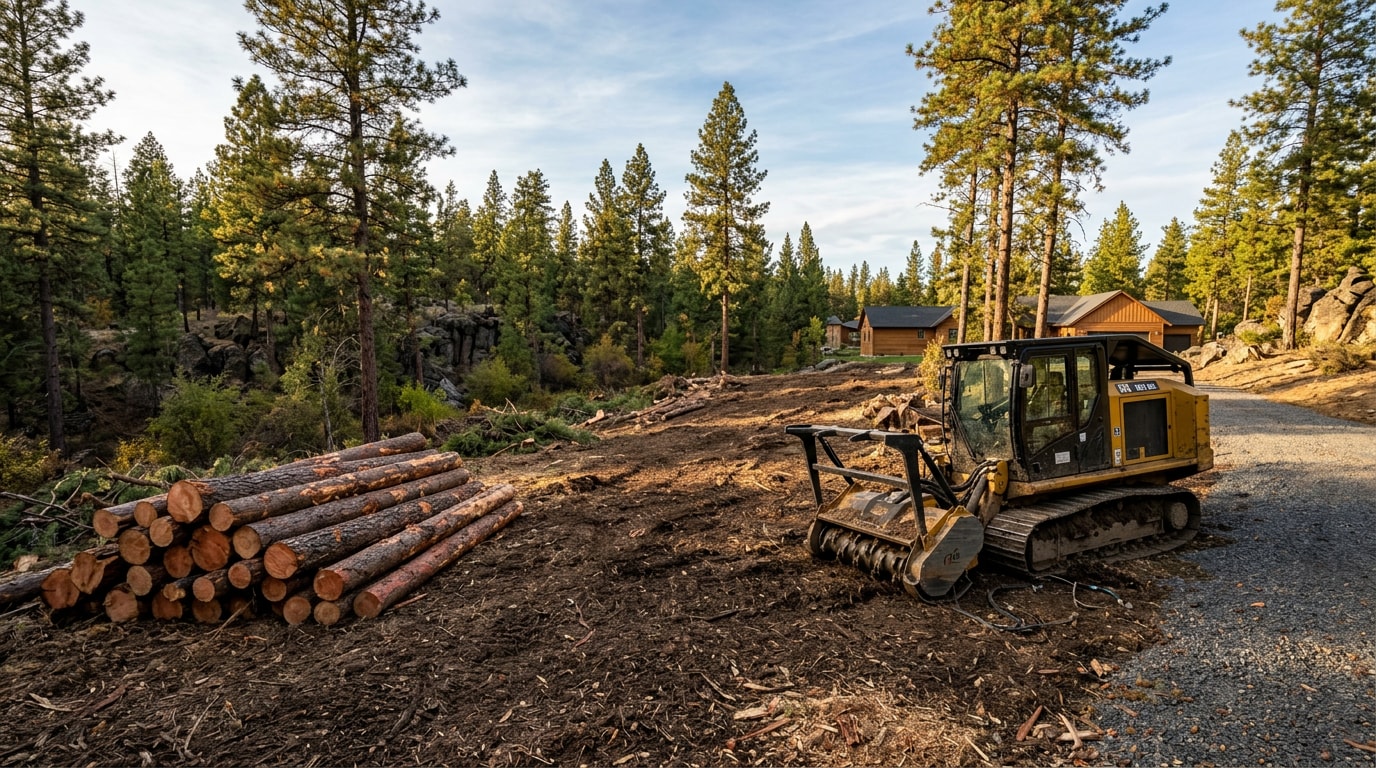
Scattered cedar across acreage is usually a forestry mulching job. A mulching head grinds standing brush and small trees into mulch on-site, which disturbs very little soil and leaves root mass in place for erosion control. It's efficient for reclaiming pasture edges or clearing a fence line across several acres in a single visit.
A Mature Cedar Near a Structure
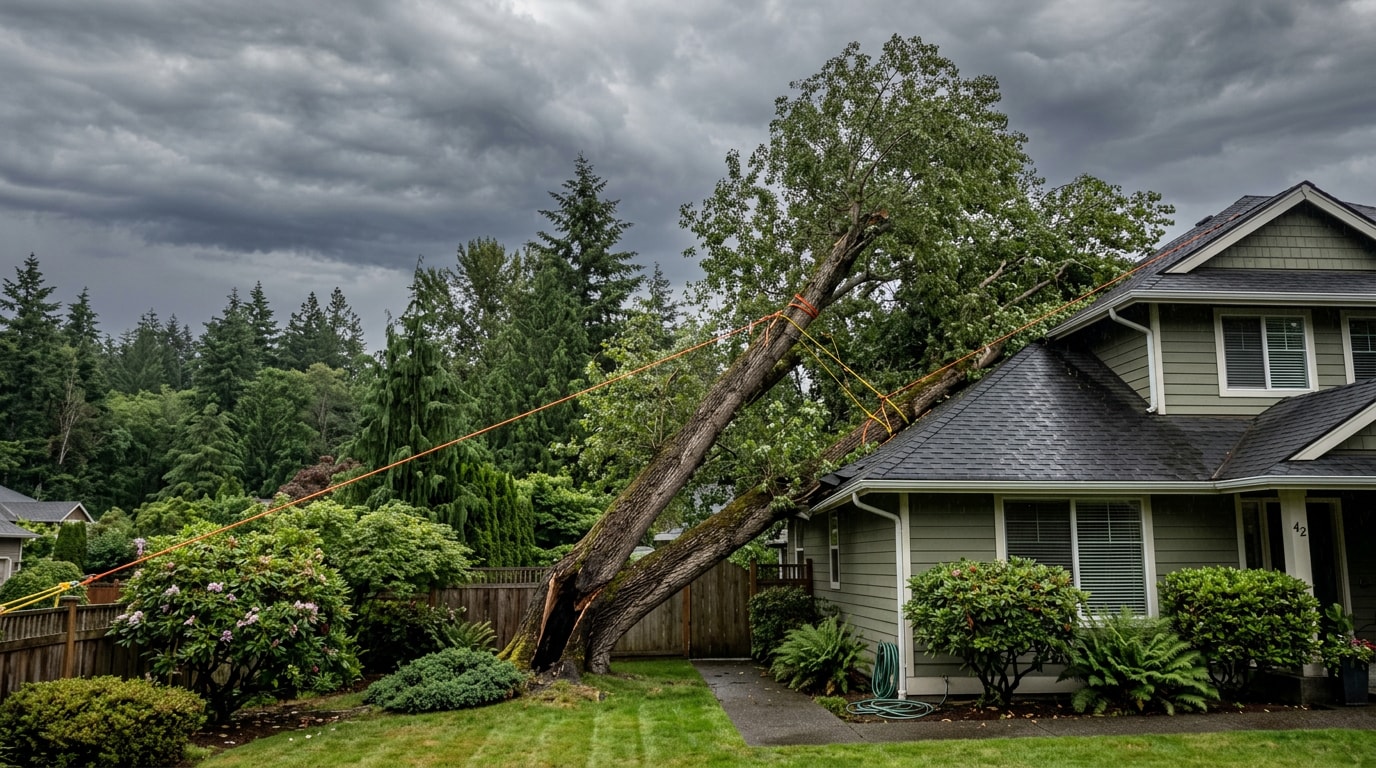
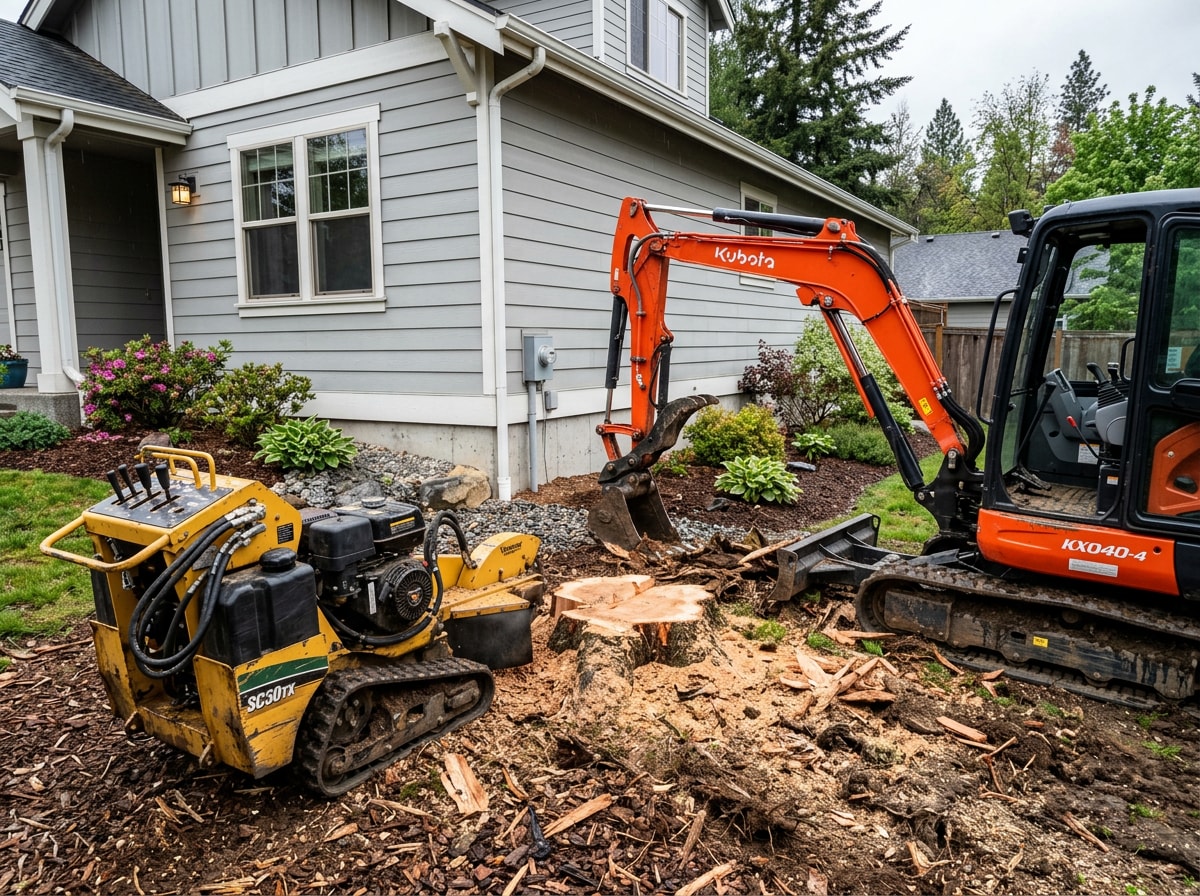
A single large cedar within falling distance of a house, garage, or power line is a different job entirely. That calls for full removal with stump grinding, felling the tree in sections if needed, then grinding the stump and root flare so the area can be graded or landscaped. Mulching equipment isn't practical that close to a foundation or buried utility line. If the tree shows dieback, cracking, or lean toward the house, it's worth a tree assessment before removal day to confirm the safest felling direction.
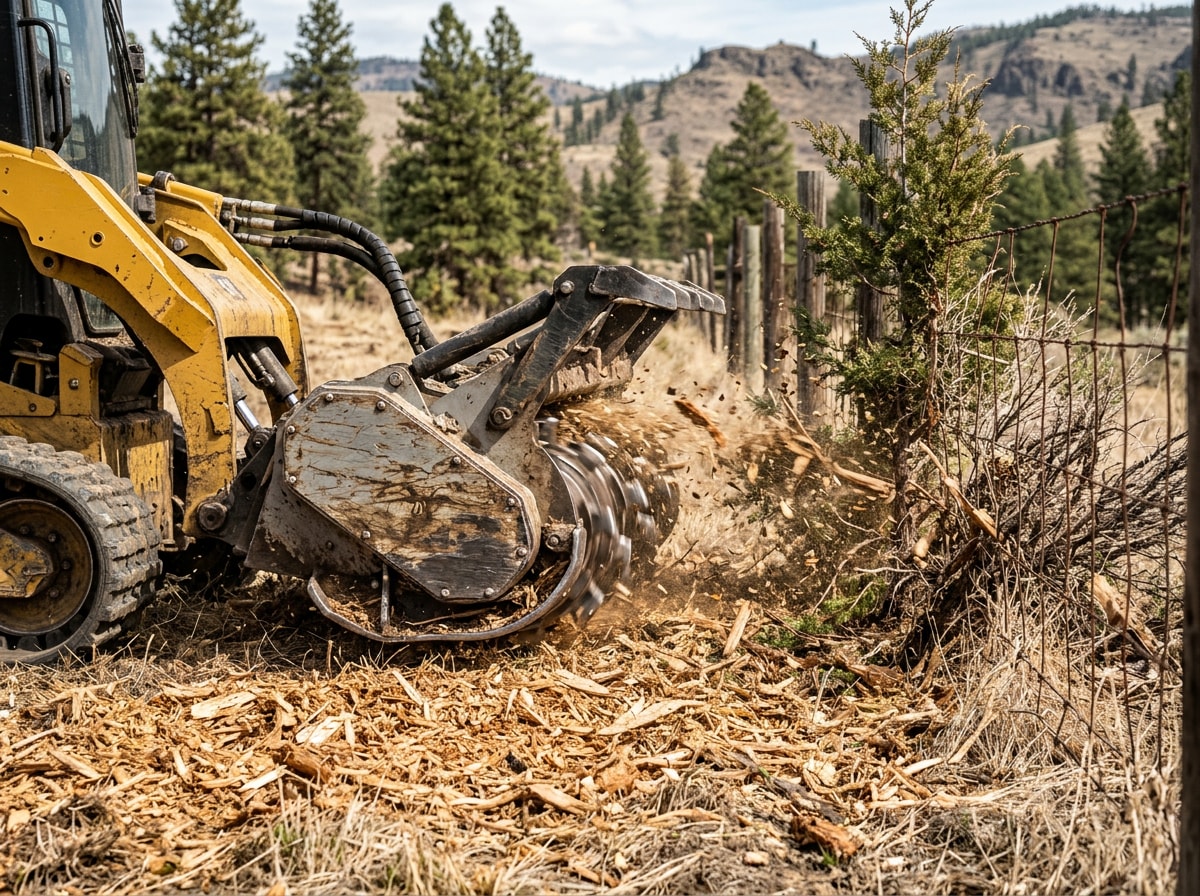
The Cedar Clearing Process, Step by Step
Most projects, whether it's one tree or five acres, follow the same sequence:
- Site visit and assessment. A crew walks the property to check slope, drainage, access points, utility lines, and which trees (if any) are worth keeping.
- Equipment selection. Dense acreage usually calls for a tracked mulching head; single trees near structures call for chainsaw felling and a stump grinder.
- Permit check. If the project crosses the one-acre or 5,000-square-foot disturbance threshold, an erosion control plan gets filed before cutting starts.
- Clearing. Crews work selectively around property lines, retained trees, and structures rather than cutting indiscriminately.
- Debris handling. Material is either mulched in place, chipped and hauled, or stacked for pickup, confirm which one is included in your quote.
- Grading and cleanup. Stumps and root flares are ground down so the site is level and workable for landscaping, grazing, or construction.
A smaller residential lot typically wraps in a day or two. Larger rural acreage with dense stands often gets phased across several weeks, especially if mulched material needs to settle before grading.
Why Clear Cedar in Spokane's Wildfire-Prone Terrain
Eastern Washington's wildland-urban interface means a lot of Spokane-area homes sit close to dense cedar and brush, and that proximity carries real fire risk during dry summers. The Washington Department of Natural Resources notes that as many as 80 percent of homes lost to wildland fire may have been saved if brush around the homes were cleared and defensible space created around structures .
DNR's defensible space guidance breaks the area around a home into zones, each with different clearing standards. A free Firewise risk assessment through Spokane Conservation District can tell you exactly how much space your specific property needs, since the size of this space will vary based on factors such as slope and vegetation type, determined during the assessment . For a leaning or dead cedar inside that buffer, our hazard tree removal and dead tree removal services handle the removal; storm tree cleanup covers what's left after a windstorm takes one down on its own.
Choosing a Professional Crew vs. DIY
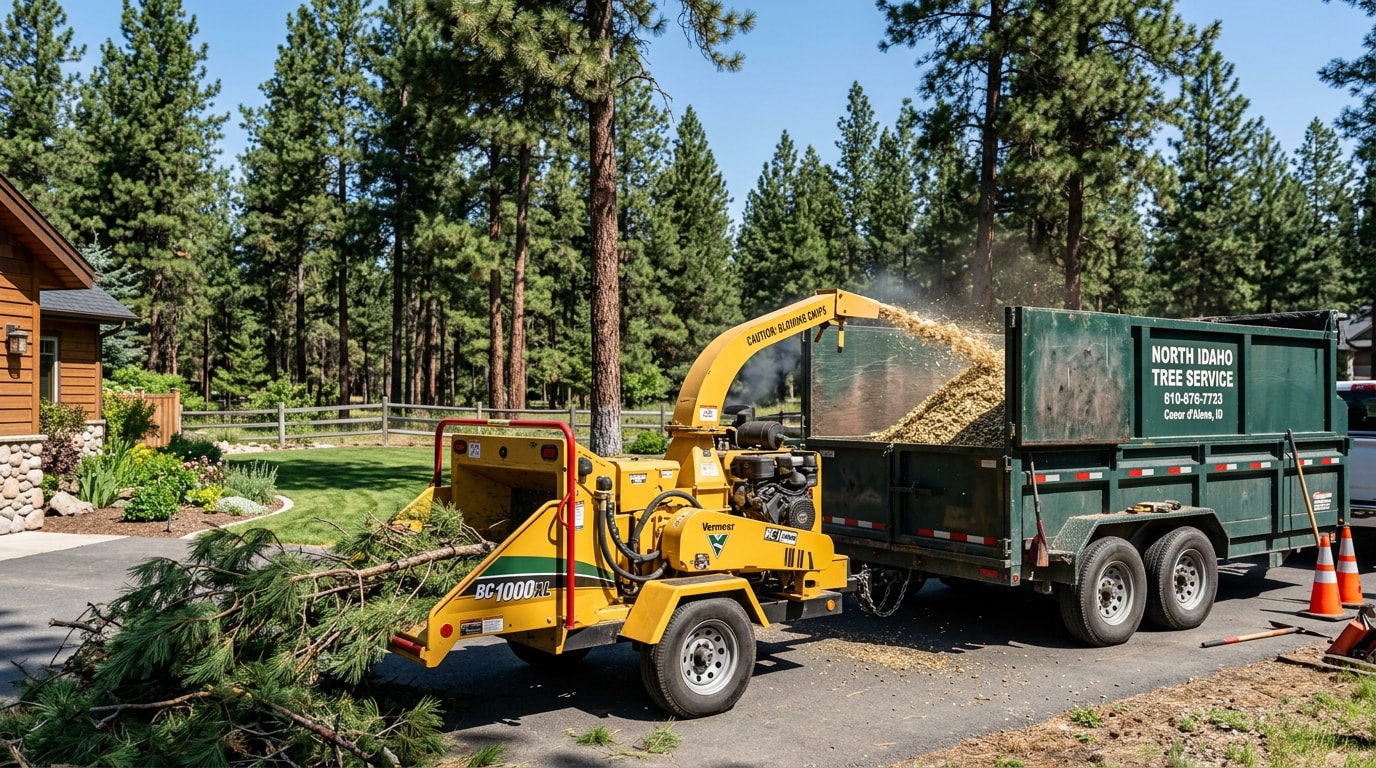
Rental equipment makes DIY clearing look tempting, but the mistakes that cost the most, hitting a buried utility line, cutting a tree the wrong direction toward a structure, or disturbing drainage on a slope, are also the most expensive to fix after the fact. In our own clearing jobs around the South Hill and Five Mile Prairie, the part that surprises homeowners most is how precisely a mulching head or excavator can work: operators route around property lines, retained trees, and septic fields rather than clearing a lot bare.
A professional crew also handles the permit question upfront, confirms debris disposal method before the invoice arrives, and carries the insurance that covers a mistake if one happens. For projects anywhere from a single backyard cedar to several acres of pasture, our tree service team and stump removal crews serve Spokane and Spokane Valley property owners. If you're managing brush or cedar on the Idaho side of the border too, our guide to brush clearing services in Coeur d'Alene covers the same decisions for that market.
You can browse completed jobs on our projects page, or start with the homepage at {{SITE_URL}} to see full service coverage across the Inland Northwest.
FAQ
How much does cedar clearing cost in Spokane, WA?
Expect roughly $1,500 to $6,000 per acre for forestry mulching of volunteer cedar and brush, or $800 to $3,500 for removing a single mature cedar with stump grinding. Density, slope, and access are the biggest swing factors. A site visit is the only way to get an exact number, request one here.
Do I need a permit to clear cedar on my Spokane property?
Not usually for a tree or two. You do need a permit and an erosion control plan once the project disturbs one acre or more, or adds 5,000 square feet or more of impervious surface. Check with Spokane County or Spokane Valley before starting anything larger than a backyard job.
Is forestry mulching effective for clearing cedar?
Yes, for volunteer cedar and brush across open land. A mulching head grinds standing growth into mulch on-site, which controls erosion and leaves the ground more usable than hauling everything away. It's not a fit for a single large tree right next to a structure, that needs felling and stump grinding instead.
Can I burn cedar debris instead of hauling it away?
Only outside city limits and urban growth areas, and only during the state's set burn windows (January 1 to June 30, and July 1 to December 31). Most properties inside Spokane or Spokane Valley don't qualify. Mulching or hauling is the practical option for in-town lots.
How long does a cedar clearing project take?
A single tree or small residential lot usually wraps in a day or two. Larger acreage with dense cedar stands often gets phased across a few weeks, especially when mulch needs time to settle before grading.
Does cedar near my house raise my wildfire risk?
Yes, especially within 30 feet of the structure. DNR's defensible space guidance recommends thinning and clearing in that zone first since it has the biggest impact on whether a home survives a wildfire.