Tree brush removal in Spokane, WA usually gets scheduled around a specific trigger: a new build, a driveway widening, or acreage that's finally getting reclaimed after years of neglect. The right method, forestry mulching, cut-and-haul, or a combination of both, depends entirely on vegetation density, slope, and what the land needs to look like when the crew leaves. Below is the process we walk clients through on every job, including cost ranges pulled from completed Spokane-area clearing projects.
Land Clearing for Residential Lots, Acreage & Access Routes
Spokane property owners typically need clearing work before:
- A building pad goes in
- A driveway gets widened
- A shop or outbuilding is placed
- A fence line needs cutting
- Utility access has to be opened up
- Overgrown acreage finally gets reclaimed
Every job gets scoped differently because every site is different. Crews review slope, drainage, access limitations, vegetation density, and how the land will ultimately be used before recommending an approach. Some properties only need selective brush clearing; others call for forestry mulching, logging, and broader site preparation combined into one project.
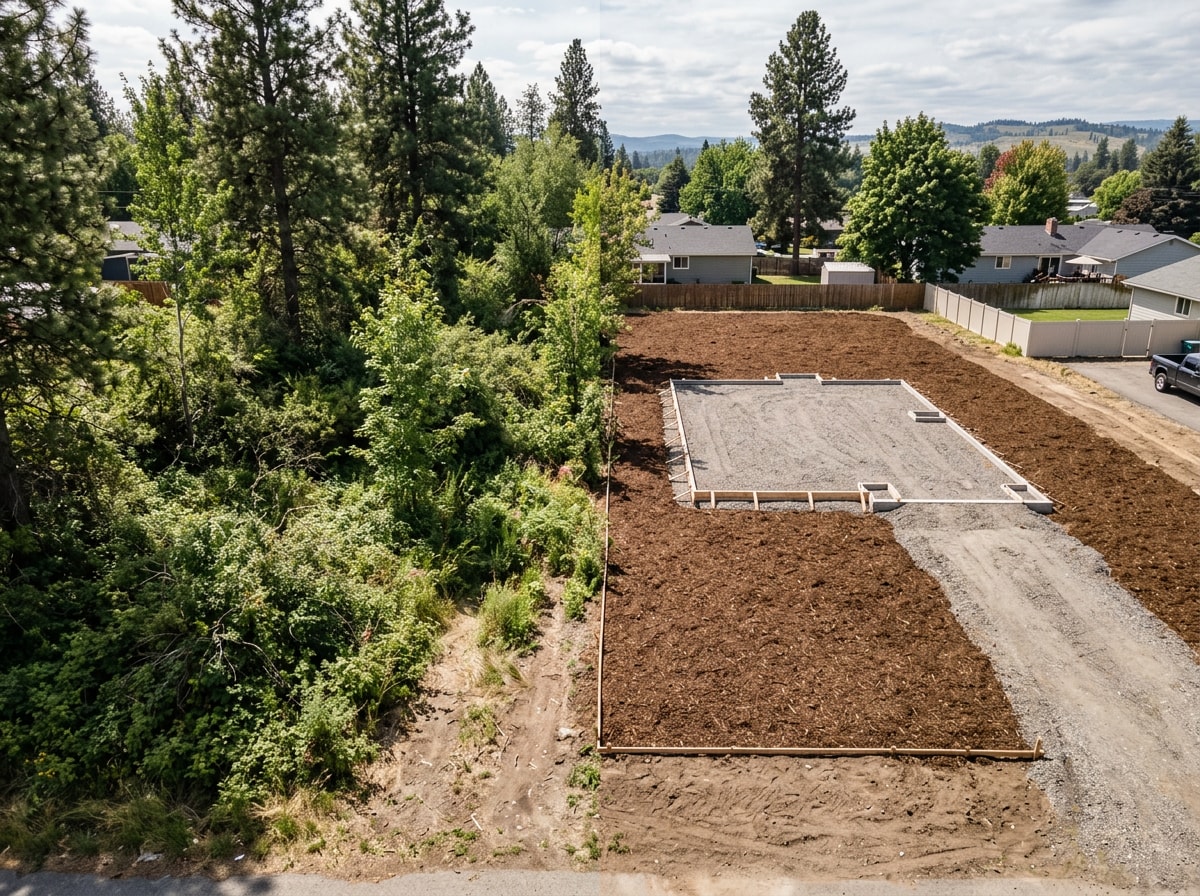
Request a free site assessment and we'll walk the property with you before quoting anything. For ongoing tree care once the lot is cleared, see our full tree service lineup.
Forestry Mulching vs. Cut-and-Haul Brush Removal in Spokane
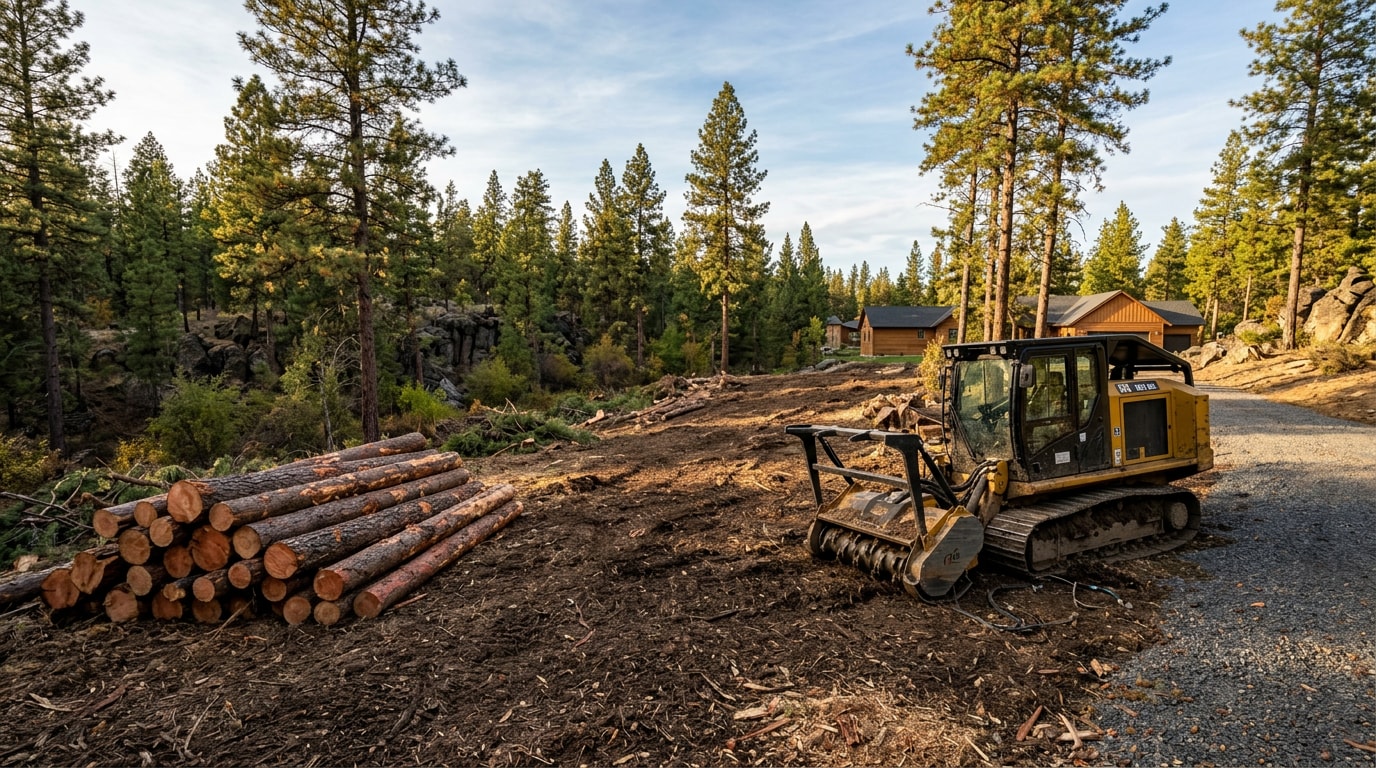
Forestry mulching is one of the more effective techniques for managing brush, small trees, and dense undergrowth on Spokane County properties. Commercial-grade brush cutting and forestry mulching machines are available for mowing competing vegetation to create a favorable environment for the regeneration of desirable trees and non-woody plants. Vegetation gets ground on site into a mulch layer instead of hauled away, which cuts trucking costs and limits soil disturbance.
Real benefits on a typical Spokane lot include:
- Reduced brush and seasonal fuel loads
- Easier movement across wooded or overgrown acreage
- Less soil disturbance than full removal methods
- Cleaner fence lines and driveways
- On-site processing of vegetation whenever ground conditions allow
Traditional cut-and-haul removal still has its place, particularly where mulch residue isn't wanted on the finished site. Here's how the two methods compared on a recent half-acre overgrown lot we cleared in Spokane Valley:
| Factor | Forestry Mulching | Cut-and-Haul Removal |
|---|---|---|
| Typical cost | $1,500–$3,000 | $2,500–$4,500 |
| Speed | About 1 day | 2–3 days |
| Soil disturbance | Low | Moderate to high |
| Debris handling | Processed on site into mulch | Hauled off property |
On that size lot, mulching usually finishes faster and leaves usable groundcover behind. Cut-and-haul makes more sense when every trace of vegetation needs to leave the property, such as ahead of foundation work. Pricing on your property will vary with terrain and vegetation type, which is why we quote after a walk-through rather than off a flat rate.
Complete Site Preparation for Your Development Goals
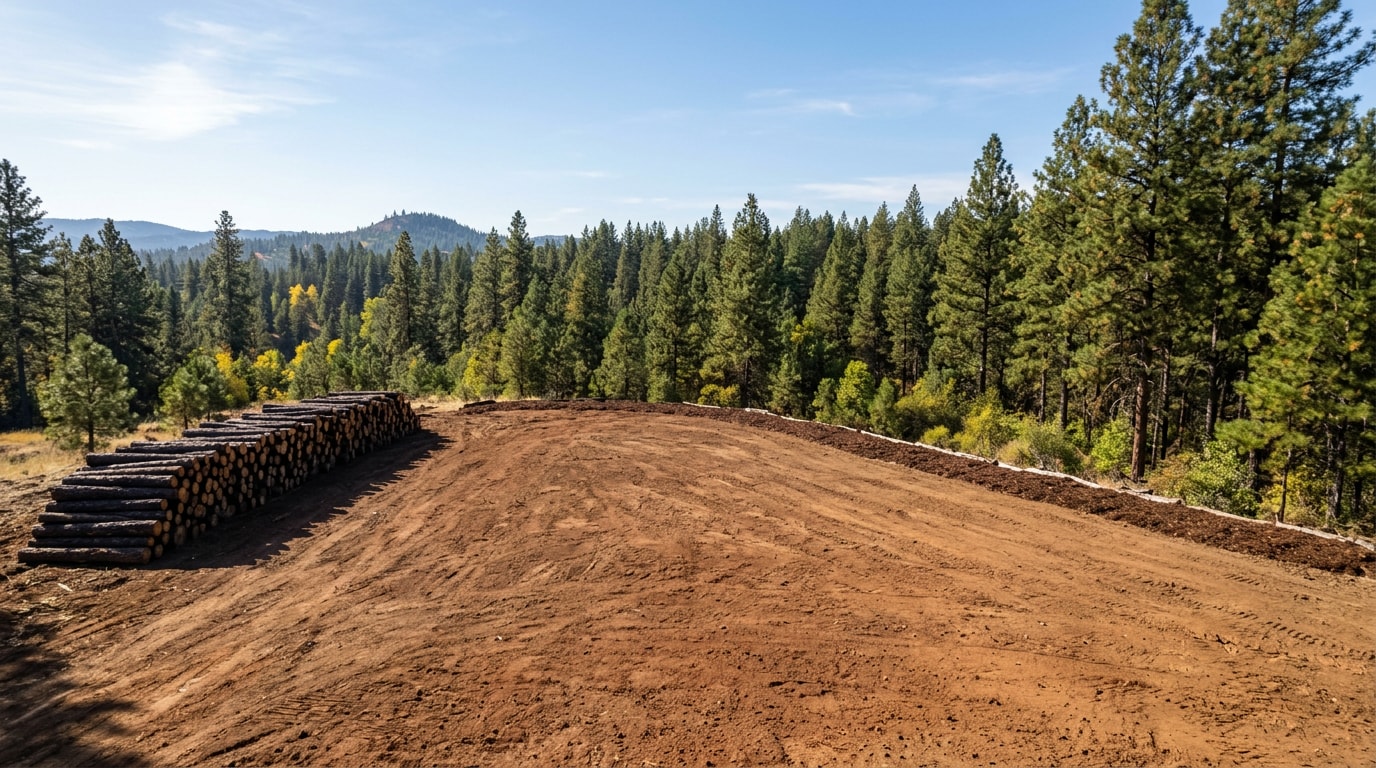
Larger jobs need more than brush removal. The process for development projects in and around Spokane and Spokane Valley starts with a property walk and ends with grading-ready ground.
Why Professional Land Clearing Matters
Professional land clearing involves strategic planning that weighs soil preservation, drainage patterns, and selective removal to protect a property's long-term value, rather than simply pushing over everything in the way. It's more careful than it looks from the road.
The work begins with a tree assessment to identify trees worth preserving, locate underground utilities, and map equipment access routes. Skipping this step is how projects end up with damaged drainage lines or an accidental utility strike.
Specialized Equipment Used for Large-Scale Clearing
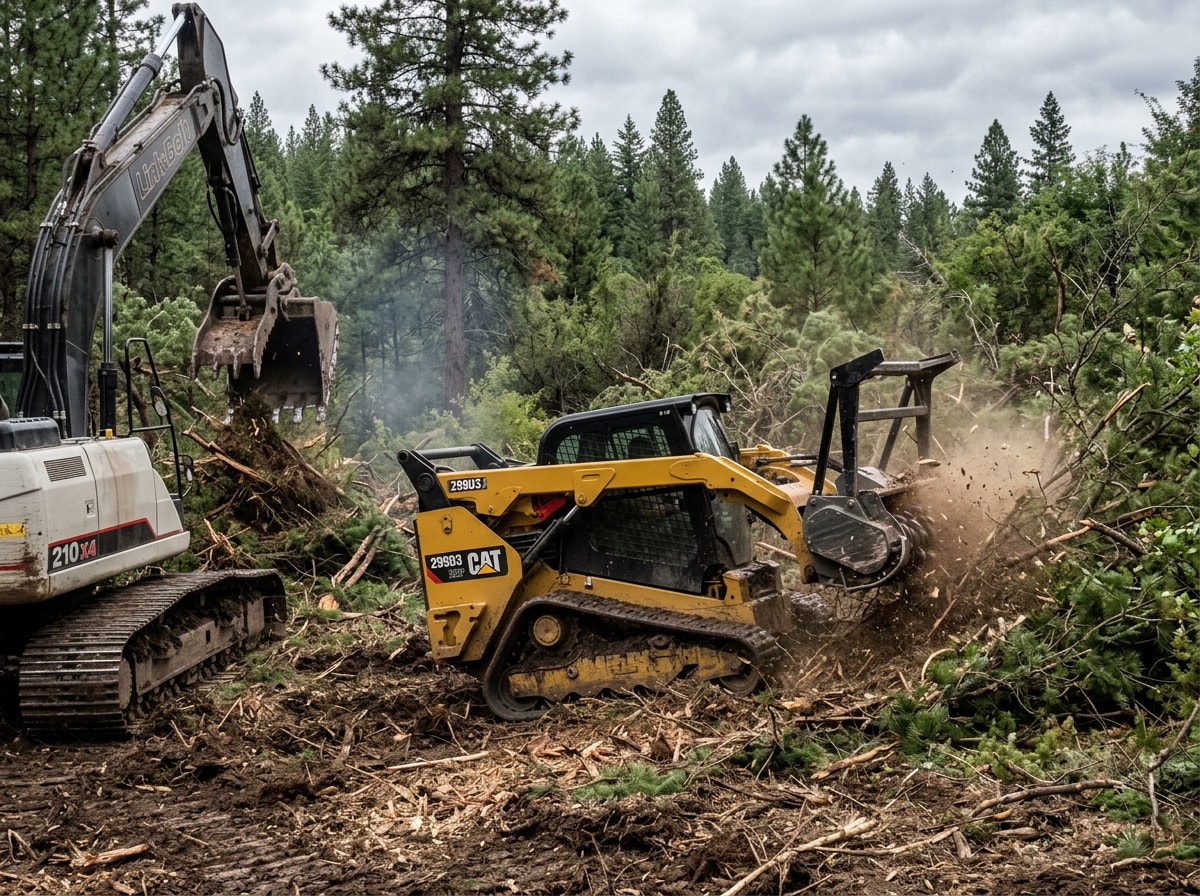
Large-scale clearing relies on a specific equipment lineup:
- Tracked excavators to push over small trees and pull stumps
- Skid steers fitted with mulcher attachments for grinding undergrowth
- Wood chippers to process branches on site
This combination lets a crew clear multiple acres in days rather than weeks, which matters on jobs tied to a construction schedule.
Tree Removal vs. Land Clearing: Know the Difference
Tree removal and land clearing aren't the same service. Tree removal focuses on individual trees in developed areas, while land clearing removes all vegetation from an undeveloped lot or overgrown site. That distinction matters when comparing quotes, since a land-clearing bid should already include stump work. If stumps are the only thing left behind, our stump removal service handles that separately.
Timelines vary with scope:
- A typical residential lot with moderate tree coverage: 1 to 3 days
- Larger properties with heavy brush or difficult terrain: a week or more
- Before equipment moves in: protected trees, wetland boundaries, underground utilities, and safe access routes all need to be identified
Wood Chipping and Debris Disposal in Spokane, WA
Excess brush doesn't just look messy. It can drag down curb appeal and property value, so debris disposal is part of most clearing projects rather than an afterthought.
Once branches go through on-site chipping, homeowners have options. Chips can stay as mulch for landscaping beds, get hauled away entirely, or go toward erosion control on bare soil. If a storm already dropped limbs and debris across the property, our storm tree cleanup service covers that separately from planned clearing work.
If your project involves removing cedar specifically, our cedar clearing guide for Spokane breaks down species-specific costs and permit triggers in more detail.
Washington DNR Cost-Share: Funding Help for Fuel Reduction Projects
Spokane County landowners planning fuel reduction or defensible space work should look into Washington DNR's cost-share program before starting. DNR offers free consultations to determine wildfire and forest health risks, prioritize potential actions, and then shares in paying for the cost of treatment with qualified landowners, and non-federal owners of less than 5,000 forested acres in Washington state are eligible. Once an application is submitted, it typically takes 1-2 weeks to find out whether a cost-sharing application is approved.
Program terms and per-acre caps change from year to year, so confirm current guidelines on the DNR Forest Resilience Division site before assuming a project qualifies. We can help flag which parts of a clearing job are the kind of fuel-reduction work DNR typically funds.
Permits and Local Rules Before You Clear
Clearing and grading rules in Spokane County depend on zoning, acreage, slope, and whether the parcel touches a critical area like a wetland or steep slope. One threshold that catches people off guard: if a construction project cumulatively disturbs one or more acres of land through clearing, grading, excavating, or stockpiling of fill material, it may need construction Stormwater Permit Coverage from the Washington State Department of Ecology , separate from any county permit. Spokane County can't tell you in advance whether your project needs that coverage, so it's worth confirming directly with the Spokane County Building & Planning Department, where staff handle administration and enforcement of County and State Codes related to regional comprehensive land use planning, development, construction, and alteration of buildings within the County.
Serving Spokane and Nearby Communities
Coverage extends across Spokane and Spokane Valley, plus Mead, Five Mile, South Hill, Nine Mile Falls, Airway Heights, Cheney, Millwood, Veradale, Otis Orchards, and rural properties throughout the surrounding region. We also take on cross-border projects in Coeur d'Alene, ID and Post Falls, ID for landowners managing property on both sides of the state line.
Check our homepage for the full list of services, or request your free estimate directly if you already know what the lot needs.
FAQ
How Much Does Land Clearing Cost in Spokane?
Land clearing in Spokane generally runs $1,200 to $6,000 per acre depending on vegetation density, slope, and whether stumps need removal. Light brush clearing sits near the lower end; heavy forested acreage with large trees costs more. A site visit still gives the most accurate number.
Do I Need a Permit for Land Clearing in Spokane County?
It depends on zoning, acreage, vegetation type, slope, drainage, and whether the parcel has a critical area designation. Projects disturbing an acre or more may also need separate state stormwater permit coverage. Check with Spokane County's Building & Planning Department before major clearing work begins.
How Long Does a Land Clearing Project Typically Take?
Smaller residential lots usually wrap up in one to three days. Larger or heavily wooded properties can take a week or more, depending on terrain and access.
What Does Brush Clearing Service Entail?
Brush clearing means professionally removing dense vegetation, underbrush, and overgrown shrubs from a defined area. It matters because overgrown brush creates fire hazards, blocks property access, and lowers curb appeal.
Is Brush Removal Eligible for Washington DNR Cost-Share Funding?
Brush and fuel-reduction work can qualify under DNR's cost-share program if the property is non-federal forestland under 5,000 acres and the work is approved before it starts. Apply for a consultation first; work done without prior approval generally isn't reimbursed.
Can I Clear Brush on My Property Myself?
Small, isolated patches are DIY-friendly with hand tools or a brush mower. Anything involving stumps, slope, large brush volume, or equipment access is faster, safer, and usually cheaper per hour when a crew with mulching equipment handles it.