Removing small tree stumps in Post Falls, ID is a realistic weekend project if the stump measures under about 12 inches across and you've got the right tools. Bigger stumps, deep taproots, or anything tangled near a fence, septic line, or utility run can turn a simple dig into a multi-day slog. Here's how to size up your stump, pick the right removal method, and know when it's smarter to call in a grinder instead.
How Stump Size Determines Your Method
The size of the stump decides almost everything else about the job.
A stump under 6 inches wide is usually a 30 to 60 minute hand-dig for one person. Stumps in the 6 to 10 inch range often run 1 to 3 hours, depending on root depth and soil type. Anything over 10 to 12 inches starts eating into an afternoon, and that's when chemical treatment or mechanical grinding start looking a lot more appealing.
Post Falls sits on the sandy, rocky glacial soil of the Rathdrum Prairie, which tends to let roots pull free faster than the dense clay soils found elsewhere in North Idaho. That's a small edge worth knowing before you decide whether hand-digging is worth the effort.
Tools and Materials You'll Need
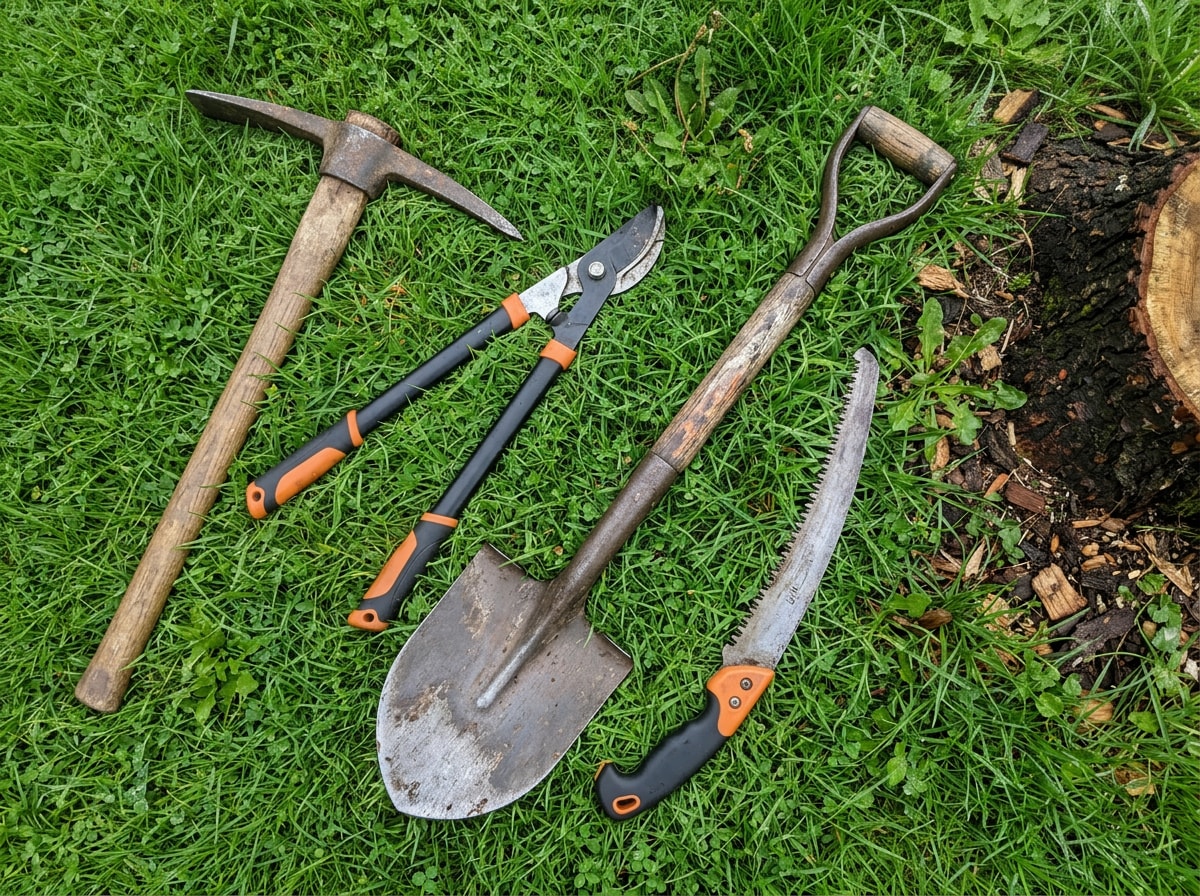
A basic stump removal kit covers most small jobs:
- Shovel or spade, for digging and clearing soil
- Mattock or pickaxe, for loosening compacted dirt and chopping roots in one swing
- Chainsaw or handsaw, for cutting the stump down and severing the taproot
- Loppers or a pruning saw, for finer secondary roots
- Root cutter or axe, for thicker growth
- Hand winch or come-along, for a stubborn stump that won't budge
- Chemical stump remover (optional), if you're going the slow-decomposition route
Don't forget gloves, eye protection, and sturdy boots.
A sharp mattock blade is arguably the single most useful item in the kit. A dull edge turns taproot-cutting into a slog that can double the time you spend outside.
If you'd rather skip the manual labor entirely, browse our tree service options or stump removal service for Post Falls properties.
Digging Out a Small Stump by Hand
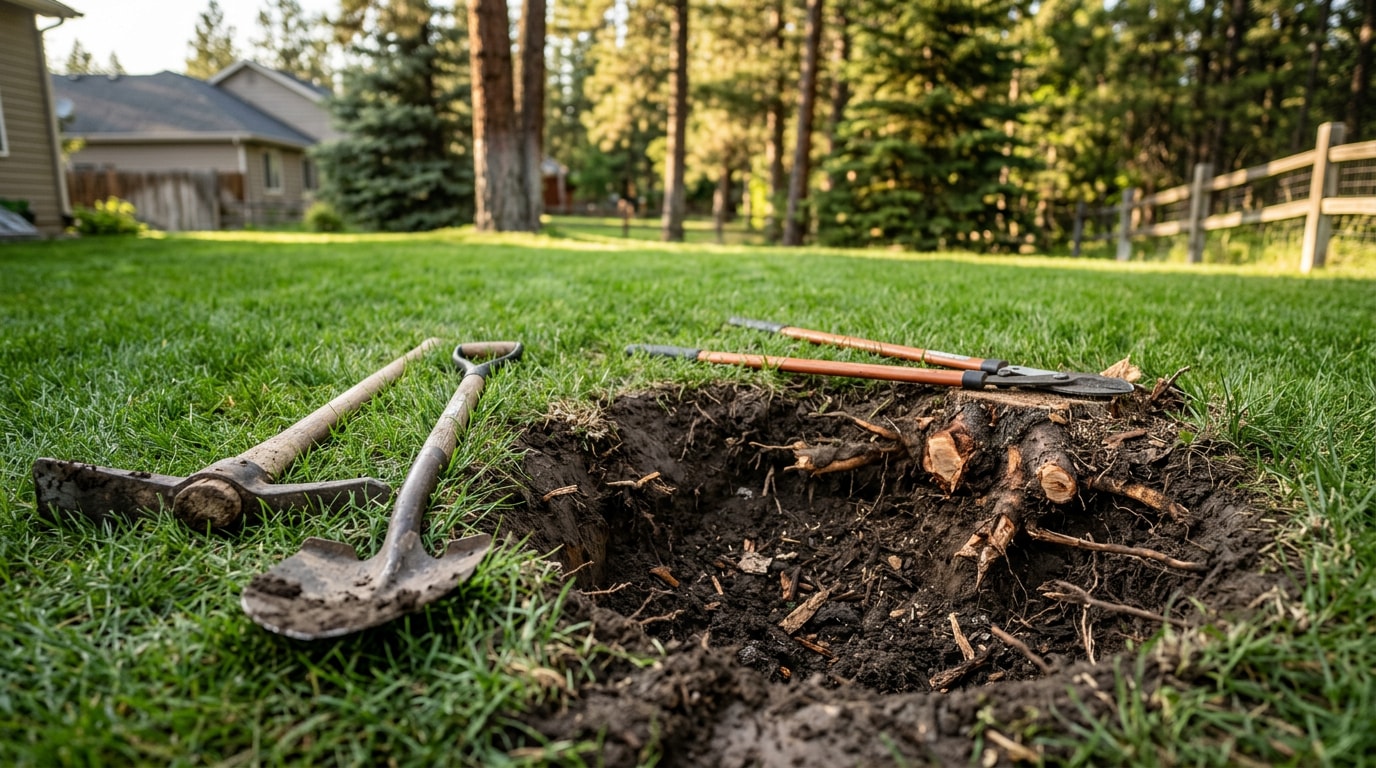
Hand-digging is the standard method for truly small stumps. Dig a trench around the base to expose the roots, cut through them, then lever or pull the stump free. It works without any machinery, but it's realistic mainly for stumps under about 12 inches across.
Step 1: Dig Around the Stump and Cut the Secondary Roots
Tree root systems branch outward before diving down. Secondary roots shoot off in several directions and need to be cut before the taproot is even visible.
Digging a trench around the stump's perimeter is what uncovers them. Trim back any remaining stump material first, then dig to expose as much root structure as possible. Cut each visible root with a saw as you go, working systematically around the stump rather than digging randomly. This step takes the longest, but it sets up everything that follows.
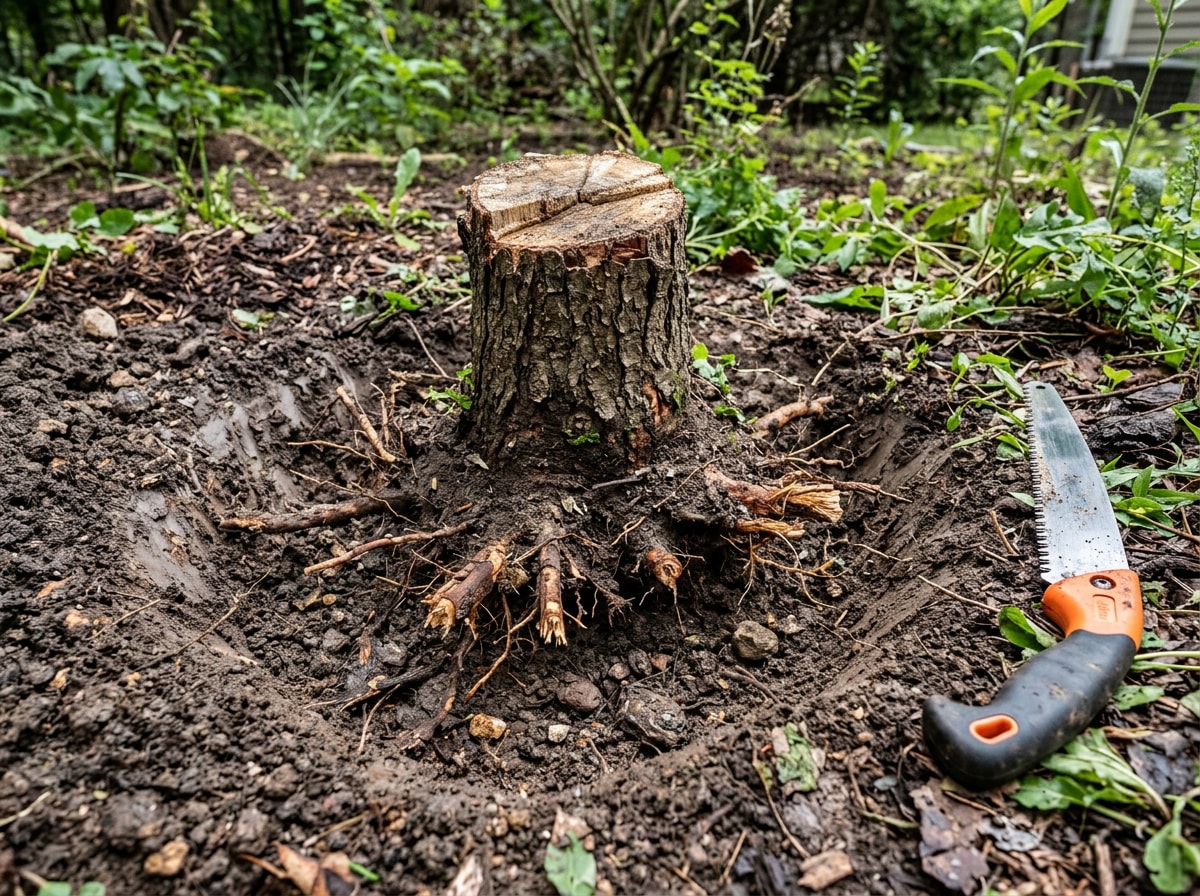
Step 2: Sever the Taproot and Pull the Stump Free
Once the secondary roots are cut, the only thing anchoring the stump is usually the taproot, a single thick root running straight down. All the earlier digging exists to reach this one point.
Cut through the taproot with a saw or axe. The stump will often pop loose with a firm pull or a lever placed underneath it. A few stray roots may still need snipping before it comes fully free.
This method stays practical for stumps roughly 10 to 12 inches across or smaller. Bigger stumps have deeper, thicker taproots that make hand-digging far less efficient.
Chemical Stump Removal
Chemical removal speeds up decomposition rather than physically extracting the stump. Saw the stump down as close to ground level as possible, drill several holes into the exposed top and sides, then fill them with a chemical stump remover following the label instructions.
Most over-the-counter products use potassium nitrate as the active ingredient, which accelerates wood breakdown so the stump softens enough to chop apart or burn later. Expect several weeks of waiting, not instant results.
Handle these products carefully. Keep them away from pets, kids, and waterways, wear gloves and eye protection while mixing or applying, and follow the label exactly. The National Pesticide Information Center's guidance on minimizing exposure is a useful reference before you open the bag.
Burning the Stump (and Idaho's Burn Permit Rules)
Burning only works after the stump has been cut down to less than 6 inches above ground, with all nearby branches, debris, and combustible material cleared to create a safe perimeter.
This method carries real fire risk and isn't legal everywhere. Idaho requires a burn permit for most outdoor burning done outside city limits between May 10 and October 20 each year, and local fire departments can add their own restrictions on top of that. Check current rules and get a free permit, if one applies to your address, through Idaho's self-service burn permit portal before lighting anything, and call Post Falls Fire if you're inside city limits, since municipal burn rules can be stricter than the statewide baseline.
Post Falls Rules on Stump Removal
Most homeowners removing a stump on their own private property in Post Falls won't need a permit. The rules change if the tree sat in the street right-of-way, a planting strip, or anywhere the city classifies as public.
Post Falls' Urban Forestry Division requires that any public tree removal be approved by the city's Urban Forester, and the city's tree standards manual spells out that stumps on public trees must be ground to at least 8 inches below soil grade and the hole backfilled to prevent a safety hazard. If your stump is anywhere near a sidewalk, curb, or planting strip, call the Urban Forestry Division before you touch it.
Comparing Your Removal Options
| Method | Cost | Effort | Best For | Timeline |
|---|---|---|---|---|
| Hand-digging | Low (tools only) | High | Stumps under 12 inches | A few hours |
| Chemical treatment | Low | Low | Any size, if you can wait | Several weeks |
| Stump grinding | Moderate | Minimal | Nearly any size, no digging | A few hours |
| Hiring a pro | Highest | None | Large stumps or multiple stumps | Fastest guaranteed result |
When to Call a Professional
When a "small" stump turns out bigger than expected, professional equipment closes the gap fast. Tree services typically use a stump grinder to shred the stump into chips below ground level, or a backhoe or excavator for larger root systems, sometimes paired with chemical pre-treatment to soften stubborn wood first.
A mechanical grinder is generally the quickest and safest route once a stump is too large or too rooted for hand tools. It also saves you from guessing how deep a taproot runs before you've already dug a three-foot hole. If grinding leaves you with a pile of chips, our guide on what to do with wood chips after tree removal covers the disposal and reuse options.
For anything beyond a quick afternoon project, get a free estimate and we'll tell you honestly whether hand tools will cut it or whether grinding makes more sense for your yard.
FAQ
What Is the Fastest Way to Remove a Small Tree Stump?
For stumps with shallow roots, hand-digging is fastest: expose the roots, cut them with a saw or loppers, then pull the stump free. Larger or deep-rooted stumps are faster to remove with a grinder.
How Do You Remove a Small Stump Without a Stump Grinder?
Small stumps can be removed without a grinder either manually, by digging and cutting roots, or chemically, by drilling holes, applying a stump-removal product, and waiting for decomposition.
Will a Tree Stump Grow Back If I Don't Remove the Roots?
Stumps left with intact roots can sprout new growth. To prevent regrowth, remove the stump completely, grind it down, or treat it with a stump killer.
Do I Need a Permit to Remove a Tree Stump in Post Falls?
Not on private property, in most cases. If the tree sat in a right-of-way near the street or on city property, Post Falls' Urban Forestry Division may require approval first. Always check with the city before digging near a sidewalk or planting strip.
What Is the Cheapest Way to Remove a Small Tree Stump?
Hand-digging is the cheapest method since it only requires tools you likely already own. Chemical treatments cost a bit more but need far less physical effort.
Can You Remove a Stump With Rock Salt or Epsom Salt?
You can try it, but it's slower and less reliable than a purpose-made stump remover, and heavy salt applications can harm surrounding soil and nearby plant roots. A potassium nitrate-based product is the more predictable option if you're going the chemical route.
Learn more about pruning smaller ornamental trees once the old stump is gone in our guide to pruning a weeping cherry tree, or head back to our homepage to see the full range of tree services we offer around Post Falls.