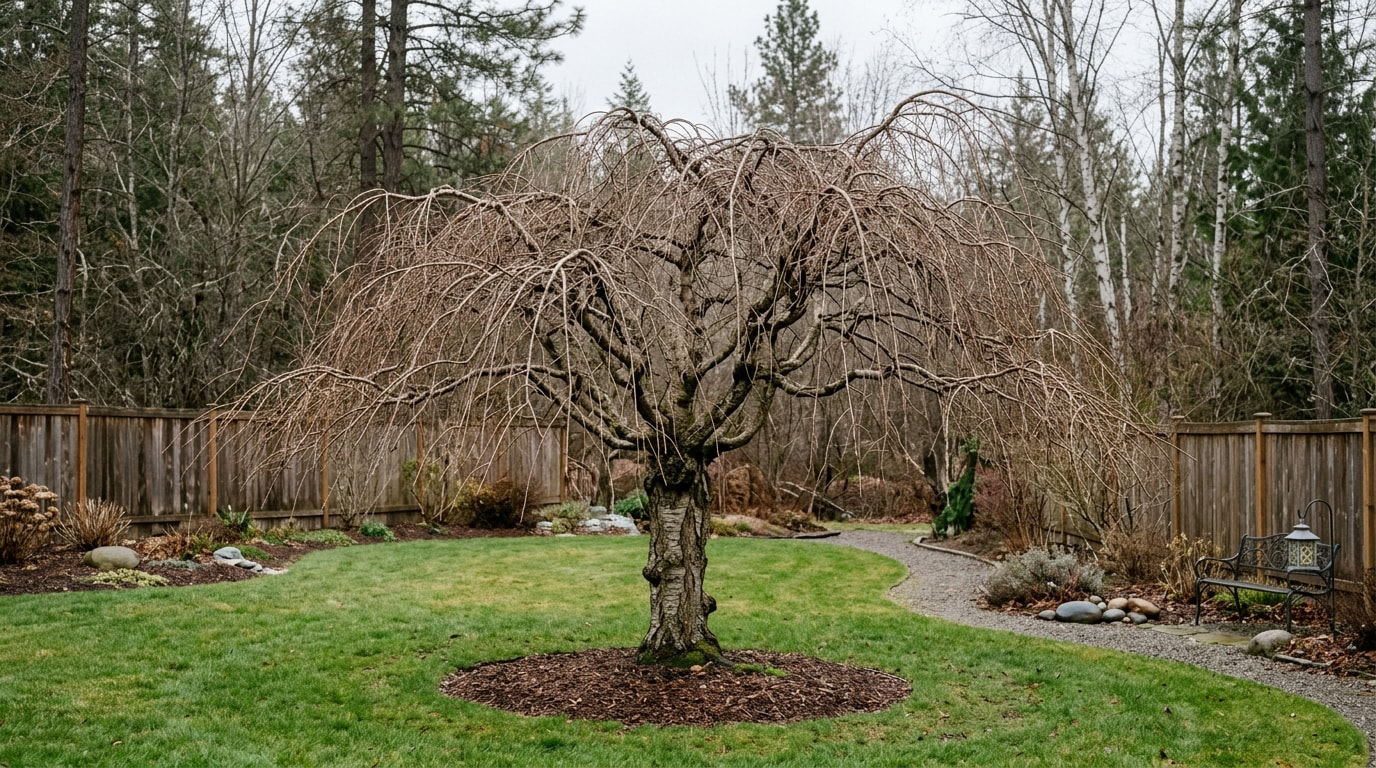
Pruning a weeping cherry tree in Coeur d'Alene, ID comes down to two things: timing it around our wet dormant season and knowing whether your tree is grafted. Get either one wrong and you can strip a season of blooms or trigger disease on a tree that's otherwise healthy. This guide covers both, plus the exact cuts, tools, and mistakes we see most often on North Idaho properties.
When to Prune a Weeping Cherry Tree
Timing trips up more homeowners than the actual cutting does.
Online advice is all over the map. Some sources say dormant-season pruning in late winter. Others push late summer. A few say to wait until right after bloom. All of these can be correct, depending on your goal and your climate.
For Coeur d'Alene specifically, the safest default is late winter dormant pruning, after the hardest freezes have passed but before buds swell. That usually lands in a window from mid-to-late February through early March in Kootenai County, though it shifts a bit year to year with the weather. Coeur d'Alene sits in USDA plant hardiness zone 6b, per the USDA's 2023 Plant Hardiness Zone Map , which is colder than many national pruning guides assume. You can confirm your exact zone by ZIP code on the USDA Plant Hardiness Zone Map before planning major cuts.
One local wrinkle: flowering cherries are prone to cytospora canker, a fungal disease that spreads fastest through fresh wounds in cool, damp conditions. Extension guidance calls for pruning out infected tissue during dry weather, with cuts made at least 12 inches below the visibly infected area . In the Panhandle, that means waiting for a dry stretch in your pruning window, even a short one, instead of cutting the first clear day the calendar allows.
| Pruning Goal | Best Window | Why |
|---|---|---|
| Structural/dormant pruning | Mid-to-late Feb through early March | Buds haven't swelled; branch structure is visible |
| Light shaping after bloom | Right after flowers drop, mid-to-late spring | Minimal stress, preserves next year's buds |
| Sucker and watersprout removal | Anytime they appear | Delay lets them steal energy from the canopy |
| Disease/cankered wood removal | Any season, but only in dry weather | Wet cuts spread fungal spores fastest |
Is My Weeping Cherry Grafted?
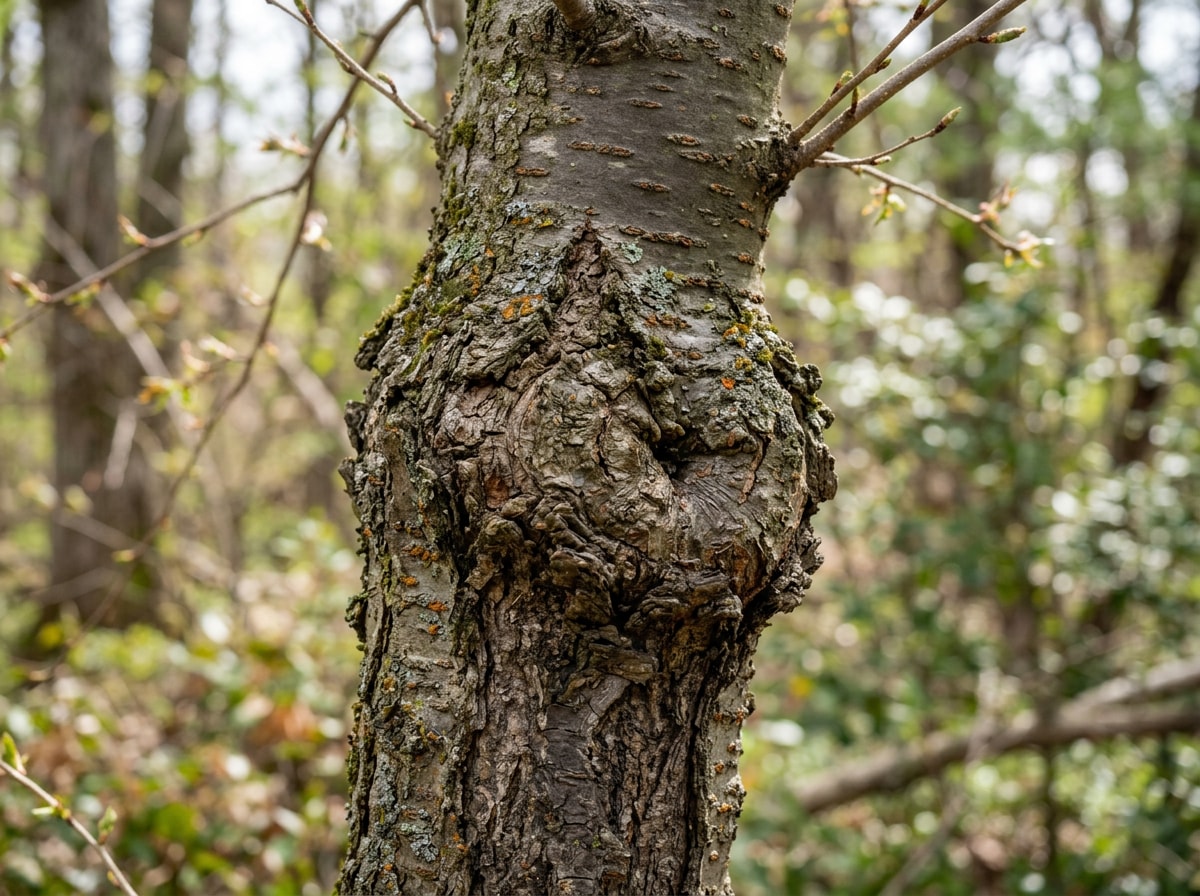
Before you make a single cut, check the trunk for a graft union. On most weeping cherries it shows up as a raised knot or seam, typically 4 to 5 feet above the soil line. The graft union on a weeping cherry tree is located higher on the trunk than the graft unions on many other grafted plants, generally 4 to 5 feet above soil level .
If you find that knot, you have a grafted tree. The cascading canopy above the union is a different variety than the upright rootstock below it. No knot, and a straight, uniform trunk instead, means you likely have a naturally weeping variety.
This distinction changes everything about how you prune. Grafted and natural trees are pruned with opposite logic for upright-growing branches.
How to Prune a Weeping Cherry Tree Step-by-Step
Pruning a Grafted Weeping Cherry Tree
Start with the tips that touch the ground. Trim them back so they clear the soil by at least 6 inches.
Next, look for branches growing straight up. On a grafted tree, upright growth above the graft union won't ever weep on its own. Remove any branches that are growing straight up, since on grafted trees these branches will not weep and should be removed to keep the tree weeping .
Skip this step for one or two seasons and those upright shoots will crowd out the weeping form entirely. Treat it as an annual habit, not a one-time fix.
Pruning a Natural (Ungrafted) Weeping Cherry Tree
Trim ground-trailing branches the same way, back to roughly 6 inches of clearance.
Then stop. Resist cutting the upward-growing branches you see here. On naturally weeping cherry trees, upward-growing branches will eventually arch down on their own, and removing them causes the tree to lose its weeping shape . That gap can take years to fill back in.
Finish by removing anything dead, diseased, or crossing and rubbing against another branch.
Making Proper Pruning Cuts on Larger Branches
Small twigs can be snipped in one motion. Branches over an inch thick need a different approach, or you risk tearing bark down the trunk.
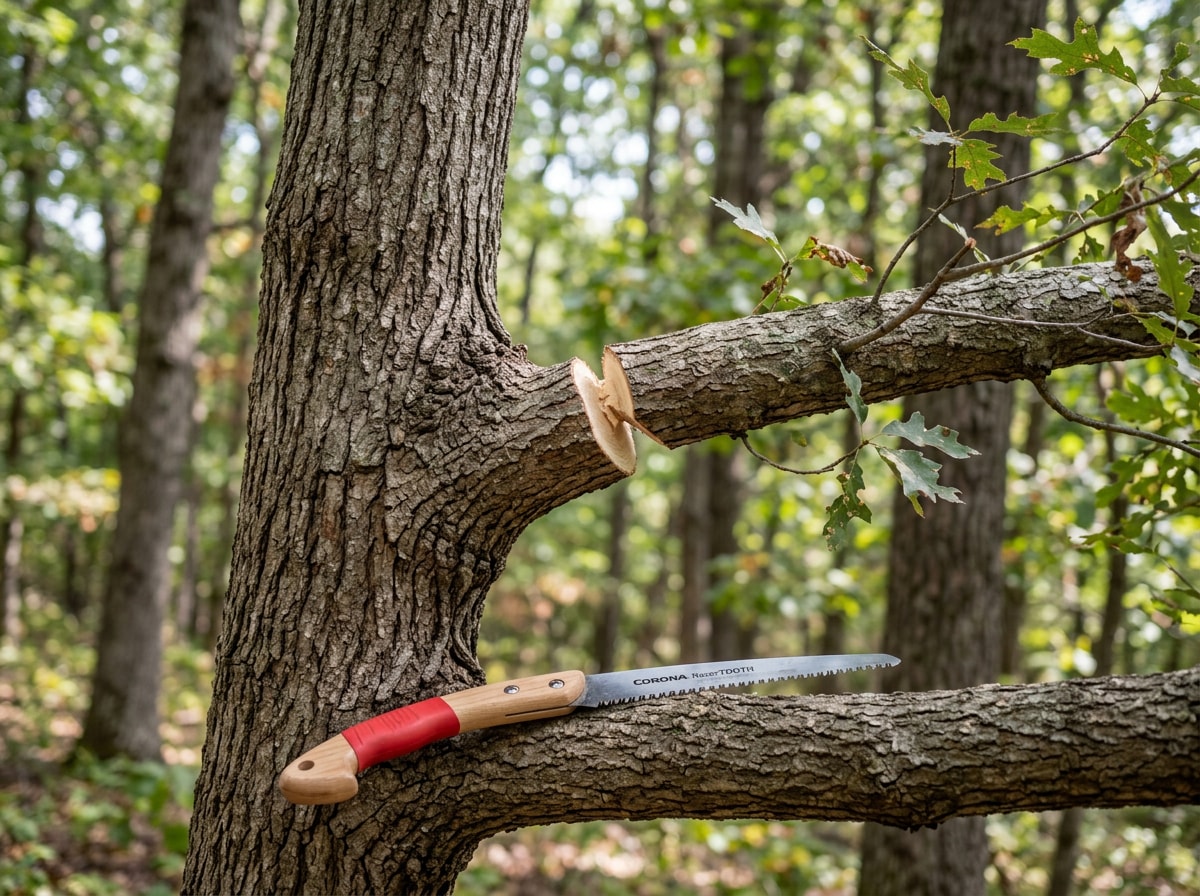
Use the three-cut method:
- Undercut - 12 to 15 inches from the trunk, cut upward about a third of the way through the branch. This stops bark from tearing as the limb drops.
- Top cut - just beyond the undercut, cutting down through the branch to remove most of its weight.
- Collar cut - the final cut, made just outside the branch bark ridge, removing the stub without damaging the branch collar.
A correct pruning cut removes the branch just outside the branch collar rather than flush against the trunk , which is the detail most DIY cuts get wrong. Flush cuts remove the tree's natural defense barrier and slow healing.
Removing Suckers and Watersprouts
Below the graft union, stems sometimes sprout directly from the rootstock. Above it, inside the canopy, you'll occasionally see a vigorous shoot called a watersprout shooting straight up.
Both detract from the tree's clean, weeping form and should go as soon as you spot them.
- Pull small suckers by hand at the base when possible; it discourages regrowth better than cutting.
- Use bypass pruners for anything too thick to snap off cleanly.
- Check the base of the trunk and the soil line each spring, since suckers often hide under mulch.
Tools and Supplies for Pruning a Weeping Cherry Tree
A clean cut heals faster and resists disease better than a ragged one.
- Hand pruning shears for twigs and small branches.
- A pruning saw for anything over an inch thick.
- Rubbing alcohol or a disinfectant spray to wipe blades between cuts, especially around any wood that looks diseased.
Keep every blade sharp. A dull tool crushes tissue instead of slicing it, which slows healing and gives fungal spores an easier entry point. If you're outfitting for a bigger job, our tree pruning team can walk you through what equipment makes sense for mature trees versus young ones.
Common Pruning Mistakes to Avoid
Most damage we see on weeping cherries traces back to one of these:
- Removing more than 25% of the live canopy in a single season.
- Cutting upright branches on a natural (ungrafted) tree, mistaking them for suckers.
- Leaving cuts flush to the trunk or too far out, instead of just outside the branch collar.
- Pruning outside the dormant or post-bloom window, especially right before a stretch of wet weather.
- Skipping tool disinfection between cuts on a tree with any visible canker or dieback.
Any one of these can set a tree back for several growing seasons. Slow, selective cuts beat an aggressive reshape every time.
Preventing Disease When Pruning
Flowering Prunus species, weeping cherries included, are more prone to fungal cankers than most ornamental trees. Watch for sunken, discolored bark with amber gumming. That's the signature of cytospora canker, and management involves pruning out and destroying infected tissue during dry weather, cutting at least 12 inches below the visibly infected area, and sterilizing tools frequently .
If you're unsure whether what you're looking at is canker, frost damage, or something else, a quick tree health consultation can confirm it before you start cutting into wood that might still be salvageable.
When to Call a Professional
Some jobs are better handed off:
- The tree is mature enough to need a pole saw or climbing gear.
- Years of neglect have left heavy, structural regrowth that needs reshaping.
- You suspect canker, borers, or another disease and aren't sure how far it's spread.
- Branches are tangled near power lines or a roofline.
We've handled weeping cherries across Coeur d'Alene that needed exactly this kind of reset, usually trees that had gone three or more years without a dormant-season prune. If your tree fits any of the situations above, it's worth a second opinion before you climb a ladder. Get a free estimate and we'll tell you straight whether it's a DIY job or not.
For more on how we approach seasonal tree care across the region, visit our homepage or see what we cover in Coeur d'Alene. If you're also budgeting for other canopy work this year, our guide to tree trimming costs per hour in Coeur d'Alene breaks down what local pricing typically looks like.
FAQ
How often should you prune a weeping cherry tree?
Once a year during dormancy is enough for most trees, with light spot-pruning anytime for dead or damaged wood. Avoid removing more than a quarter of the canopy in any single year.
Should you prune weeping cherry branches that touch the ground?
It's an aesthetic choice, not a health requirement. Trimming them up improves airflow and mowing clearance. Leaving them creates the fuller, trailing look many homeowners want.
How much should I prune a weeping cherry tree?
Stay under 25% of total canopy removal per year. The goal is maintaining the natural weeping shape and tree health, not a dramatic resize.
Can I prune a weeping cherry tree in summer?
Removing dead or damaged wood is fine anytime. Major structural pruning in summer isn't recommended, since it stresses the tree and can cut off next year's flower buds.
Can I prune a weeping cherry tree to stop it from weeping?
No. The weeping habit is genetic, carried in the grafted scion wood or the natural variety itself. Pruning can direct growth and thin a crowded canopy, but it can't change a tree's underlying growth pattern.
Will pruning my weeping cherry hurt this year's blooms?
Only if you prune heavily right before bud break. Dormant-season cuts in late winter and light post-bloom shaping both protect next year's flower buds; it's mid-spring heading cuts that cost you blossoms.