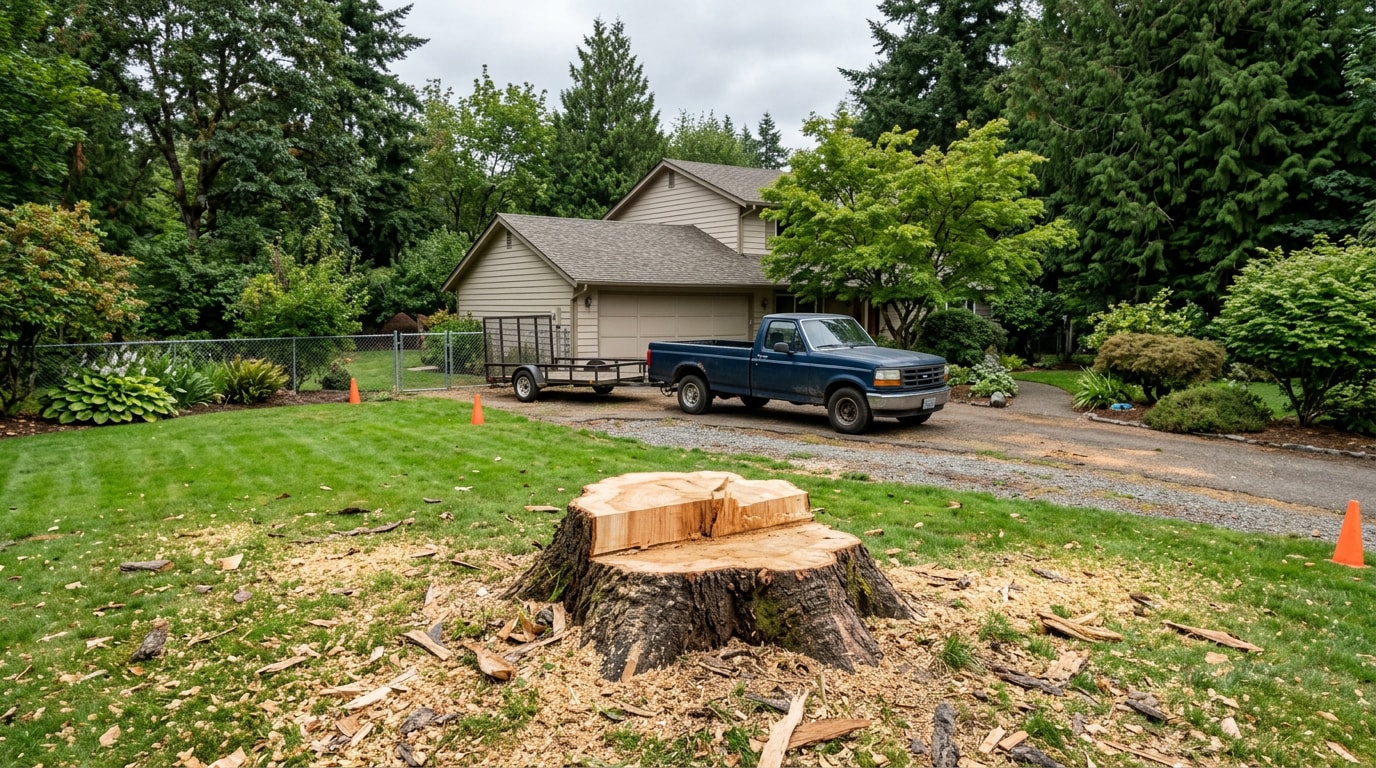
A tree removal permit in Post Falls, ID is required for any tree rooted in the public right-of-way and for commercial work on city-owned trees, but most private-yard removals skip the permit step entirely. The real test isn't how big the tree is. It's where the trunk actually sits. Here's exactly how the city draws that line, straight from its own tree code.
Do You Need a Permit to Remove a Tree in Post Falls, ID?
Whether you need a permit comes down to three things: where the tree is rooted, whether the work is commercial or DIY, and whether the tree counts as a "street tree" under city code.
Quick answer, based on the city's own tree standards:
- Private yard, non-commercial removal: Usually no permit needed.
- Tree with 51% or more of its trunk inside the public right-of-way: Classified as a street tree and regulated by the city.
- Any removal of a public tree:
All tree removals on public property must be approved by the director.
- Commercial tree work on public trees:
It is unlawful to engage in the commercial business of cutting, trimming, pruning, removing, spraying, or otherwise treating public trees within the city without the supervision of an ISA Certified Arborist.
Our crews treat that right-of-way line as the first thing to check on any Post Falls job, because it changes the entire scope of paperwork before a saw ever starts.
What the Post Falls Tree Standards Manual Actually Says
Idaho doesn't regulate tree removal at the state level in any broad way, so Post Falls' own code and tree standards manual are what actually govern your project. The city defines a street tree precisely: any tree with 51% of its trunk within the public right-of-way.
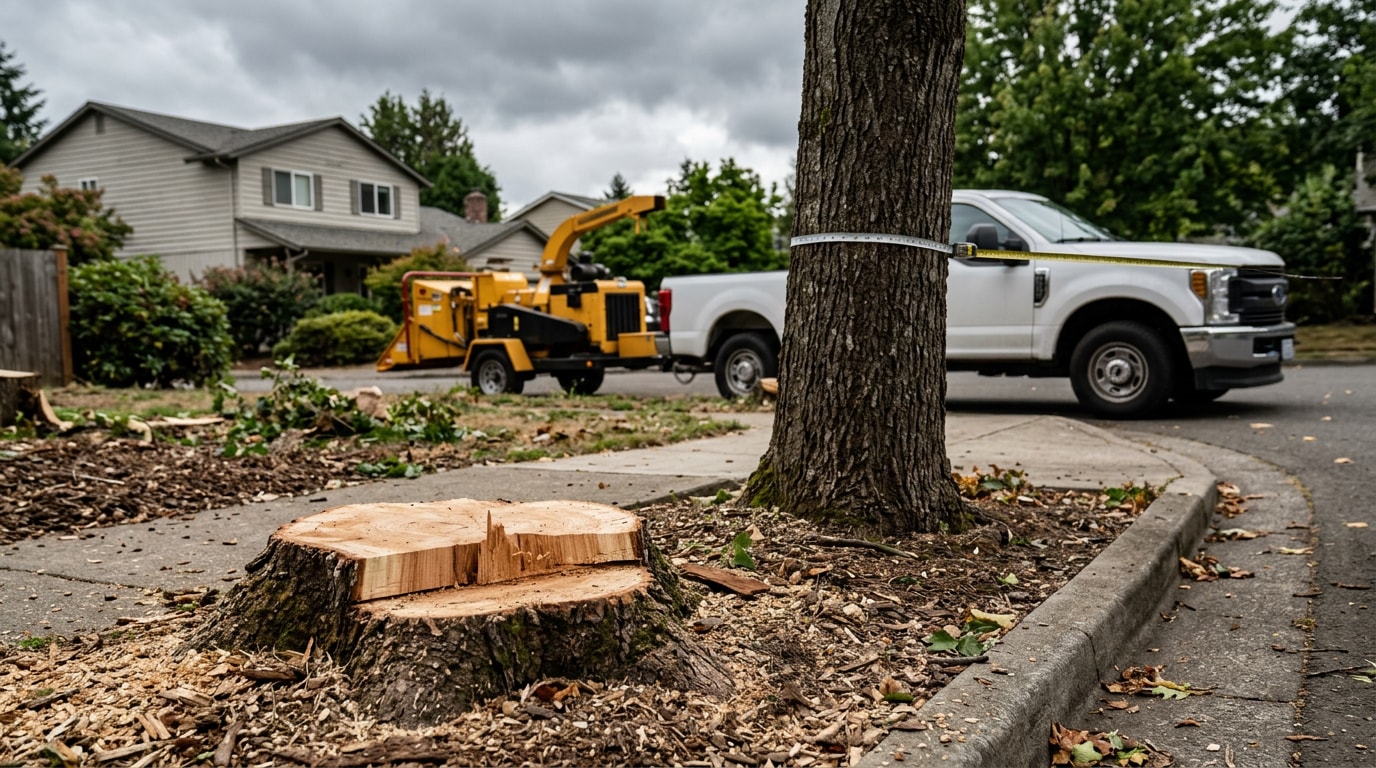
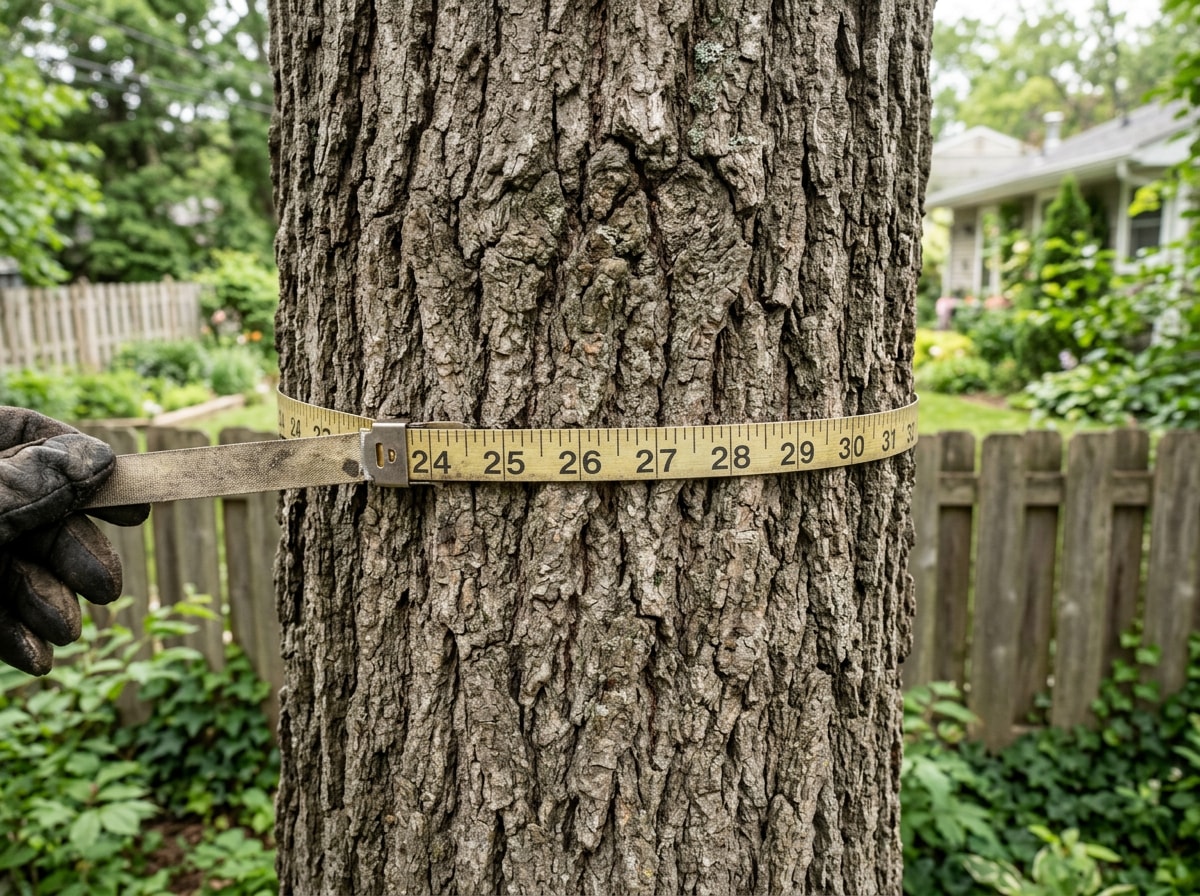
Trunk size is measured by caliper, not by eyeballing it. The diameter of the tree's trunk is measured six inches above the ground up to and including four-inch caliper size, and if the caliper at six inches above the ground exceeds four inches, it's measured at twelve inches above the ground instead. That's a different measuring point than the DBH (diameter at breast height, 4.5 feet up) method many homeowners have read about on generic tree-law sites, so don't mix the two up when sizing your tree for Post Falls specifically.
Street trees also come with a replacement rule: all street trees that are removed must be replaced, unless otherwise approved by the director. You can review the city's full Tree Standards Manual before assuming a tree is exempt, since the requirements are more specific than most blog posts suggest.
There's also a dispute-resolution mechanism worth knowing about: if the director doesn't agree with removing a right-of-way tree but the adjacent property controller insists on removing it anyway, the tree is appraised and the appraised value is assessed to the landowner. In other words, pushing ahead without approval on a right-of-way tree doesn't just risk a fine, it can mean paying for the tree's own value.
As of early 2026, the city's urban forestry program has also been actively reworking its street-tree code. City staff have proposed consolidating the street-tree requirement into a different title of the municipal code specifically to close a loophole that let developers pay a fee instead of planting replacement trees, a sign that enforcement around public trees in Post Falls is getting more consistent, not less.
Private Property Rules: Overgrown and Nuisance Trees
Permits aren't the only tree rule in Post Falls' code. Private property owners also have an obligation not to let trees become a hazard. It's unlawful for an owner, lessee, or occupant to allow the accumulation of overgrown weeds, grass, brush, or nuisance trees or shrubs, whether dead or living, on their lot or on the adjacent public right-of-way.
A tree or dead/dying tree that overhangs or intrudes onto a public street, sidewalk, or traffic visibility triangle to the point it interferes with public safety is itself a code violation.
Idaho state law backs this up at the municipal level, too. Cities are empowered to clear sidewalks and alleys of snow, ice, and rubbish, to cut and remove trees, weeds, and grass from private property, and to assess the cost of that work against the property owner. That means an overgrown or hazardous tree you ignore isn't just a neighbor complaint risk, it can turn into a city-ordered removal billed straight to you.
Public Property vs. Private Property Trees
Across Post Falls, Hayden, Rathdrum, and Coeur d'Alene, the public-versus-private distinction is the single biggest factor in whether a permit applies. A tree on a city right-of-way, parking strip, or park land typically needs director approval no matter its size. A tree entirely within your fenced yard usually doesn't, unless a commercial crew is doing the cutting on a city-owned tree nearby.
"Public" generally means land the city owns or controls: the planting strip between sidewalk and curb, median trees, and park land, not your backyard. If you're unsure whether your tree counts as a street tree under the 51%-of-trunk rule, measure before you call anyone. For broader diameter-at-breast-height standards used by certified arborists nationally, the ISA's certified arborist credential page explains how that measurement is applied in the field.
Permit Exemptions: When You Likely Don't Need One
Based on the city's own code, you generally don't need a removal permit when:
- The tree sits entirely on private property, away from any right-of-way, and the work isn't commercial.
- Dead or broken limbs pose an immediate hazard and need emergency removal.
- You're removing a tree your HOA or neighborhood covenant already classifies as non-protected (HOA rules vary by neighborhood and are separate from city code).
You generally do need approval when:
- Any part of the tree qualifies as a street tree (51%+ of trunk in the right-of-way).
- A commercial crew is removing, pruning, or treating a public tree.
- Root cutting near a street tree is involved, which requires prior approval before any digging starts.
Can You Remove a Tree Yourself, or Do You Need a Professional?
Technically, yes, you can rent equipment and attempt removal yourself on a private tree. But safety should come first. Trained crews use rigging, fall protection, and chainsaw-specific gear that most homeowners don't own or know how to use correctly, especially for anything near a structure, fence line, or power line.
There's also no real substitute for a documented hazard assessment if a permit application or insurance claim requires one. A tree assessment from a qualified crew can confirm whether a tree actually needs full removal, or whether pruning solves the problem. If the tree is already leaning, cracked, or dropping limbs, a hazard tree removal evaluation is worth getting before you touch a chainsaw.
Tree Removal Costs in Post Falls, ID
Removal pricing is driven by tree height, trunk width, and accessibility, not by a flat citywide rate. Taller trees near structures, power lines, or tight side yards cost more to remove safely because of the rigging and crew time involved.
A permit fee, when one applies, is a separate line item from labor, so don't assume it's bundled into a quote. Stump grinding is also typically billed separately from the removal itself. For a Post Falls-specific tree removal quote, or if you're weighing whether to grind the stump at the same time, our stump removal page breaks out what that add-on typically involves. If you're still deciding whether the tree needs a professional opinion first, our guide to arborist consultation services in Post Falls covers what that visit looks like and what it costs.
Tree Rules Across Post Falls & Nearby Kootenai County Cities
Tree rules shift as you cross city lines in Kootenai County. The public/private distinction stays consistent everywhere, but the exact permit paperwork and enforcement emphasis differ city to city.
| City | Permit trigger | Typical focus |
|---|---|---|
| Post Falls | Street trees (51%+ trunk in ROW), commercial work on public trees | Director approval, ISA-supervised commercial work, street tree replacement |
| Coeur d'Alene | Public rights-of-way and tree-lined streets | Right-of-way tree protection on developed corridors |
| Hayden | Public plantings; private lots generally lighter | Lighter private-lot enforcement |
| Rathdrum | Public plantings; private lots generally lighter | Lighter private-lot enforcement |
For Post Falls-specific service details and local crew availability, see our Post Falls service area page. We also work the Coeur d'Alene, ID area regularly, where right-of-way rules follow a similar public-tree-first pattern.
Get a Local Read Before You Cut
Permit rules change based on a few feet of trunk placement, so it's worth having someone check before you commit to a removal date. Get a free estimate and we'll tell you plainly whether your tree needs city approval, HOA sign-off, or neither. You can also browse examples of completed local work on our projects page, or start from our homepage to see our full range of tree and arborist services.
FAQ
Can I remove a dead or dangerous tree in Post Falls without a permit?
Emergency removal of a tree posing an imminent hazard to life or property is generally allowed without waiting on a standard permit. You may still need to document the hazard with photos or a hazard tree assessment and notify the city afterward if the tree affects the right-of-way. Non-emergency dead tree removal on private property should still be checked against city code before cutting.
What happens if I remove a right-of-way tree in Post Falls without approval?
Beyond a possible penalty, the city has a specific mechanism for disputed right-of-way removals. If the director disagrees with removing a right-of-way tree but the property owner insists on removing it anyway, the tree is appraised and the appraised value is assessed to the landowner. That cost is separate from any standard fine.
Can the city remove a tree from my property without my permission?
Yes, under specific conditions. Idaho law empowers cities to remove trees, weeds, and rubbish from private property and assess the cost against the property owner. This typically applies to nuisance trees, overgrowth, or hazards that haven't been addressed after notice.
Does home insurance cover tree removal in Post Falls?
Usually not for healthy trees or ones that were neglected. Coverage typically applies only after storm damage, meaning the tree came down due to wind, ice, or another covered event, not routine decline. Check your policy's specific wording before assuming removal costs are covered.
Is tree removal cheaper in winter in Post Falls?
Often, yes. Demand drops in the off-season, and bare branches can make assessment and cutting more straightforward for crews, which sometimes shortens job time and lowers labor cost.
Do tree removal companies need a special license in Idaho?
There's no statewide trade-specific license just for tree removal, but you should confirm liability insurance and ask directly whether the crew will handle any required city paperwork for work touching a public tree. An ISA Certified Arborist credential is a useful, verifiable standard to look for when hiring for anything near a right-of-way.